
Laws of the Game
The 21 Laws of Rugby
Every law of rugby union, explained in plain English and section by section, with a link to World Rugby's own text.
 Law 1
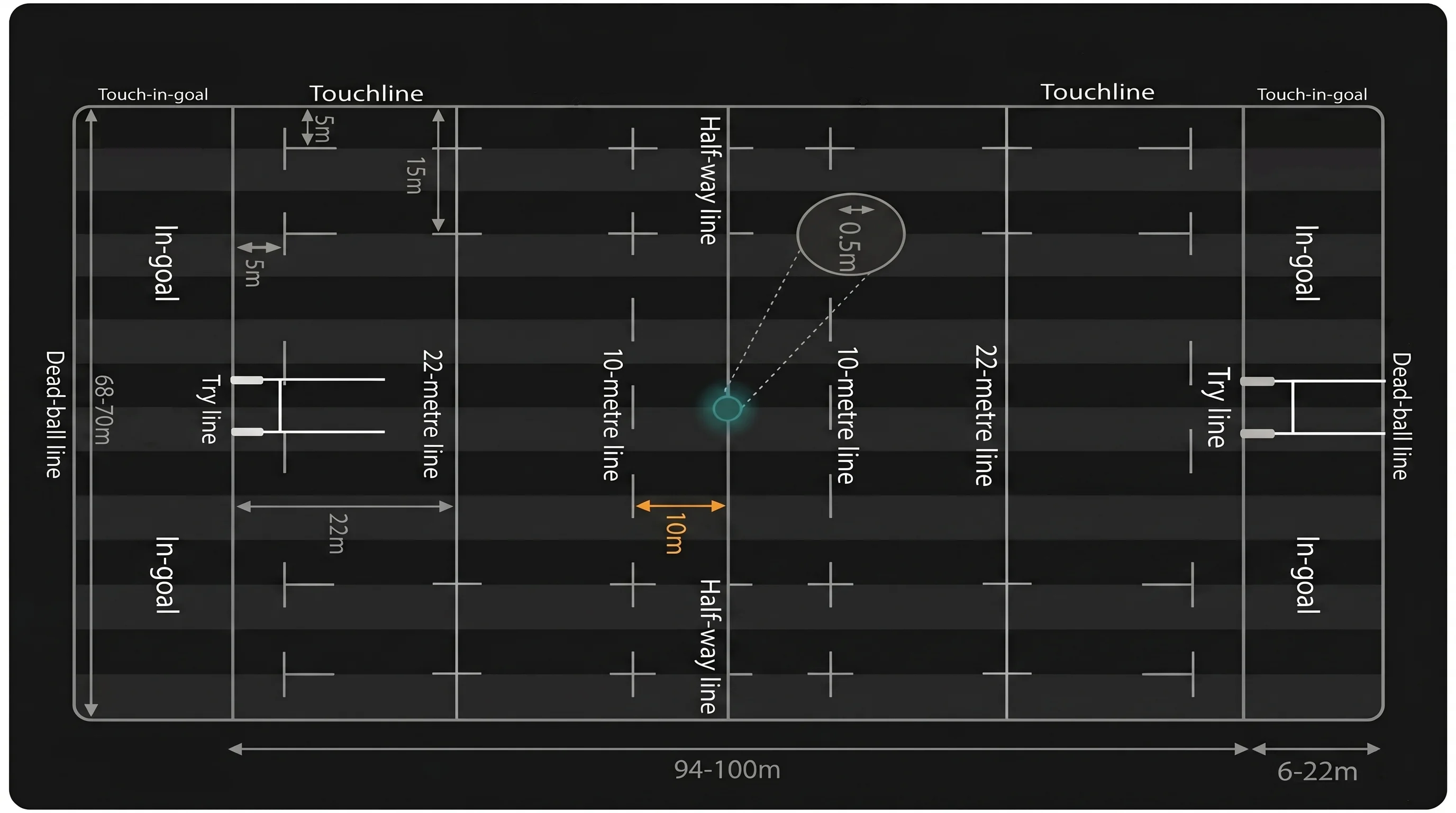
Law 1The Ground
Defines the dimensions, markings, goal posts, and flag posts of a rugby field.
Read law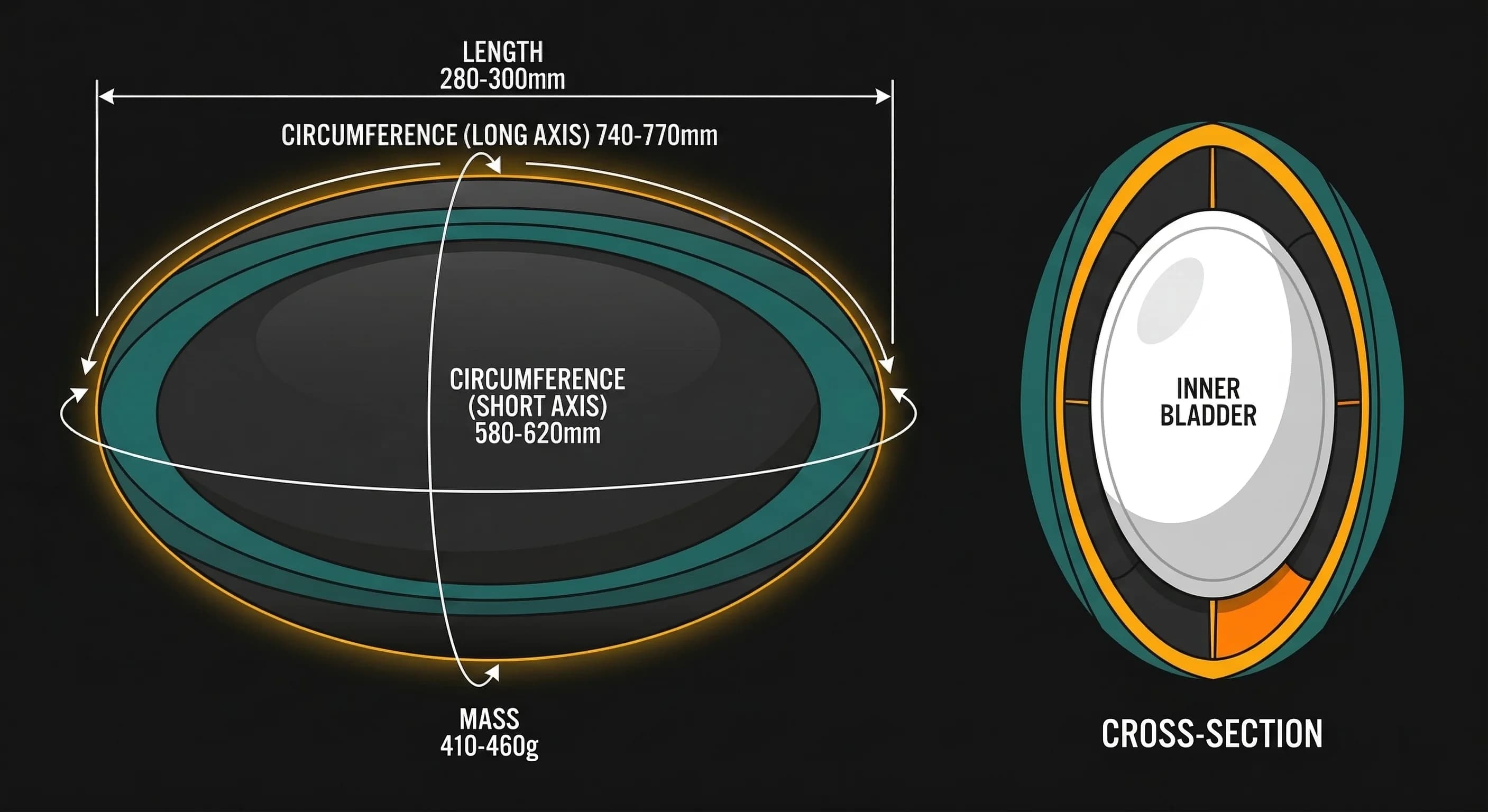 Law 2
Law 2The Ball
Specifies the size, shape, material, and air pressure of a rugby ball.
Read law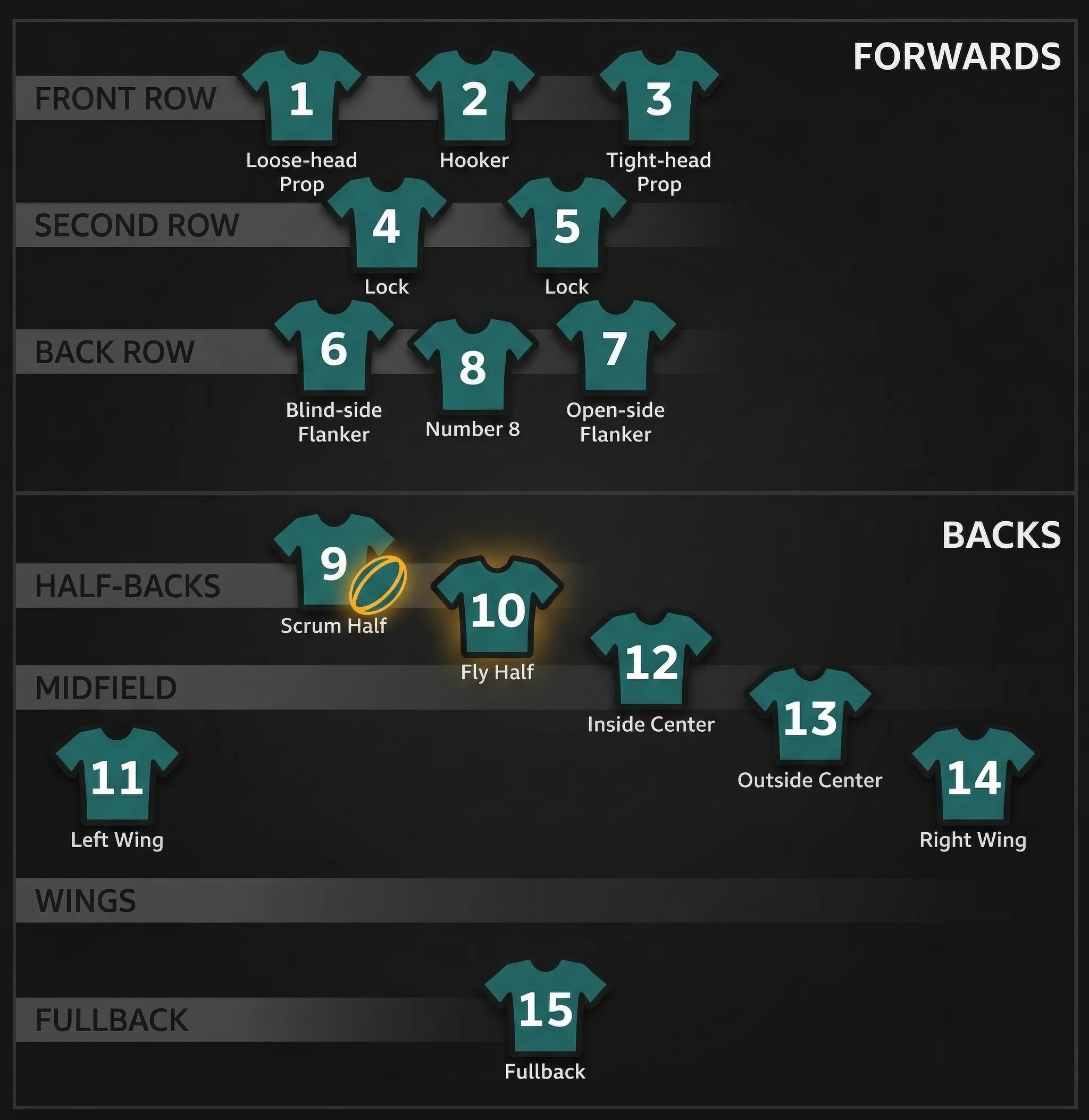 Law 3
Law 3Team
Covers team size, replacements, uncontested scrums, and player welfare processes.
Read law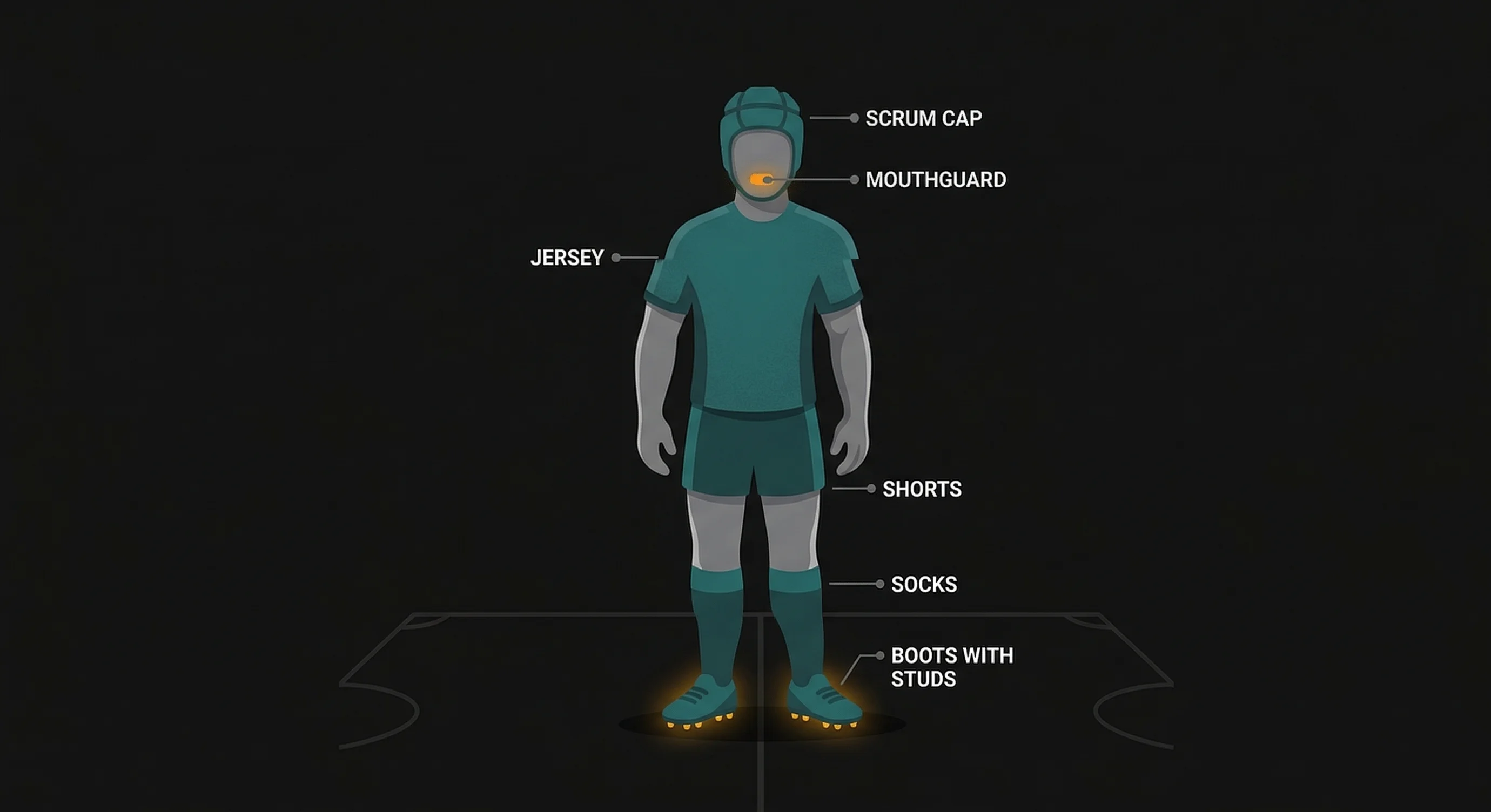 Law 4
Law 4Players' Clothing
Defines what players must wear, what is permitted, and what is prohibited.
Read law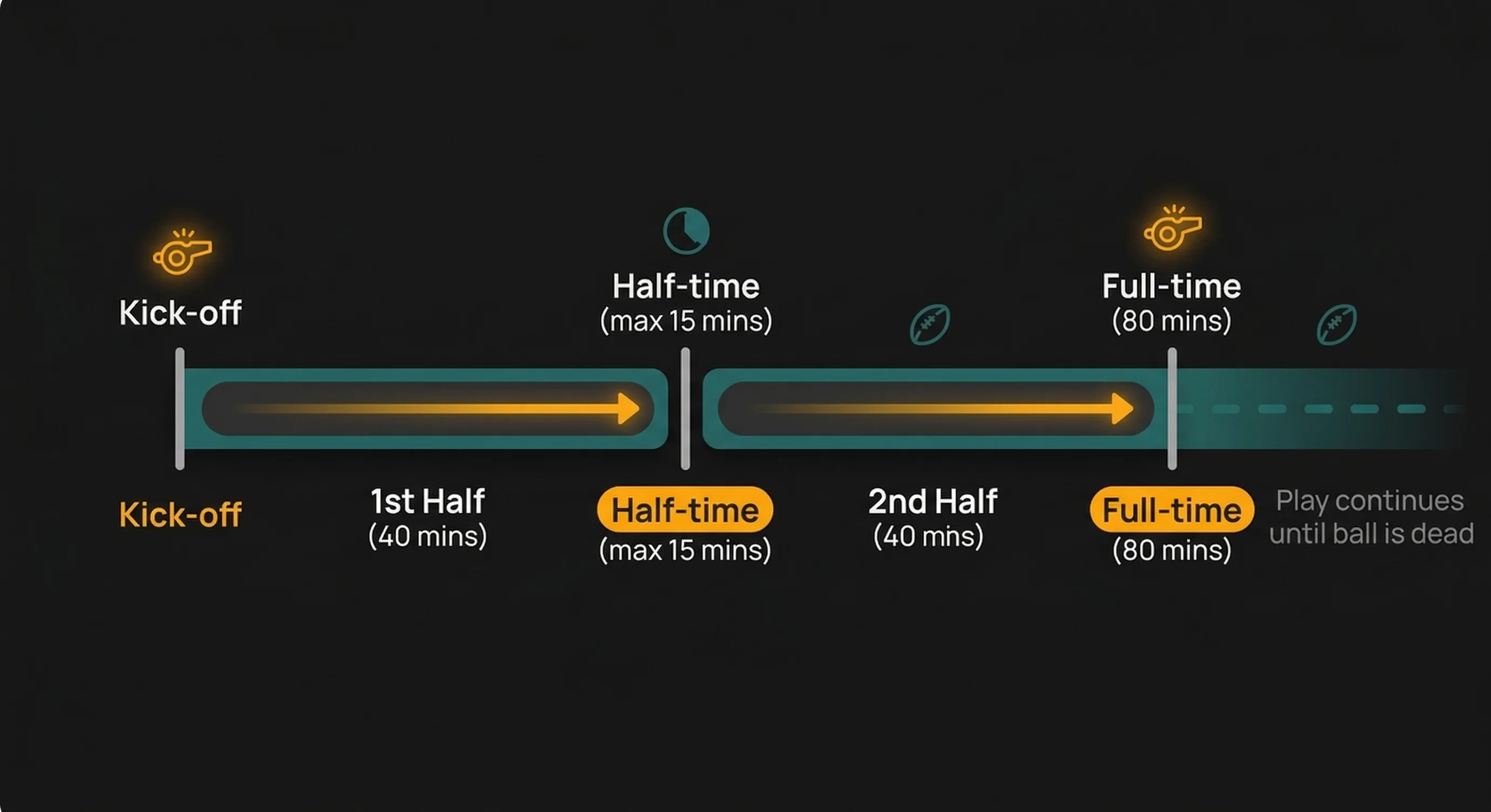 Law 5
Law 5Time
Governs match duration, half-time, time-keeping, and conditions for ending a half.
Read law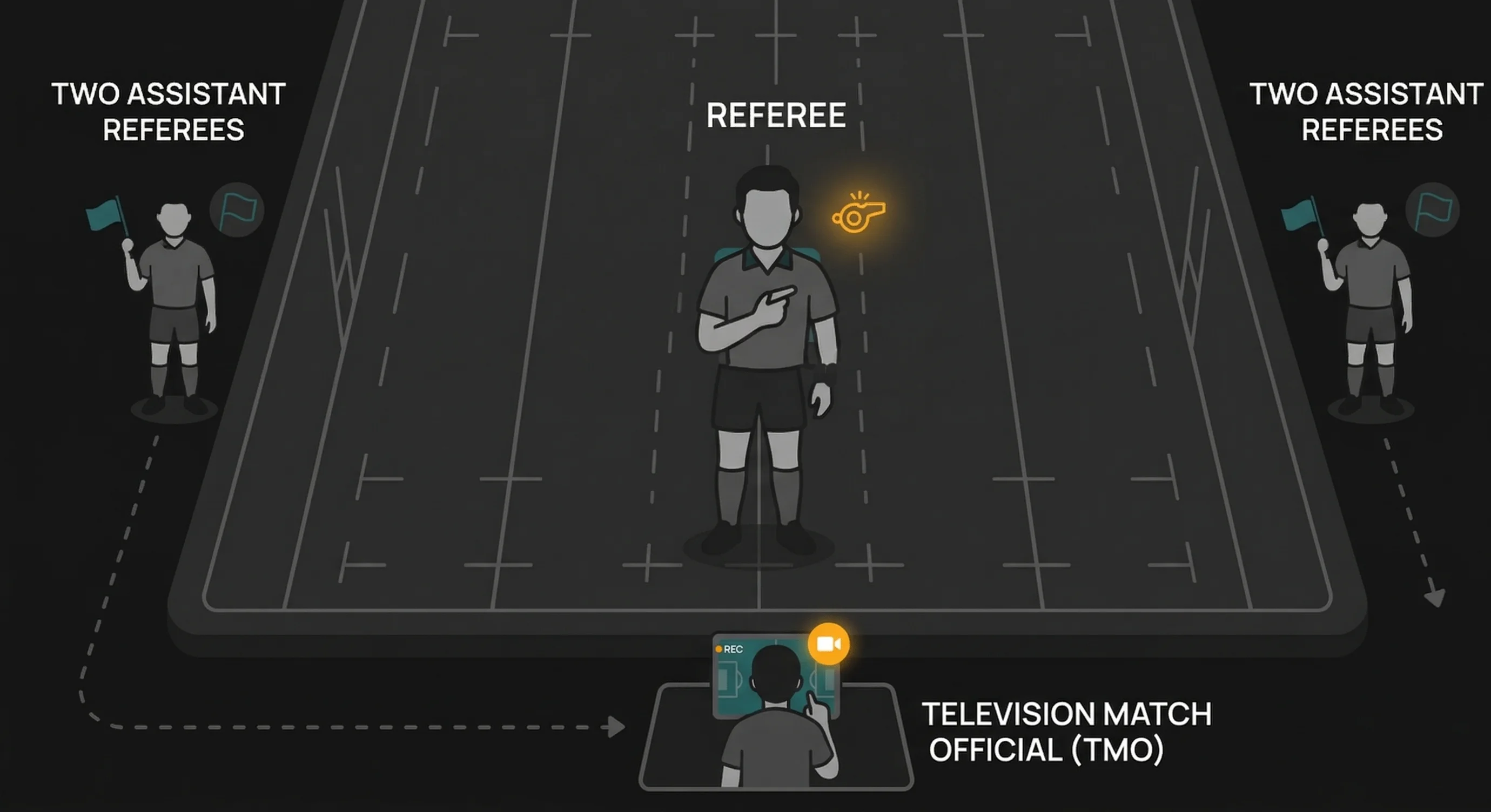 Law 6
Law 6Match Officials
Defines the roles and duties of the referee, assistant referees, touch judges, and TMO.
Read law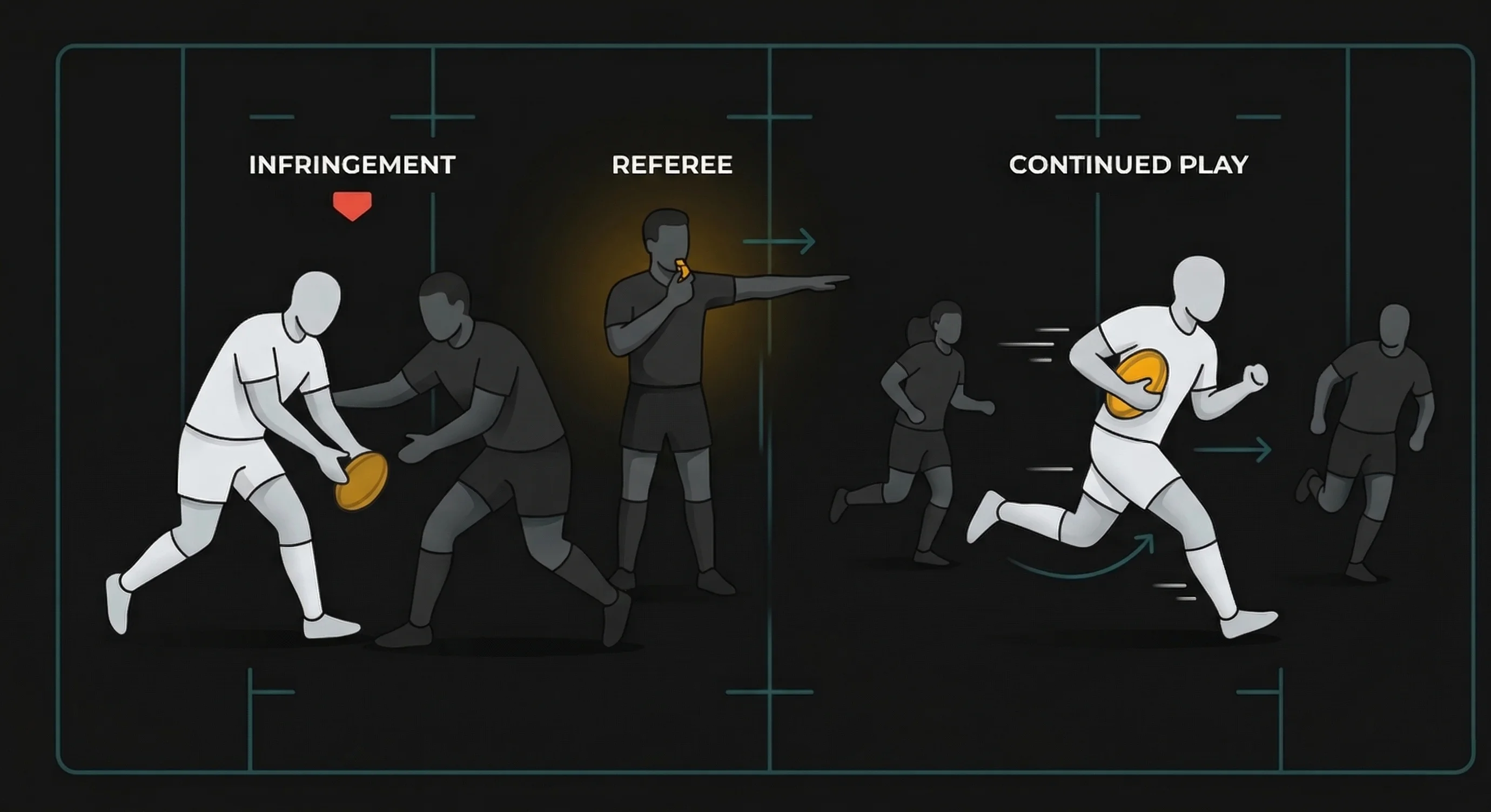 Law 7
Law 7Advantage
Allows play to continue after an infringement if the non-offending team benefits.
Read law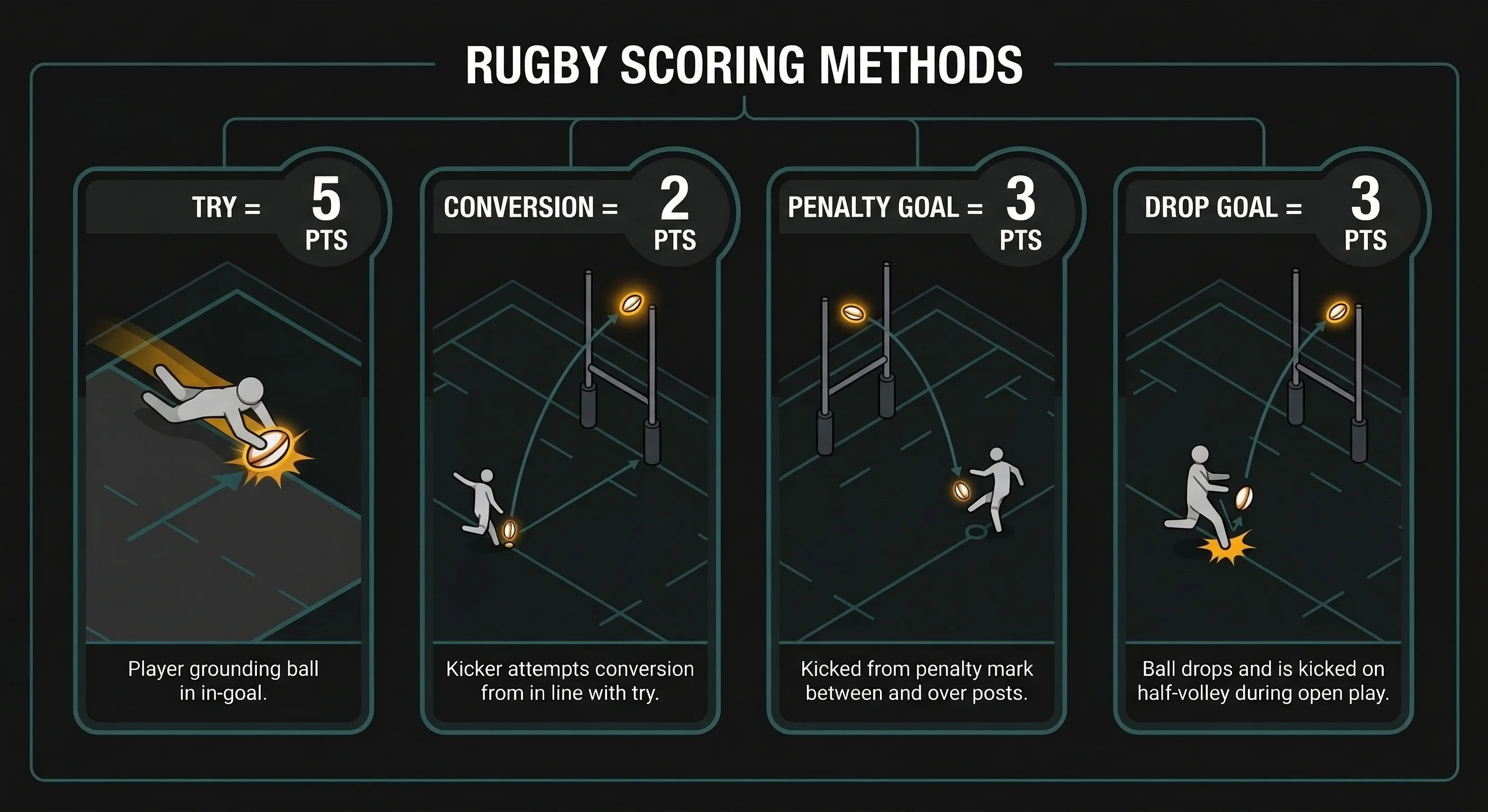 Law 8
Law 8Scoring
Defines how points are scored: tries (5pts), conversions (2pts), penalty goals (3pts), drop goals (3pts), and penalty tries (7pts).
Read law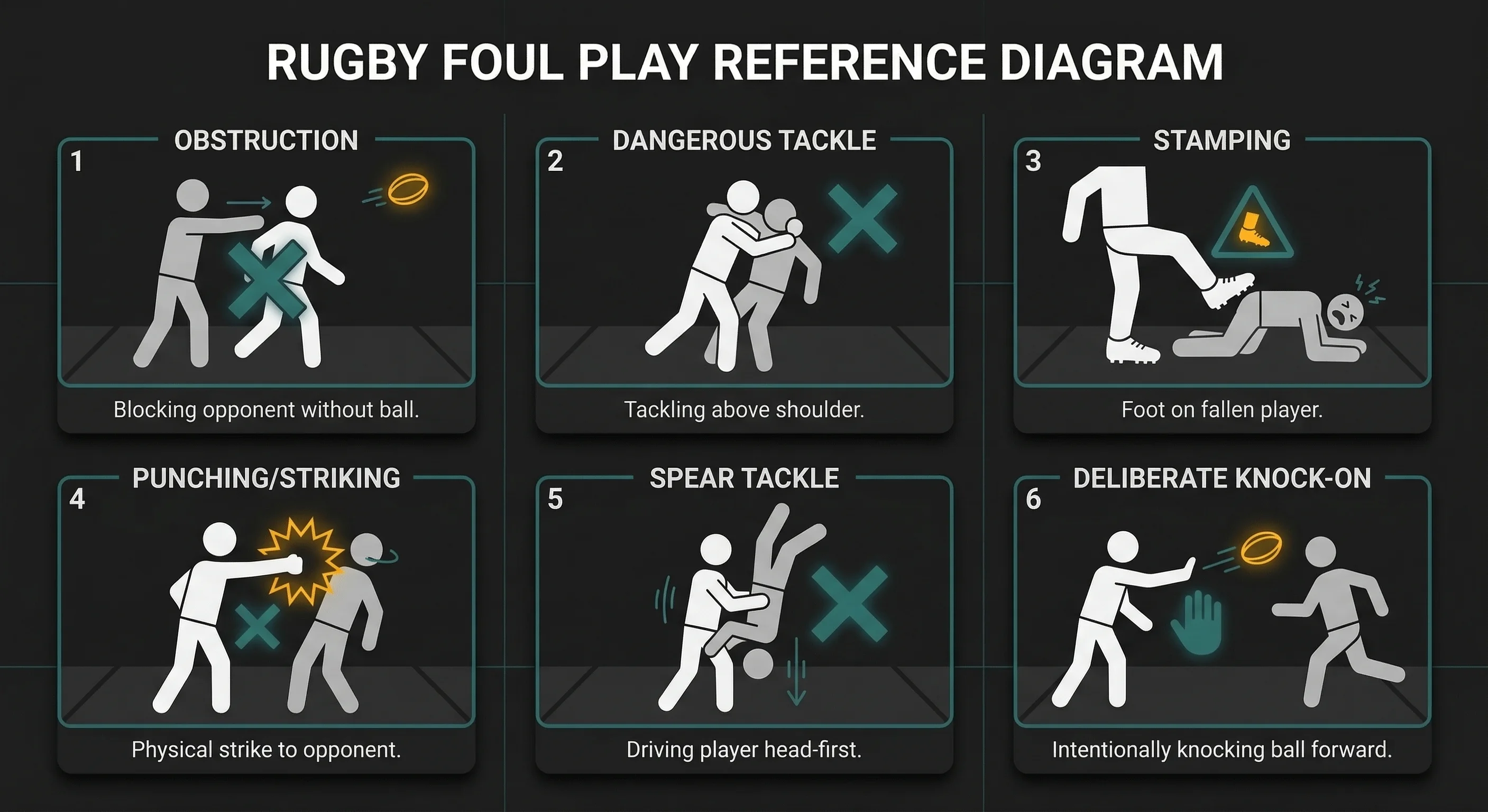 Law 9
Law 9Foul Play
Prohibits obstruction, unfair play, dangerous play, and misconduct. Sanctions include penalties, yellow cards (10-minute suspension), and red cards (permanent dismissal).
Read law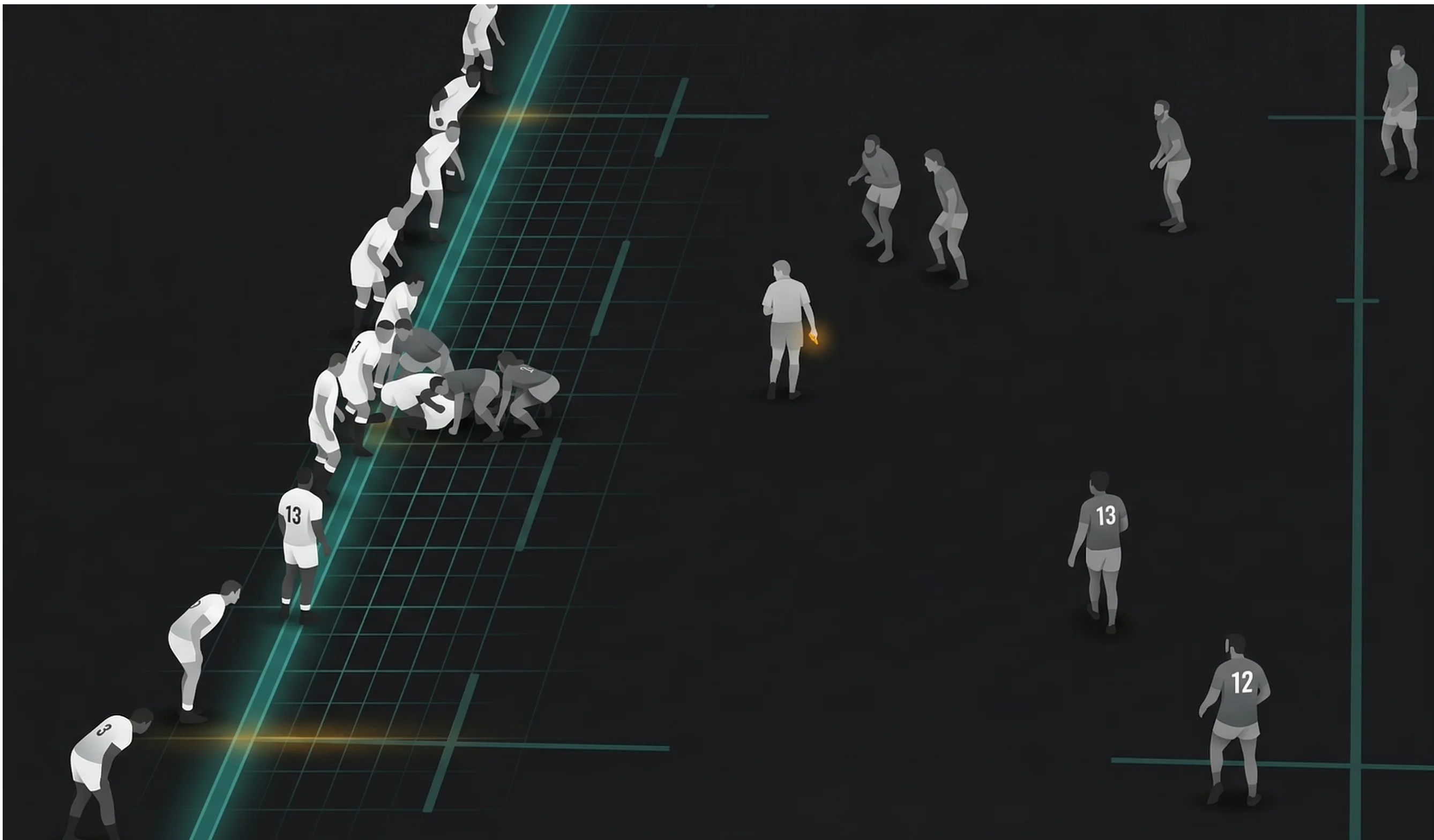 Law 10
Offside and Onside in Open Play
A player is offside if they are in front of the ball when it was last played by a teammate. An offside player must not interfere with play.
Read law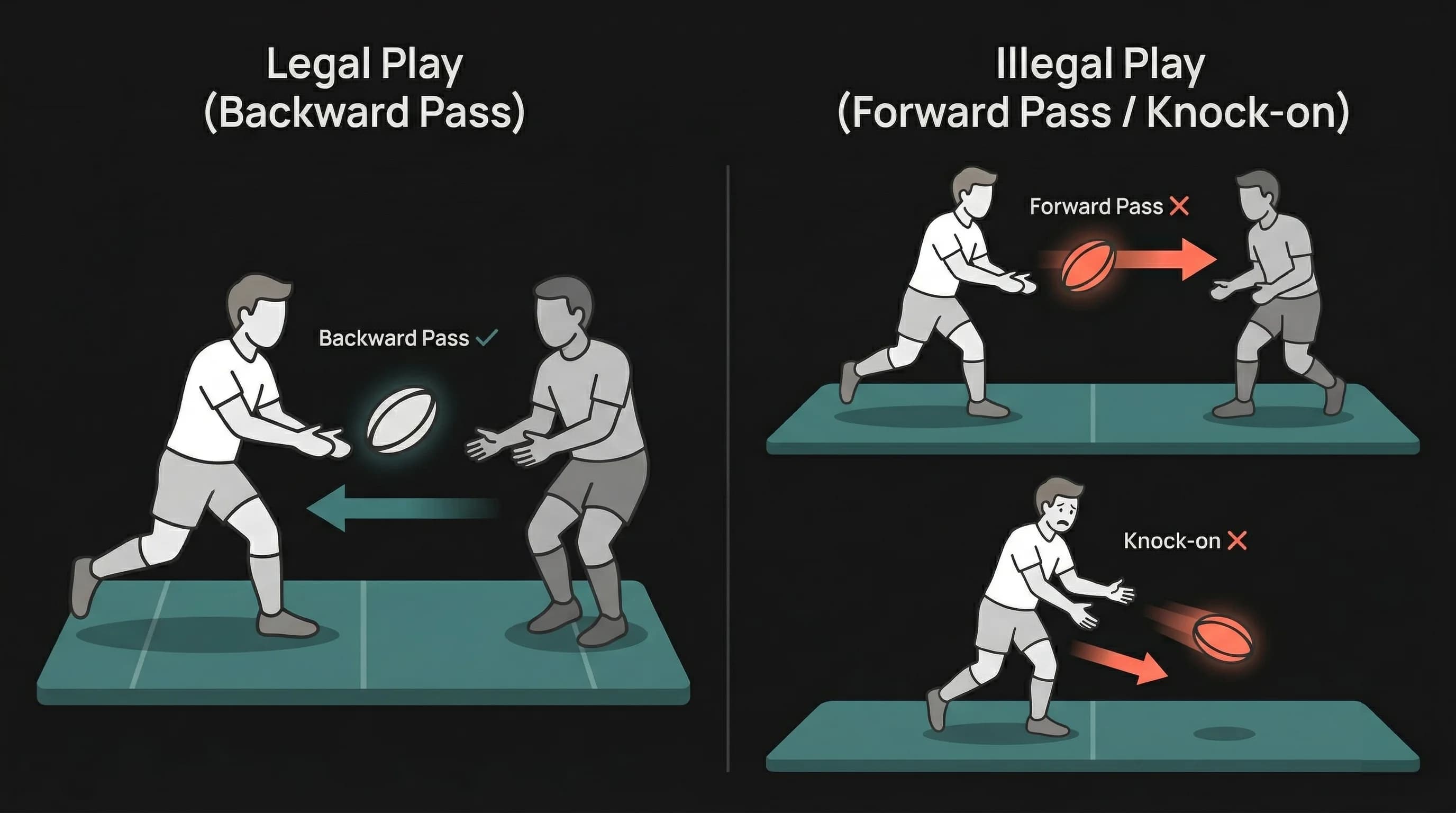 Law 11
Knock Forward or Throw Forward
The ball must not be knocked or thrown forward (toward the opponents' dead-ball line). Accidental knock-ons result in a scrum; intentional ones are penalised.
Read law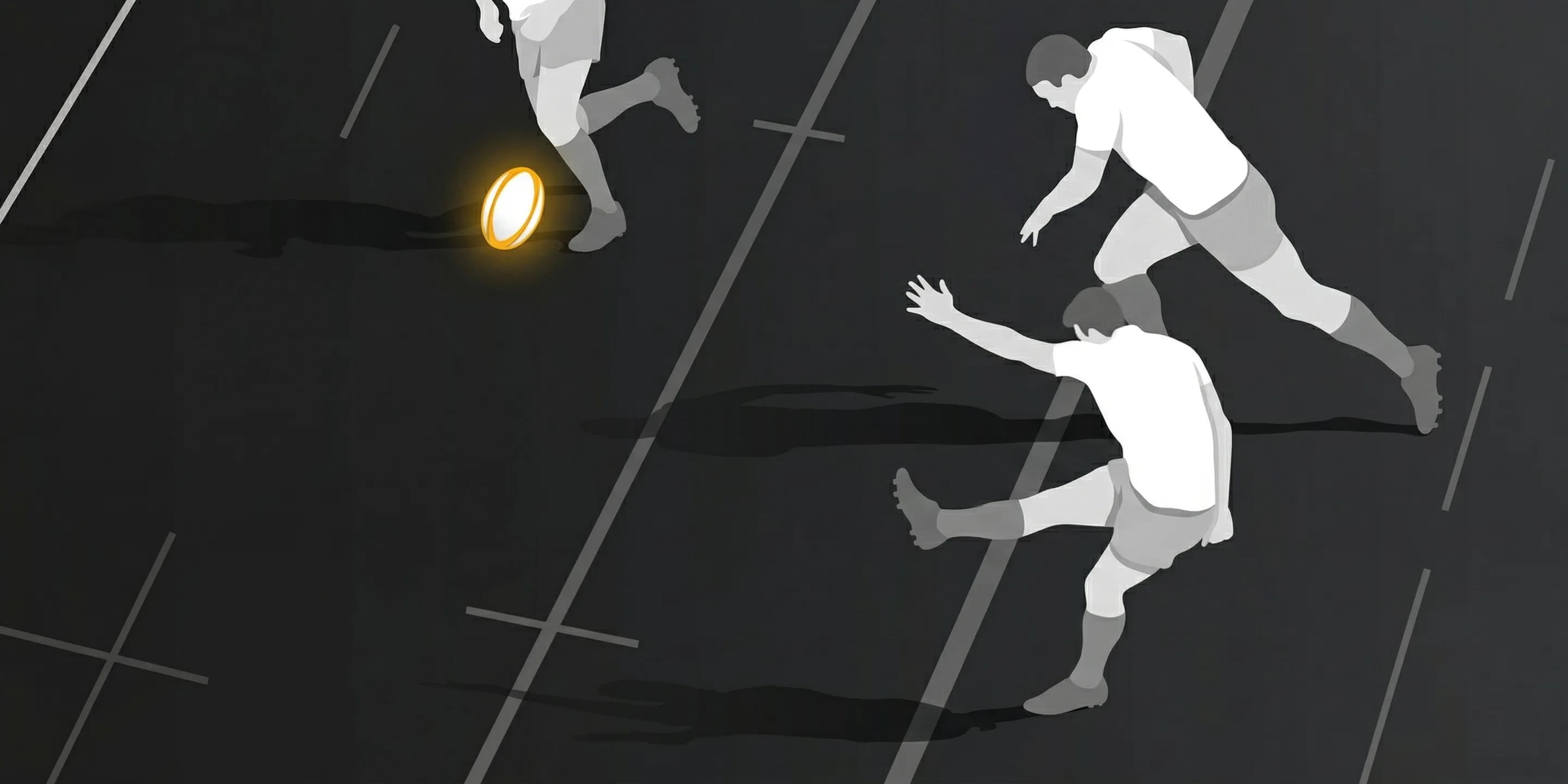 Law 12
Kick-off and Restart Kicks
Specifies how the game is started and restarted after scoring. Kick-offs are drop kicks from the centre; restart kicks follow scoring or the ball going dead.
Read law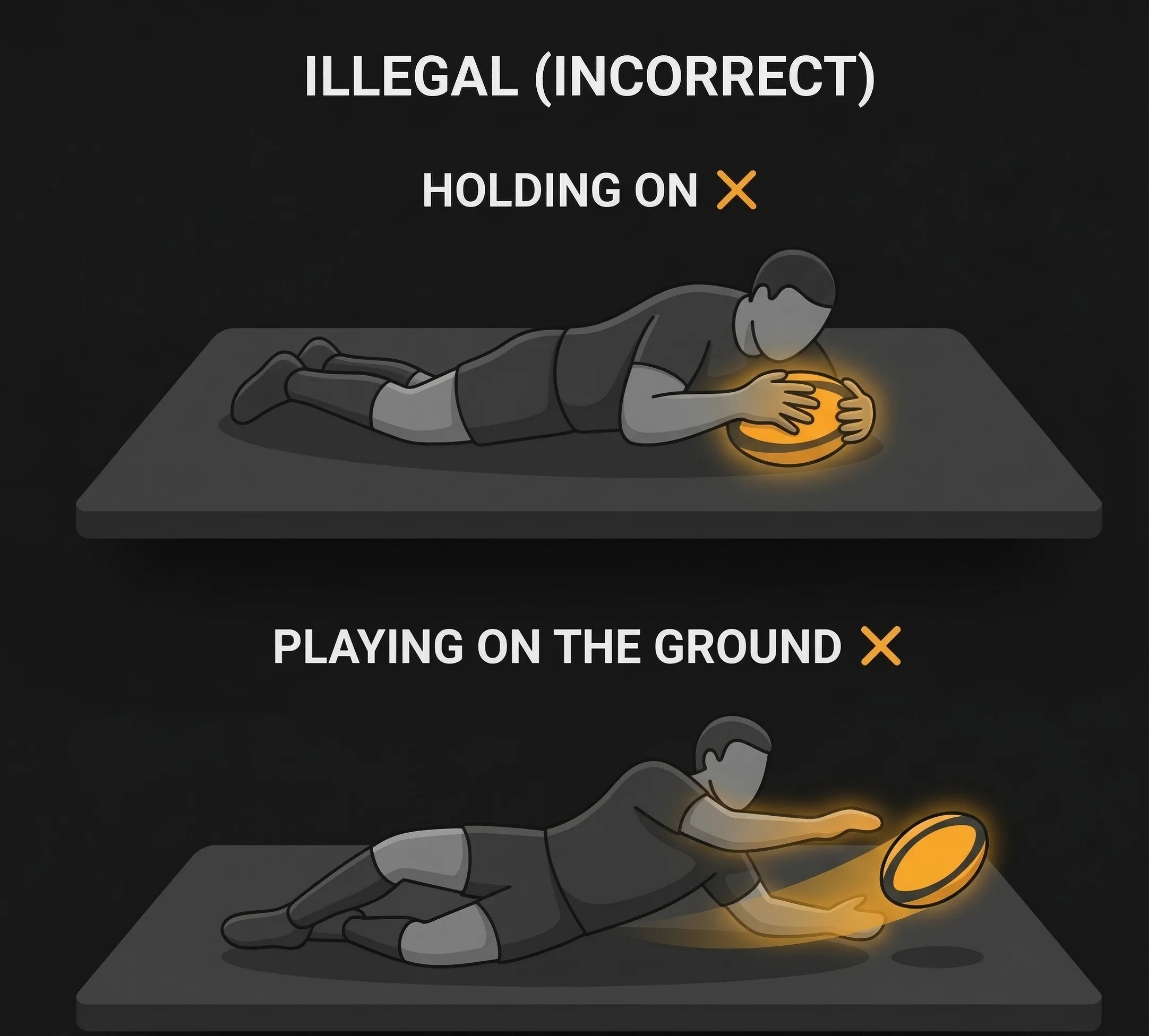 Law 13
Players on the Ground in Open Play
A player who goes to ground with the ball must at once get up, play it without kicking it, or let it go. Players on the ground without the ball are out of the game.
Read law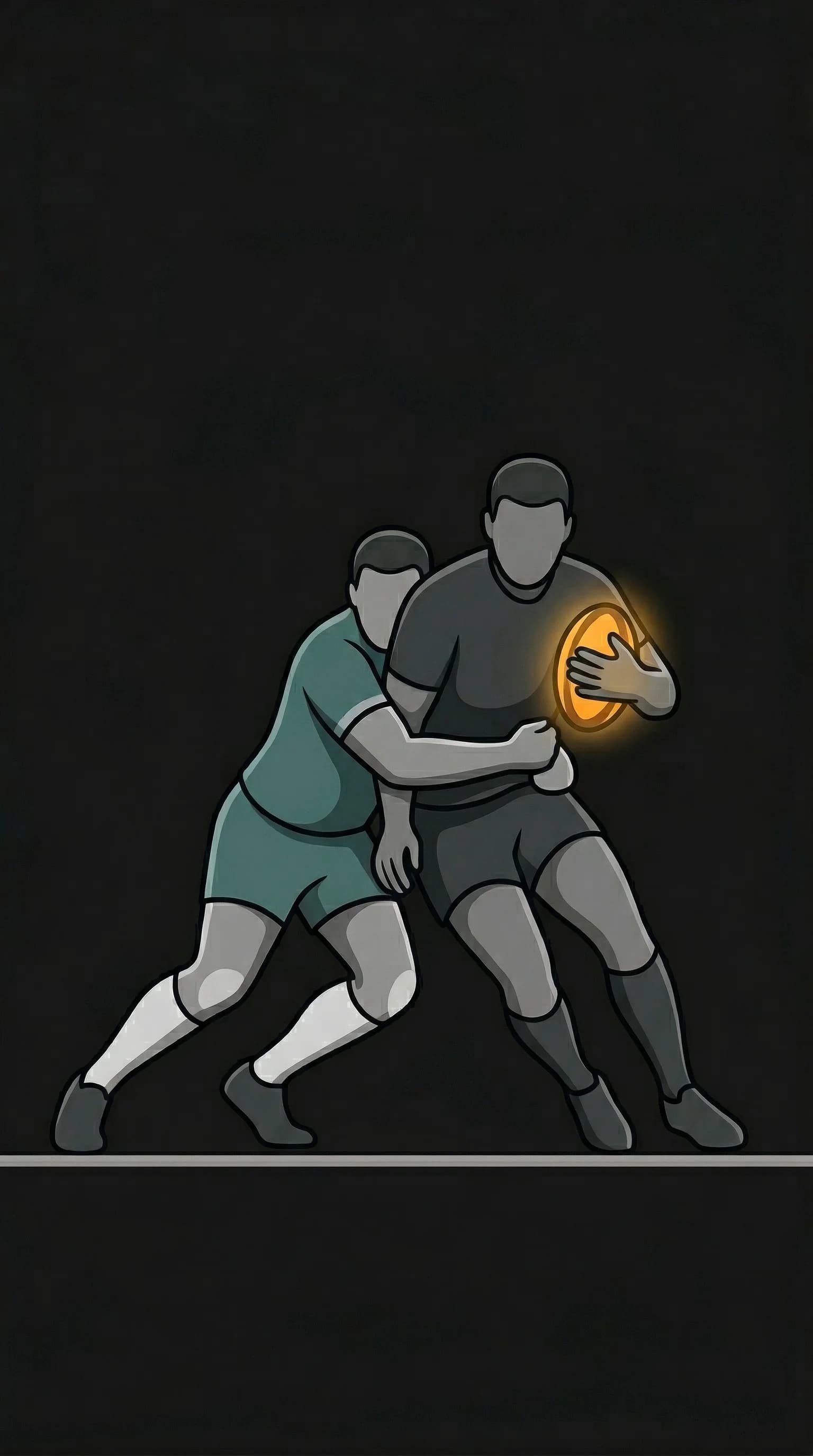 Law 14
Tackle: Ball Carrier Brought to Ground
Defines the tackle, and the duties of the tackler, tackled player, and other players arriving at the tackle. All must act quickly to keep the game moving.
Read law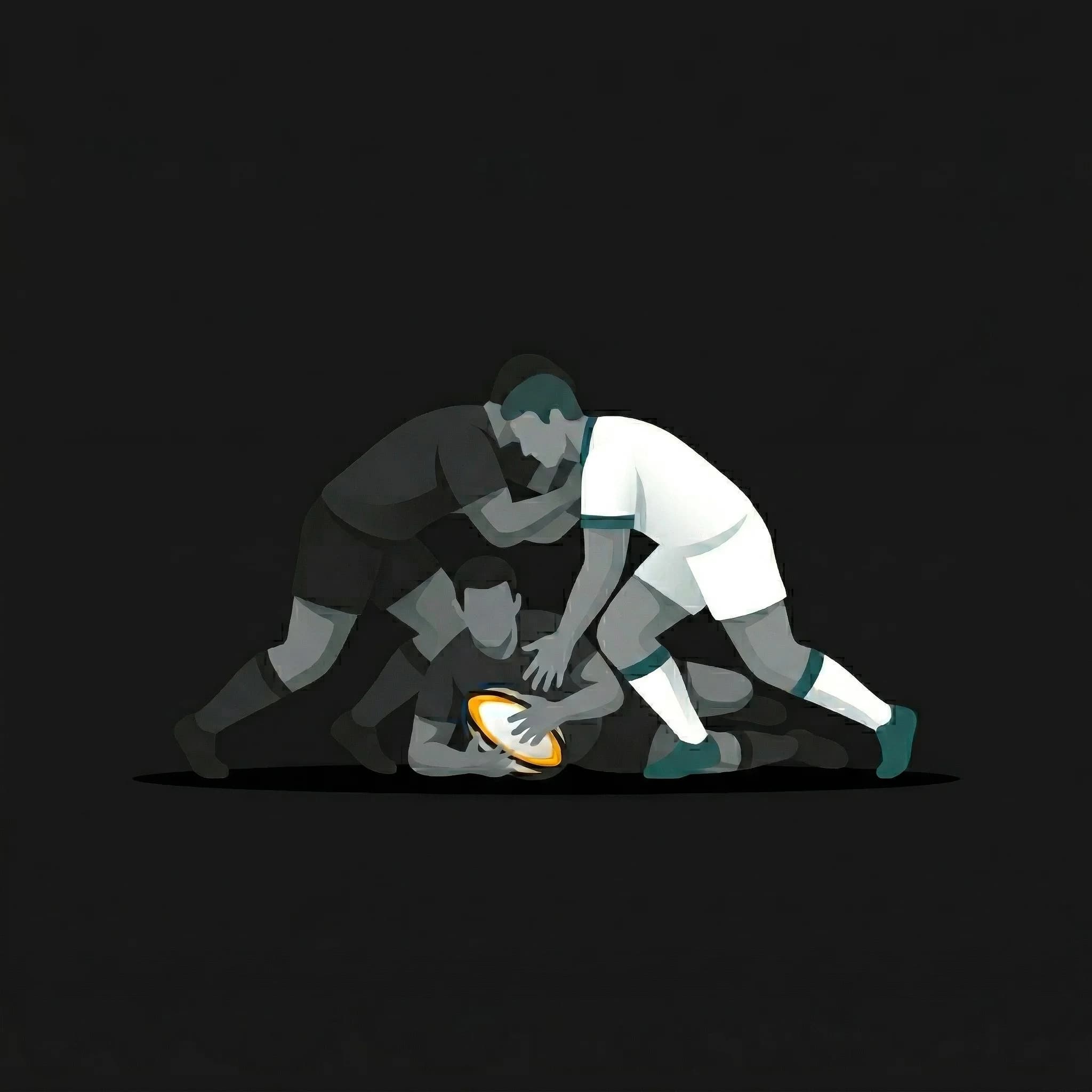 Law 15
Ruck
A ruck forms when at least one player from each team is in contact over the ball on the ground. Players must use their feet to move the ball, not their hands.
Read law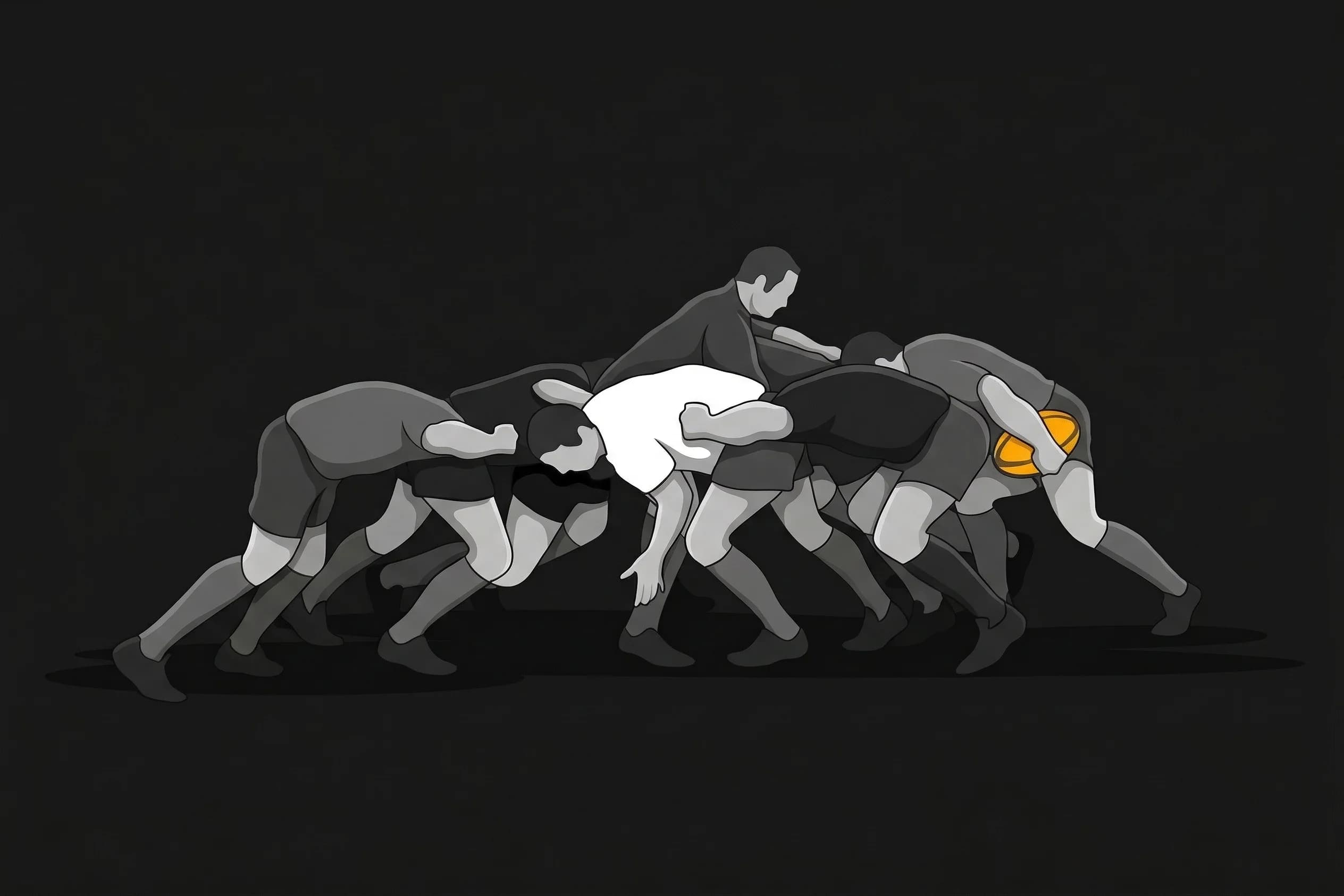 Law 16
Maul
A maul forms when the ball carrier is held by opponents while at least one teammate also binds on. Unlike a ruck, the ball is carried off the ground. The maul must keep moving or the referee calls "use it".
Read law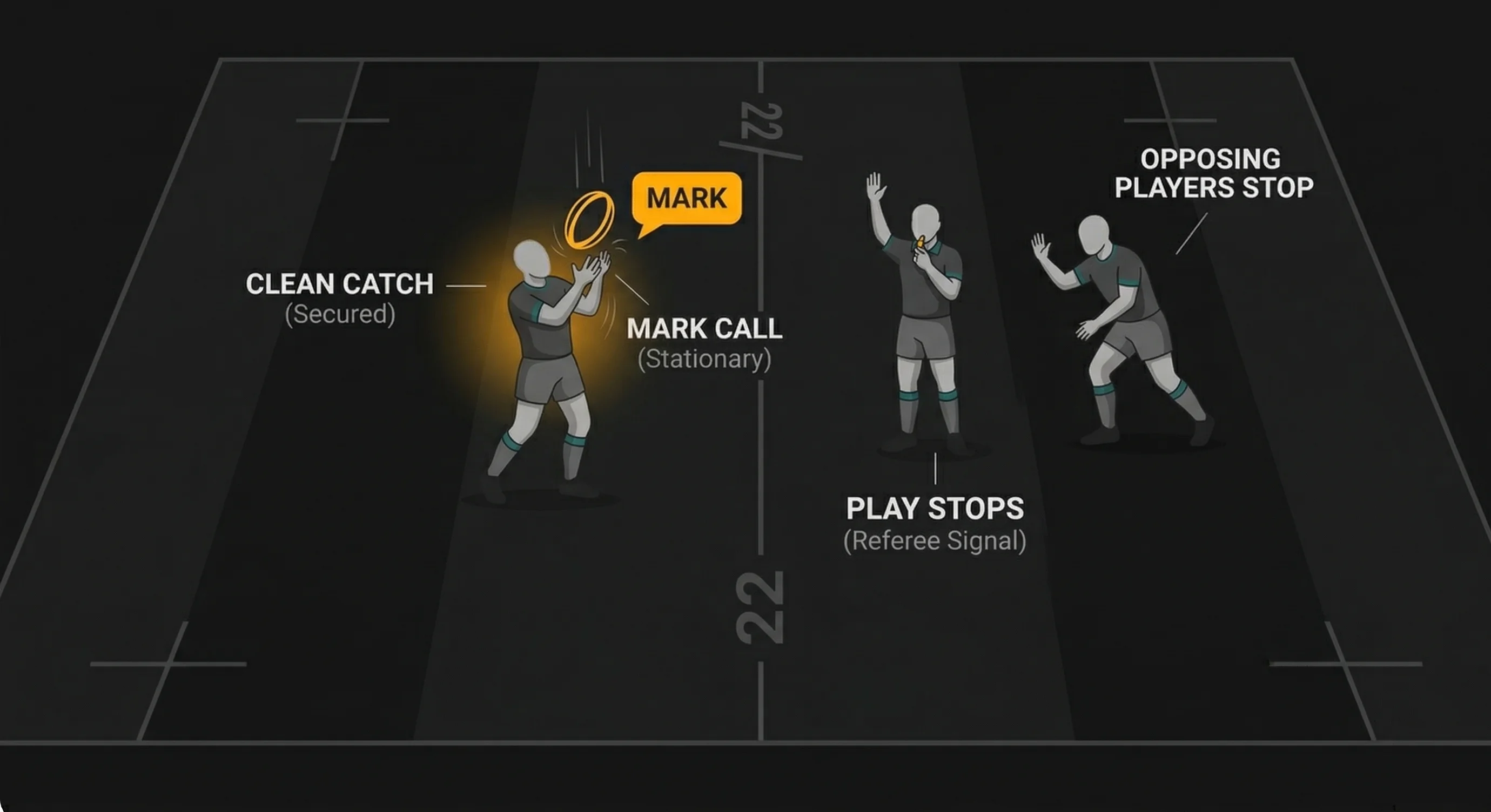 Law 17
Mark
A player who catches an opponent's kick directly in their own 22 or in-goal and calls "mark" wins a free-kick. The referee stops play at once.
Read law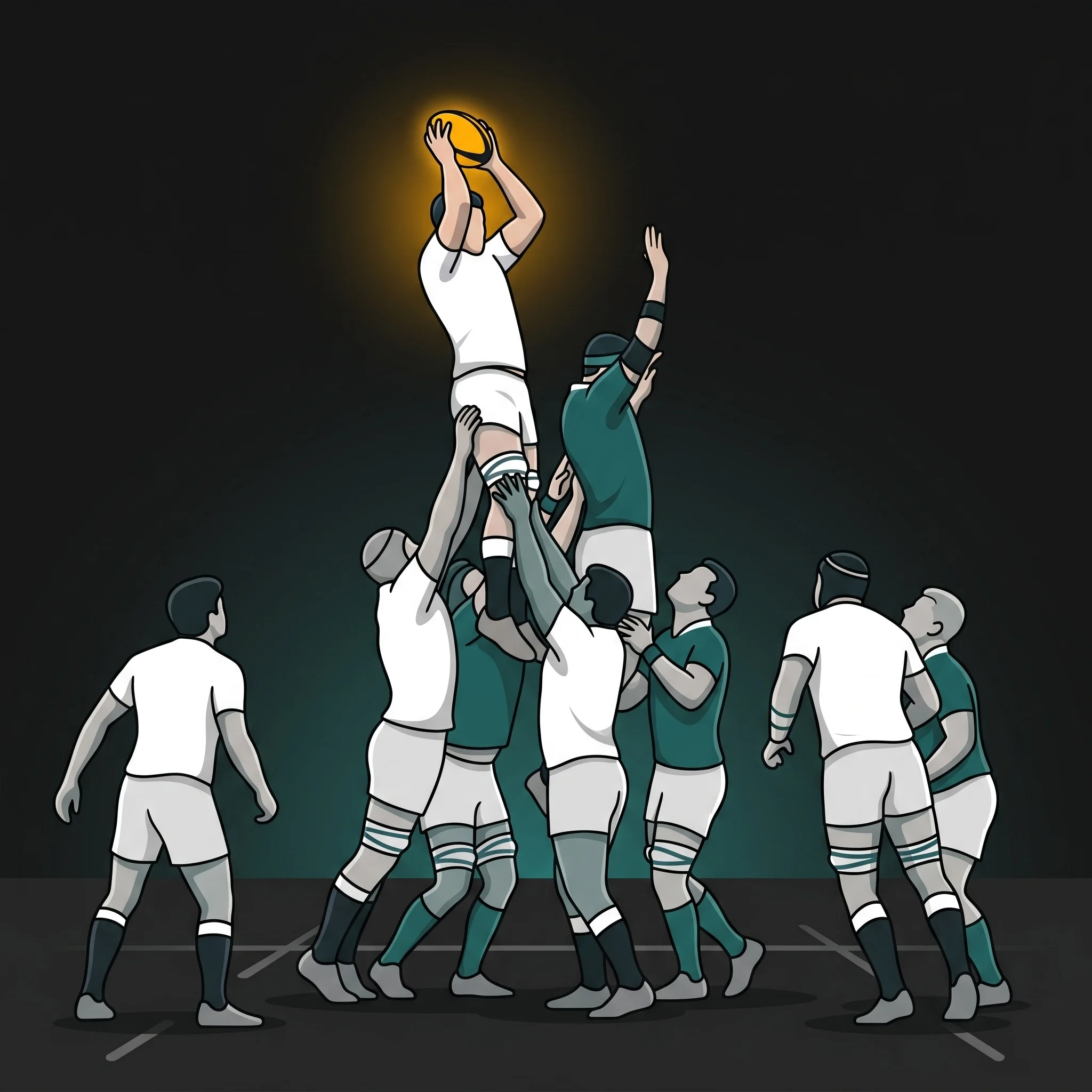 Law 18
Touch, Quick Throw-in and Lineout
Covers when the ball is in touch, how to take a quick throw-in, and all lineout rules including formation, throw-in, offside, and lifting.
Read law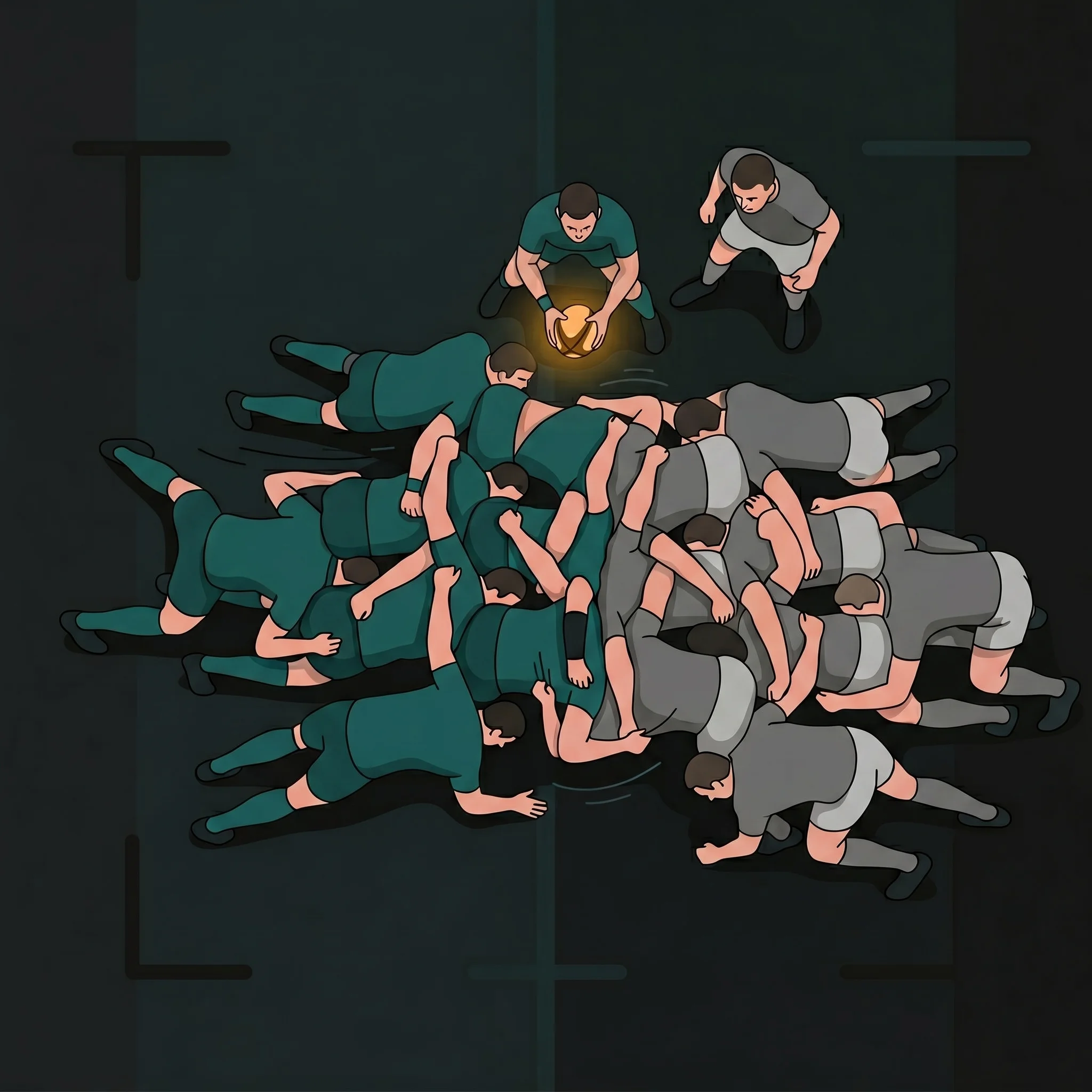 Law 19
Scrum
A scrum is a set piece where 8 forwards from each team bind together and contest for the ball. It is used to restart play after minor infringements. The engagement sequence is: crouch, bind, set.
Read law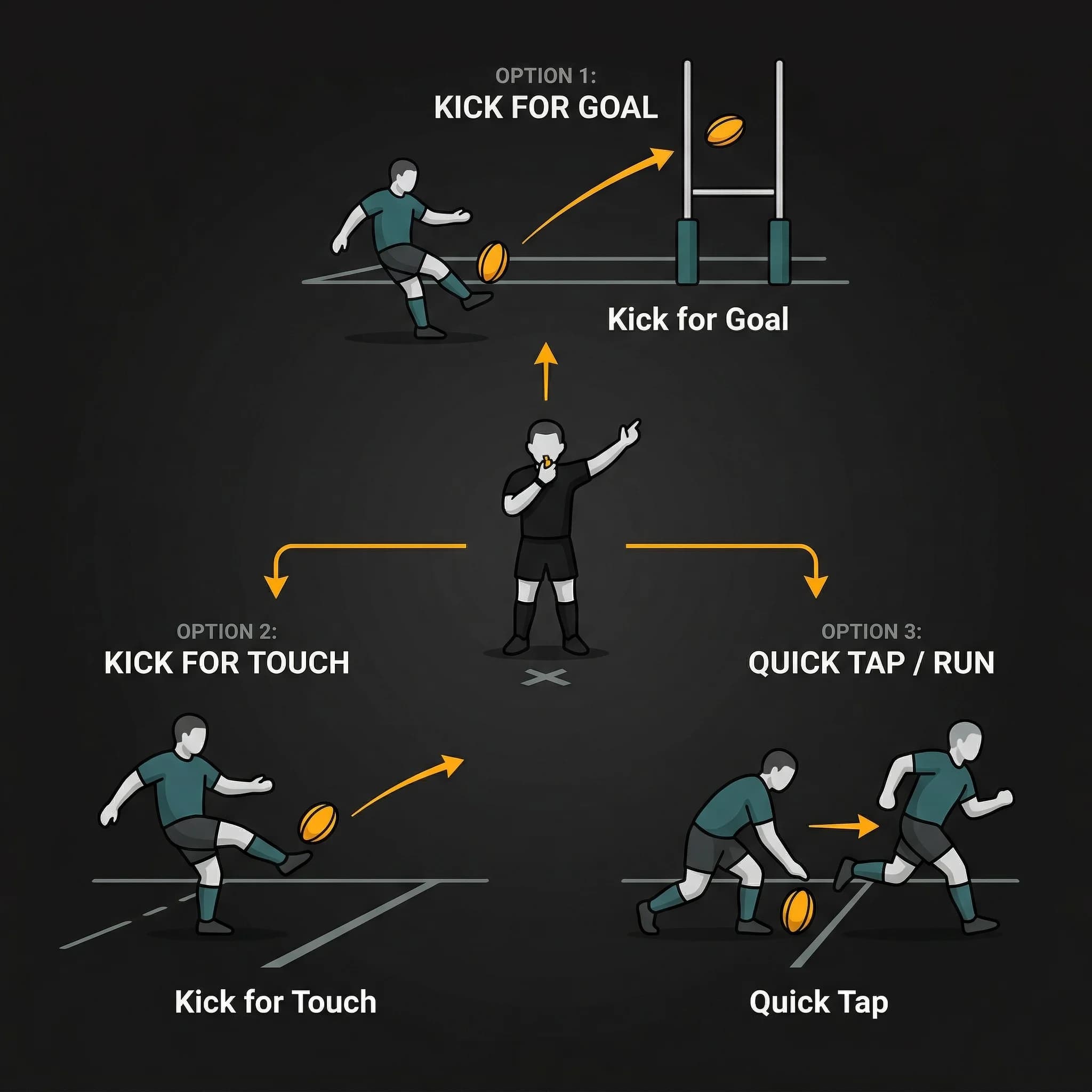 Law 20
Penalty and Free-Kick
Penalties are awarded for serious infringements and allow the kicker to attempt a goal or kick to touch. Free-kicks are for minor infringements and cannot score directly.
Read law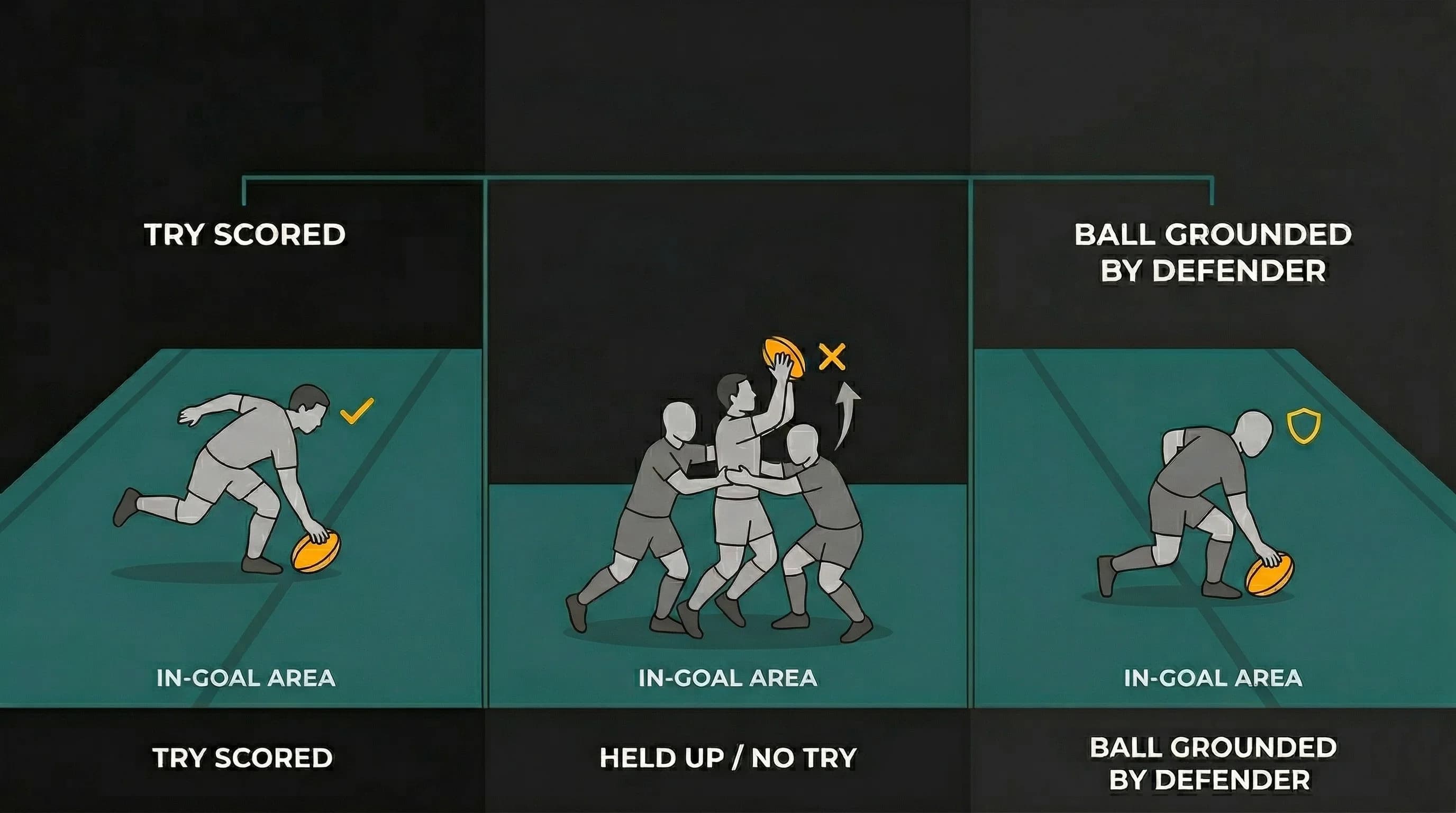 Law 21
In-Goal
The in-goal area is behind each goal-line. Scoring a try requires grounding the ball in the opposition in-goal. This law defines grounding, touch-in-goal, the dead-ball line, and what happens in various situations.
Read law