
Referee Guide
Rugby Referee Signals
47 referee and touch-judge signals. What each gesture means, and when it is used.
Scoring
4 signals
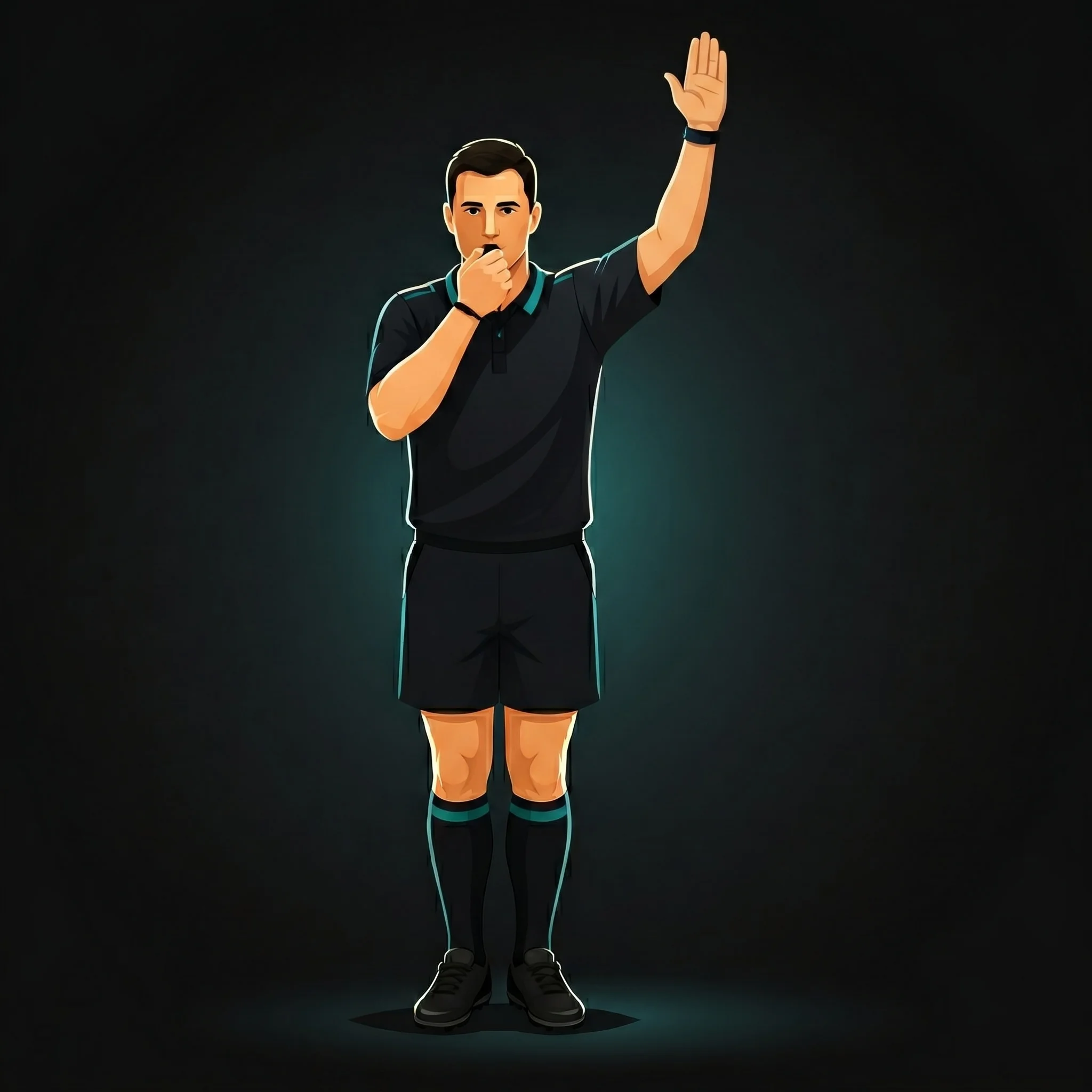
Try
Referee points to the centre of the goal area with one arm extended, then blows the whistle.
When used: Awarded when a player grounds the ball in the opponents' in-goal area.
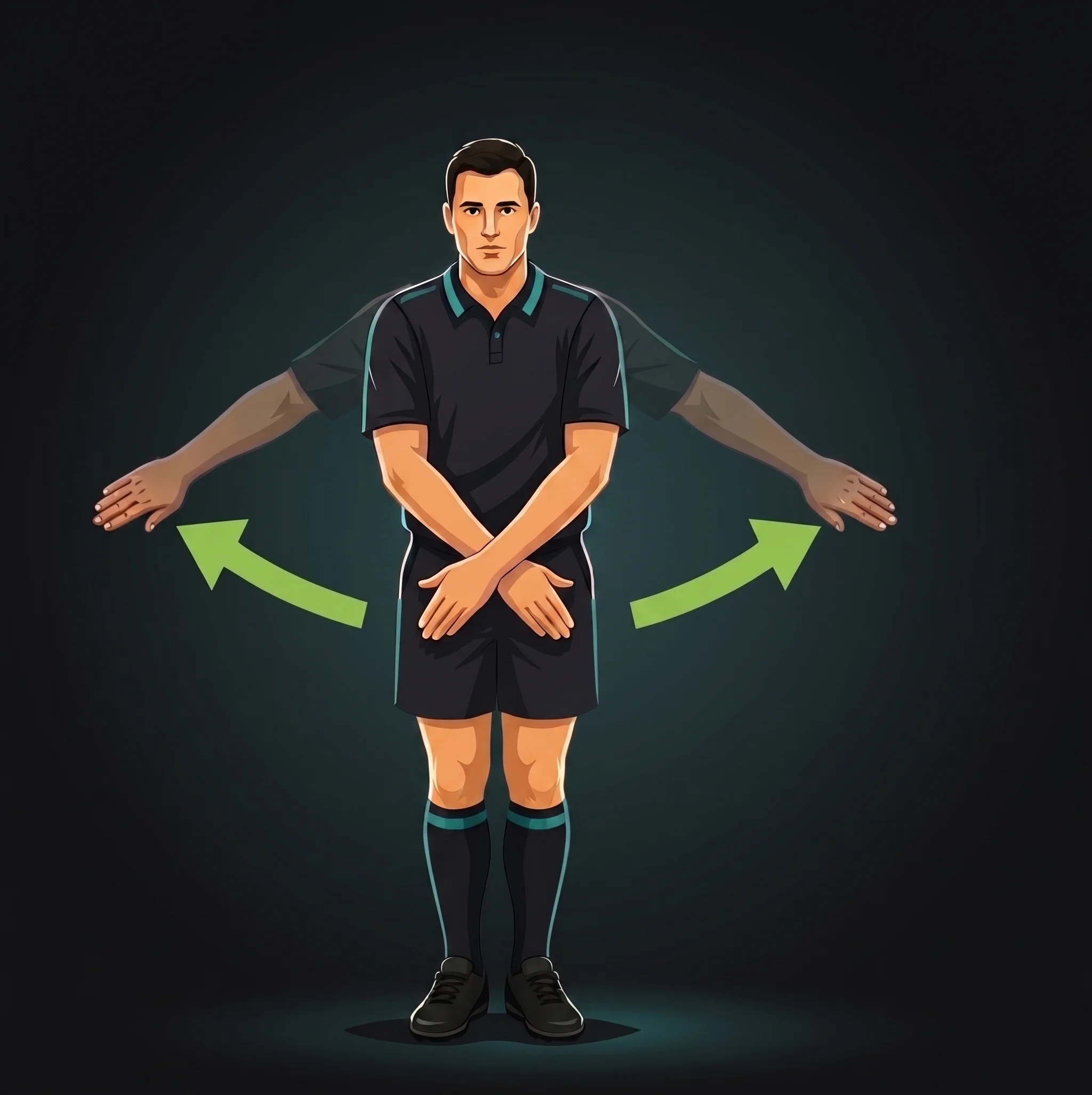
No Try
Referee waves both arms across the body in an X shape, then shakes the head.
When used: Signals that a try has been disallowed, e.g. due to a knock-on or foot in touch.
Penalty Try
Referee points to the centre of the goal posts and announces "Penalty Try".
When used: Awarded when foul play by the defending team stops a try that would probably have been scored. The offending player must also be shown a yellow or red card.
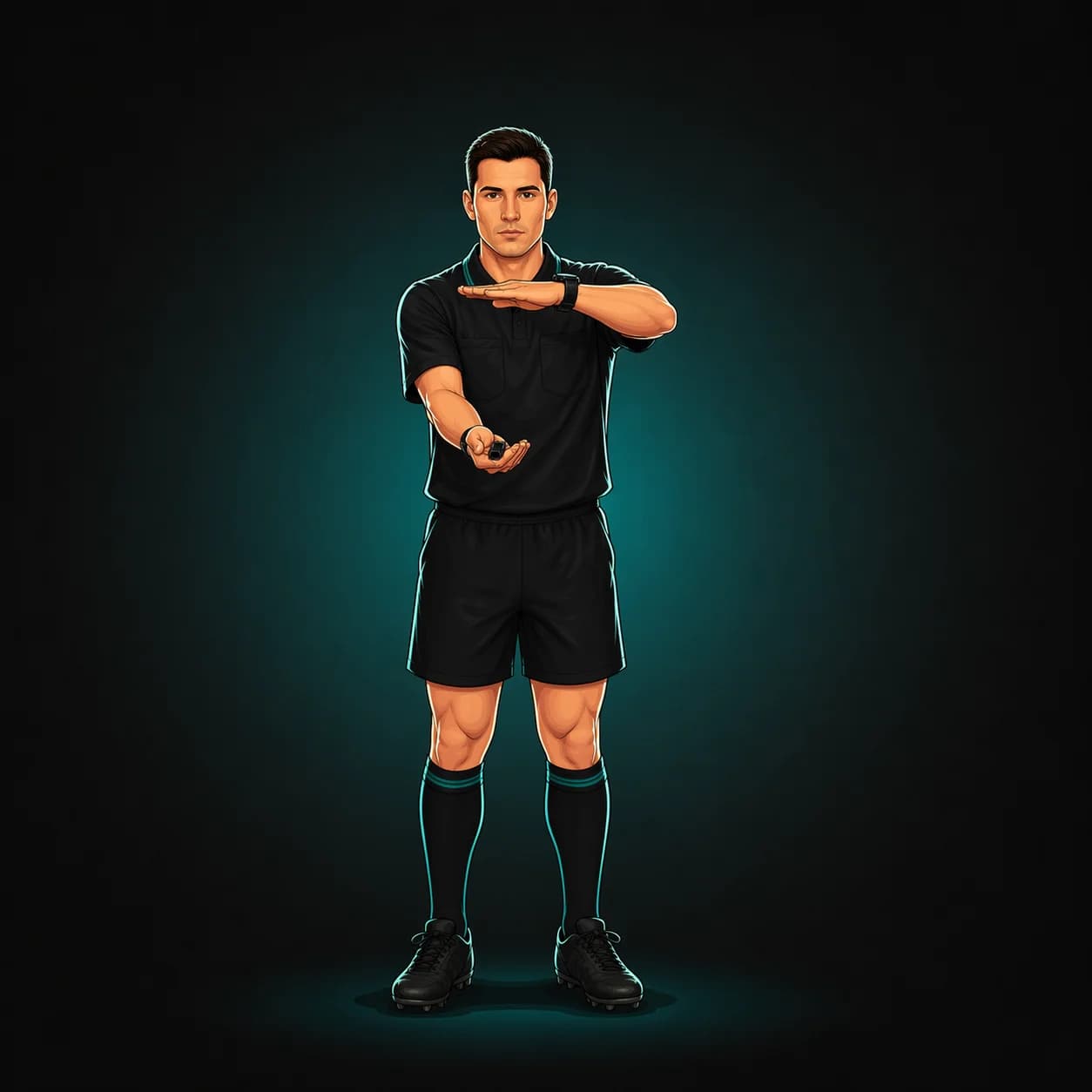
Ball Held Up In-Goal
Referee raises both arms horizontally above the head to indicate the ball was held up and no try is awarded.
When used: Used when a ball carrier in in-goal is held up so they cannot ground the ball. No try is scored, and play restarts with a try line drop-out or a 5-metre scrum, depending on how the ball got into in-goal.
Kick-off & Restarts
1 signal
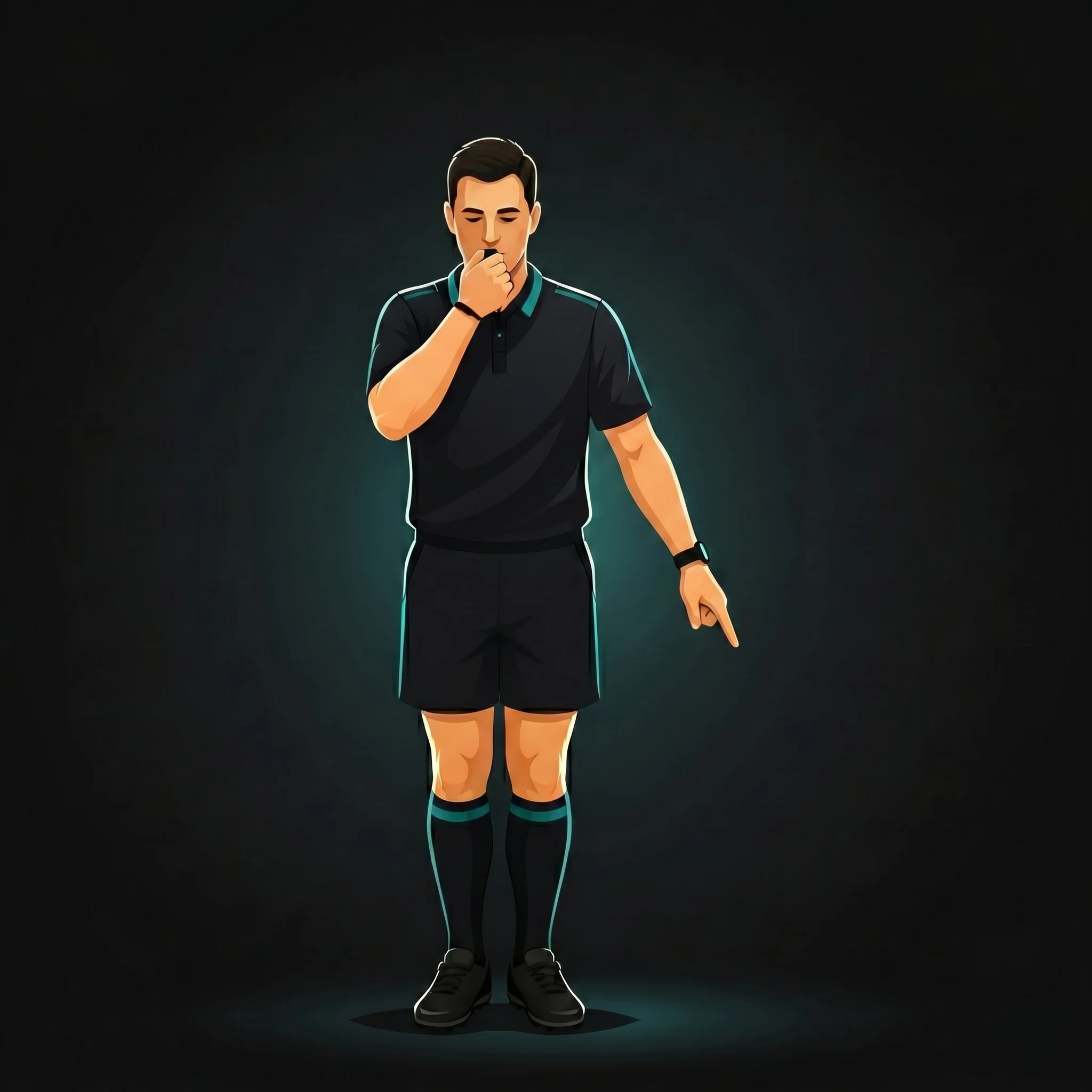
Drop-Out
Referee extends both arms horizontally at shoulder height, palms facing down, pointing toward the 22-metre line.
When used: Restarts play with a drop kick by the defending team after the ball is made dead in their in-goal without a score. The same signal is used for a 22-metre drop-out and a try line drop-out.
Penalties & Advantage
3 signals
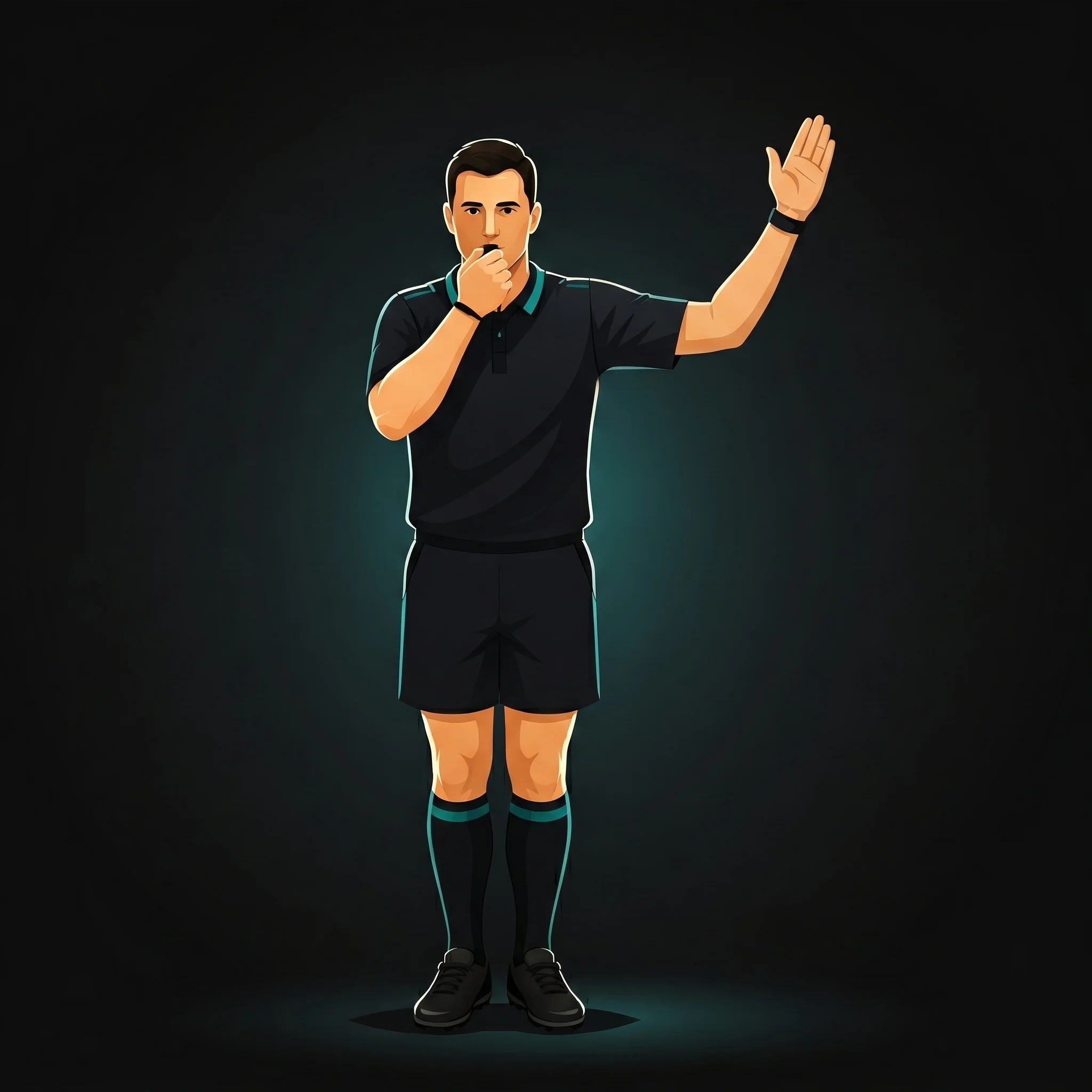
Penalty Kick
Referee raises one arm above the head and points it horizontally in the direction of attack, indicating the non-offending team's direction.
When used: Awarded for a deliberate or serious infringement of the laws.
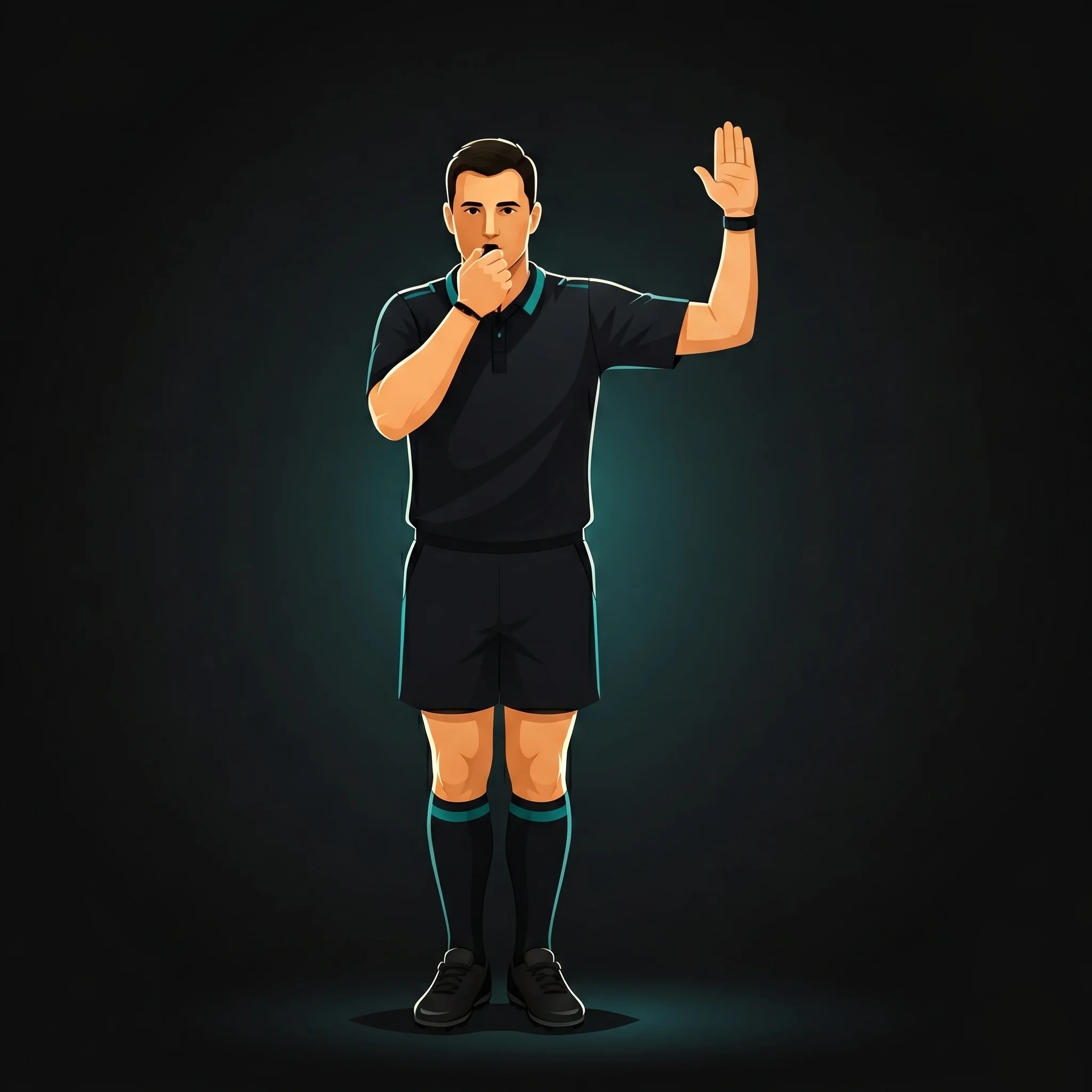
Free Kick
Referee raises one arm and bends the elbow so the forearm forms an "L" shape, pointing in the direction of attack.
When used: Awarded for a lesser infringement (e.g. incorrect scrum engagement, lineout fault). Cannot score directly with a drop goal.
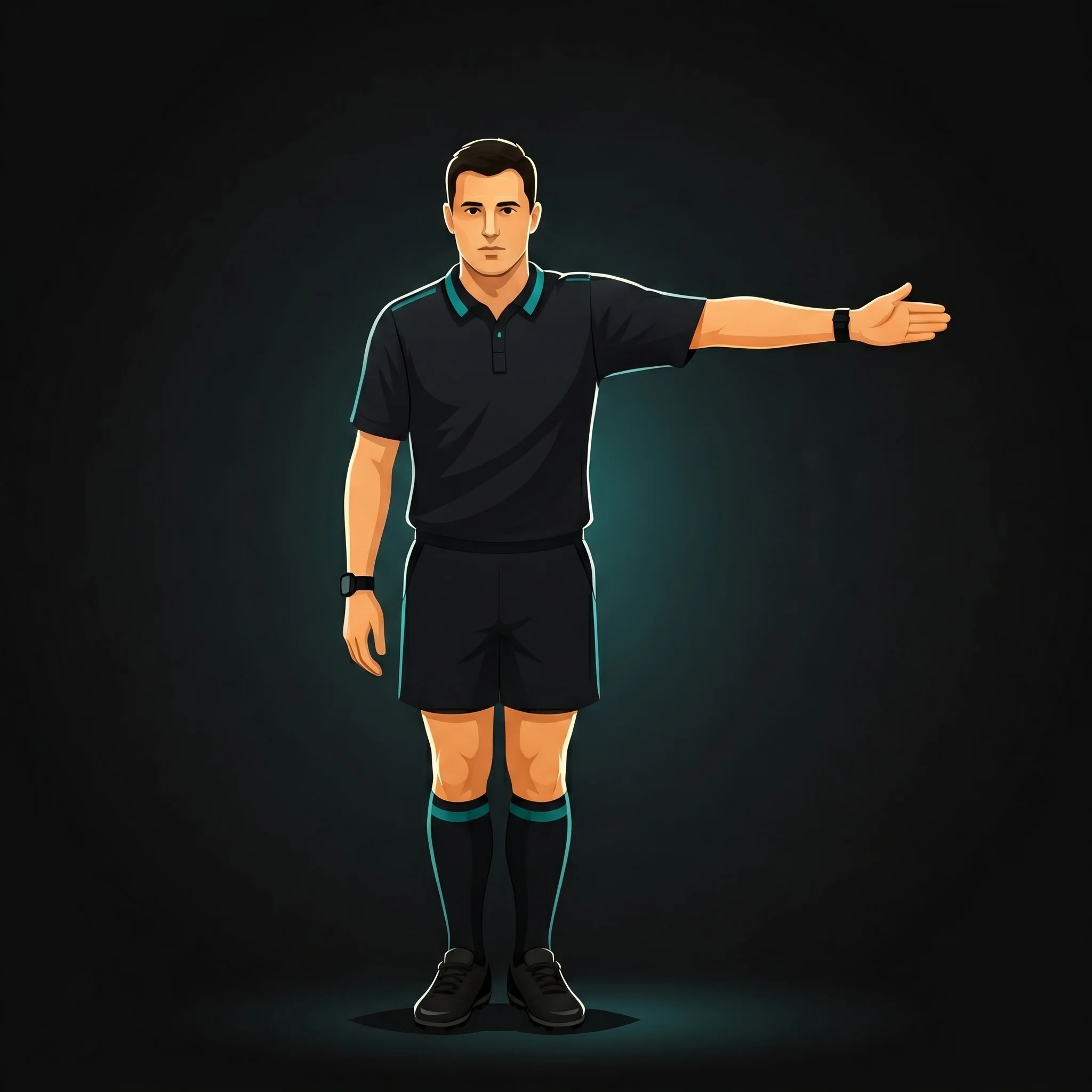
Advantage
Referee extends one arm horizontally at waist height, pointing in the direction of attack for the non-offending team.
When used: Signals the referee is playing advantage following an infringement. Held until advantage is gained or the referee calls "No advantage".
Scrums
5 signals
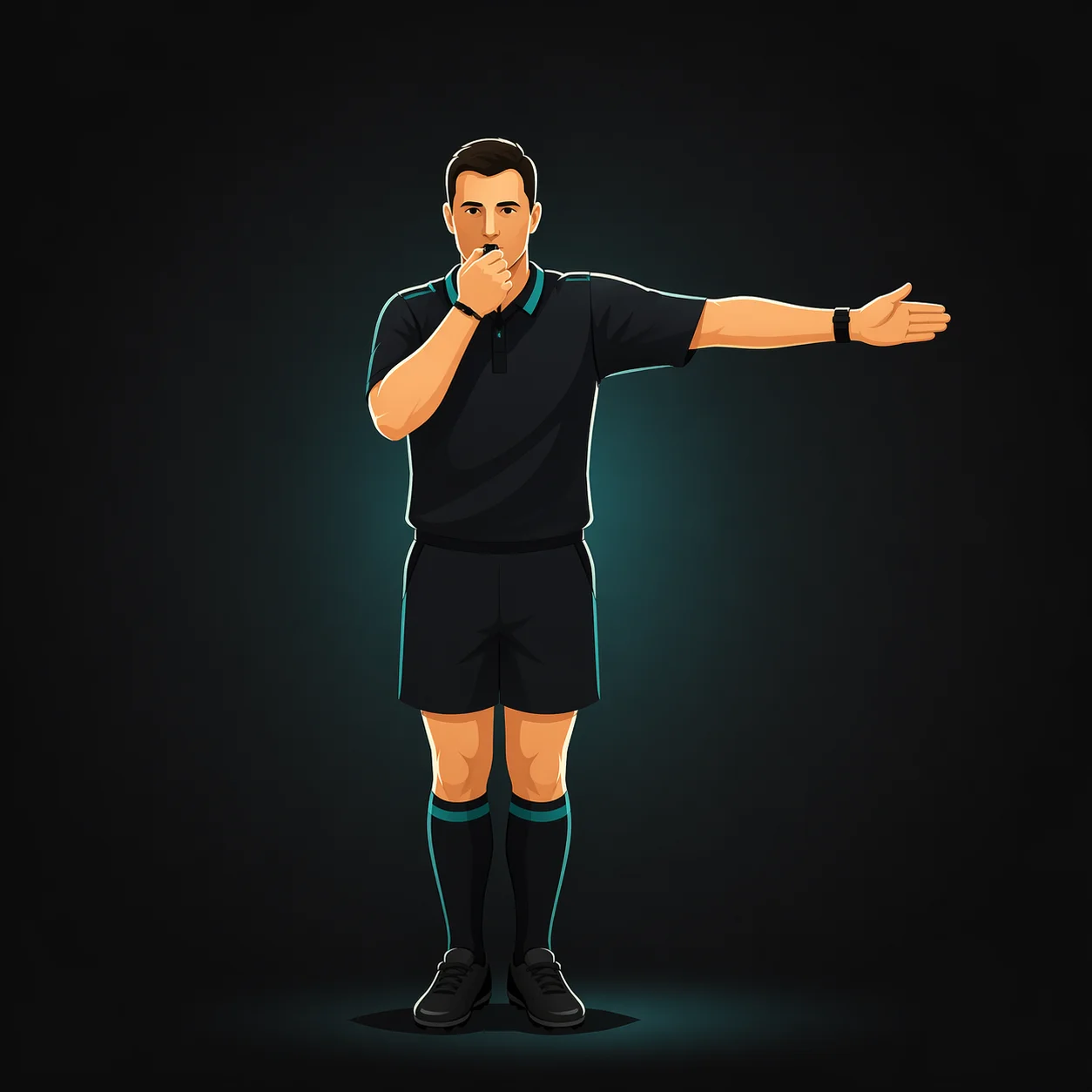
Scrum Awarded
Referee rotates both fists in circles in front of the body, then points in the direction of attack for the team awarded the scrum.
When used: Indicates a scrum has been awarded. Also used to call for a scrum reset.
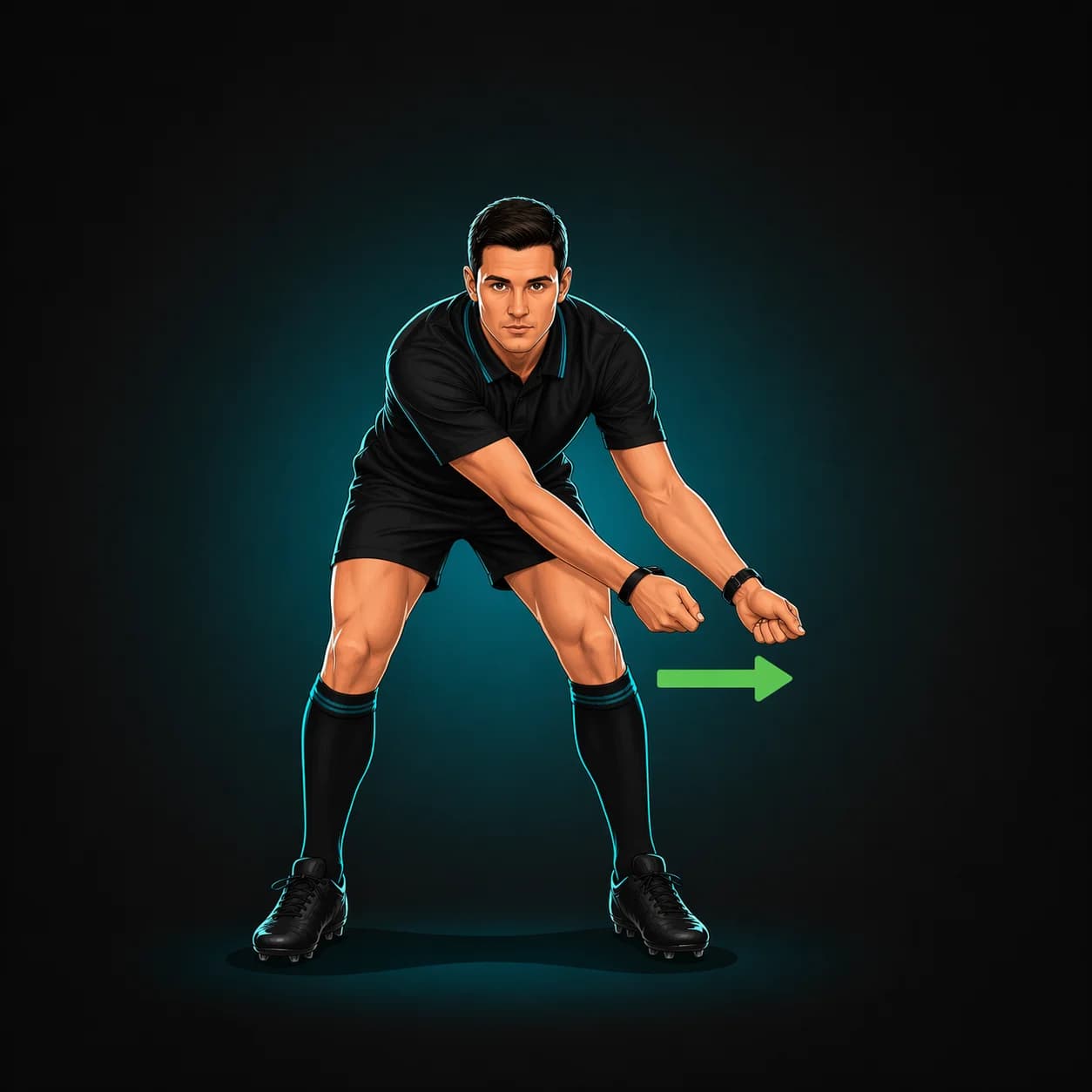
Throw Not Straight (Scrum)
Referee extends one arm forward, then moves it across the body in a horizontal arc to the side.
When used: Awarded when the ball is not thrown straight into the scrum tunnel. Free kick to the non-offending team.
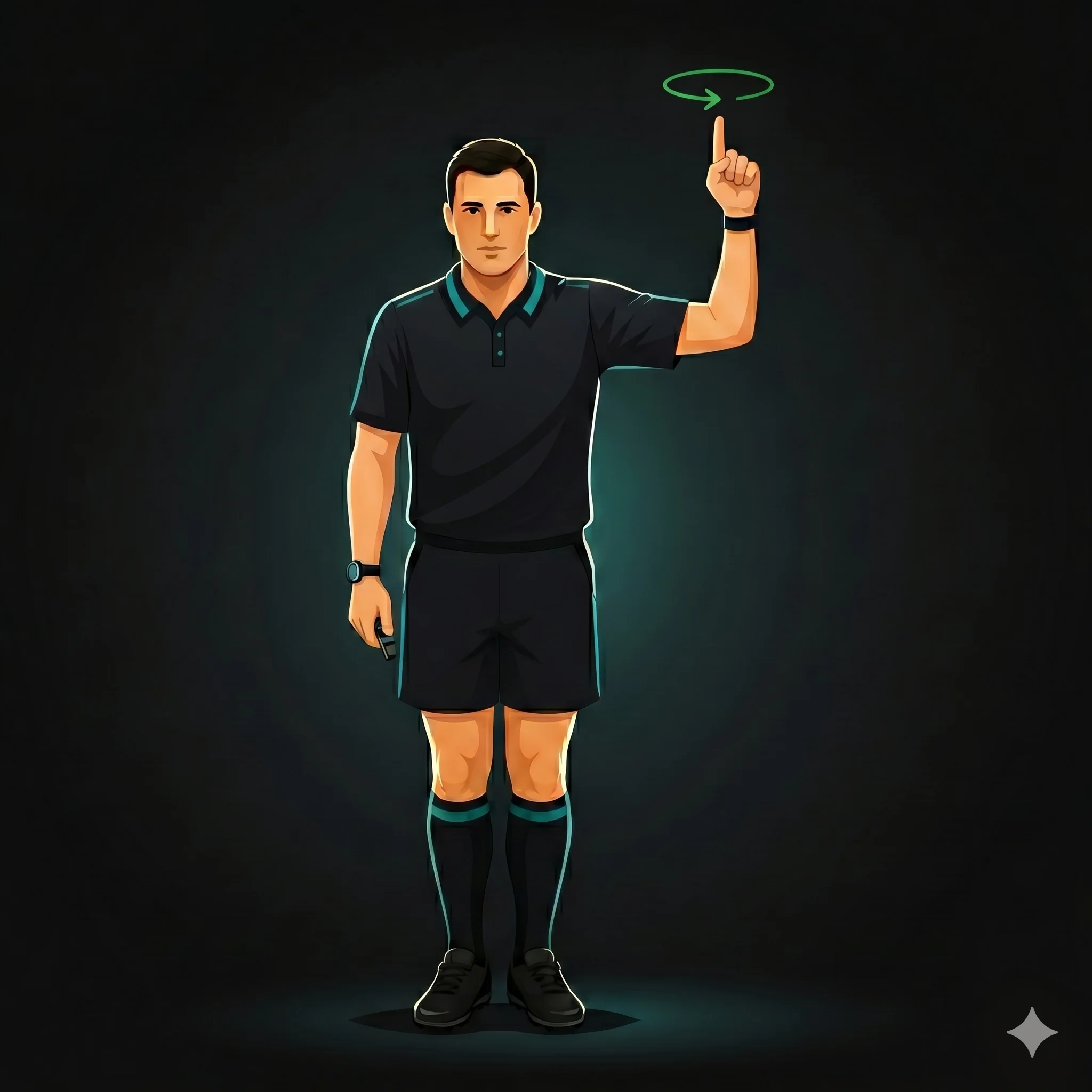
Collapsing the Scrum
Referee extends both arms forward, palms facing down, then lowers them toward the ground.
When used: Awarded when a player deliberately collapses the scrum. Penalty to the non-offending team.
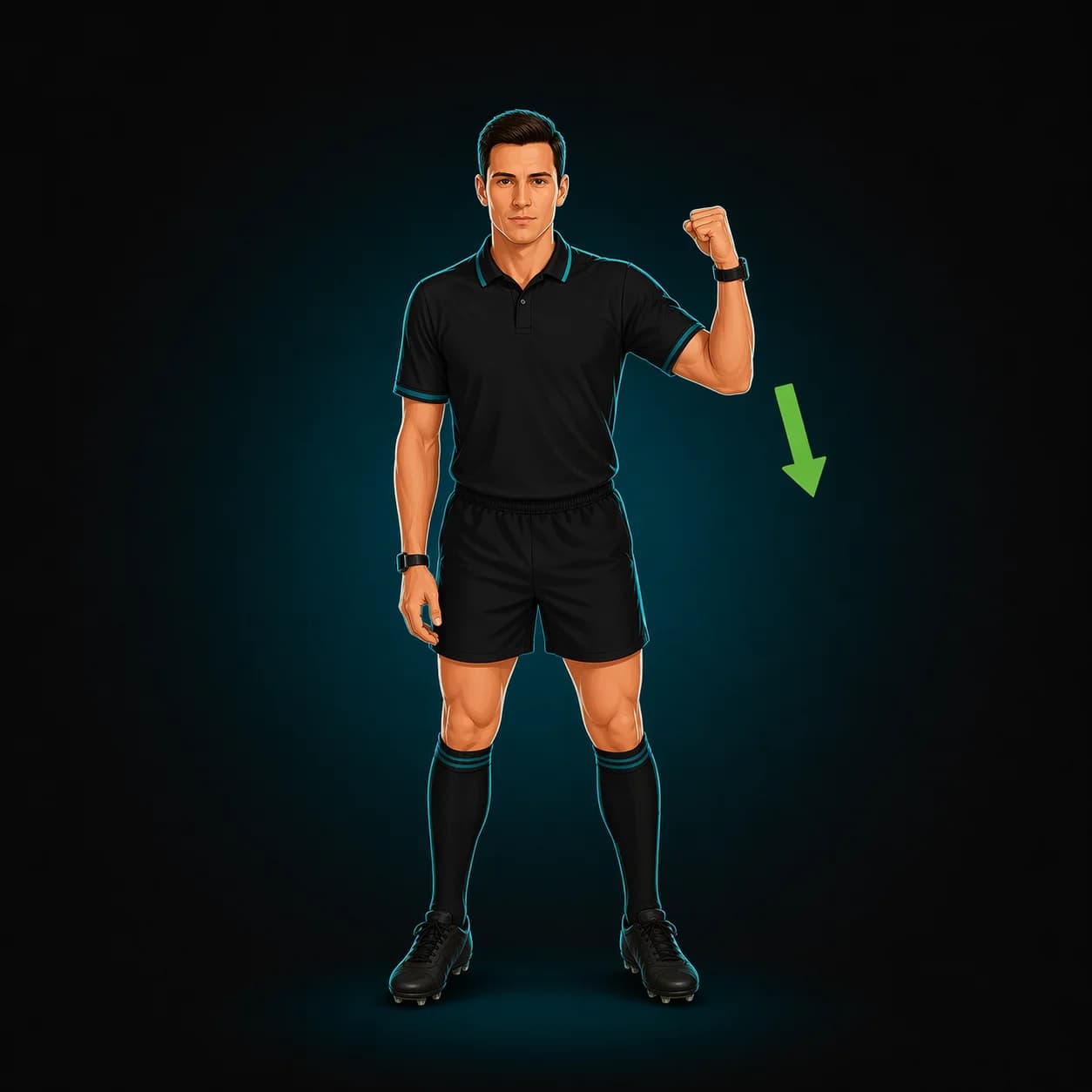
Pulling Down a Player
Referee places both palms together and pushes them downward.
When used: Indicates a player is illegally pulling an opponent down in the scrum or in open play.
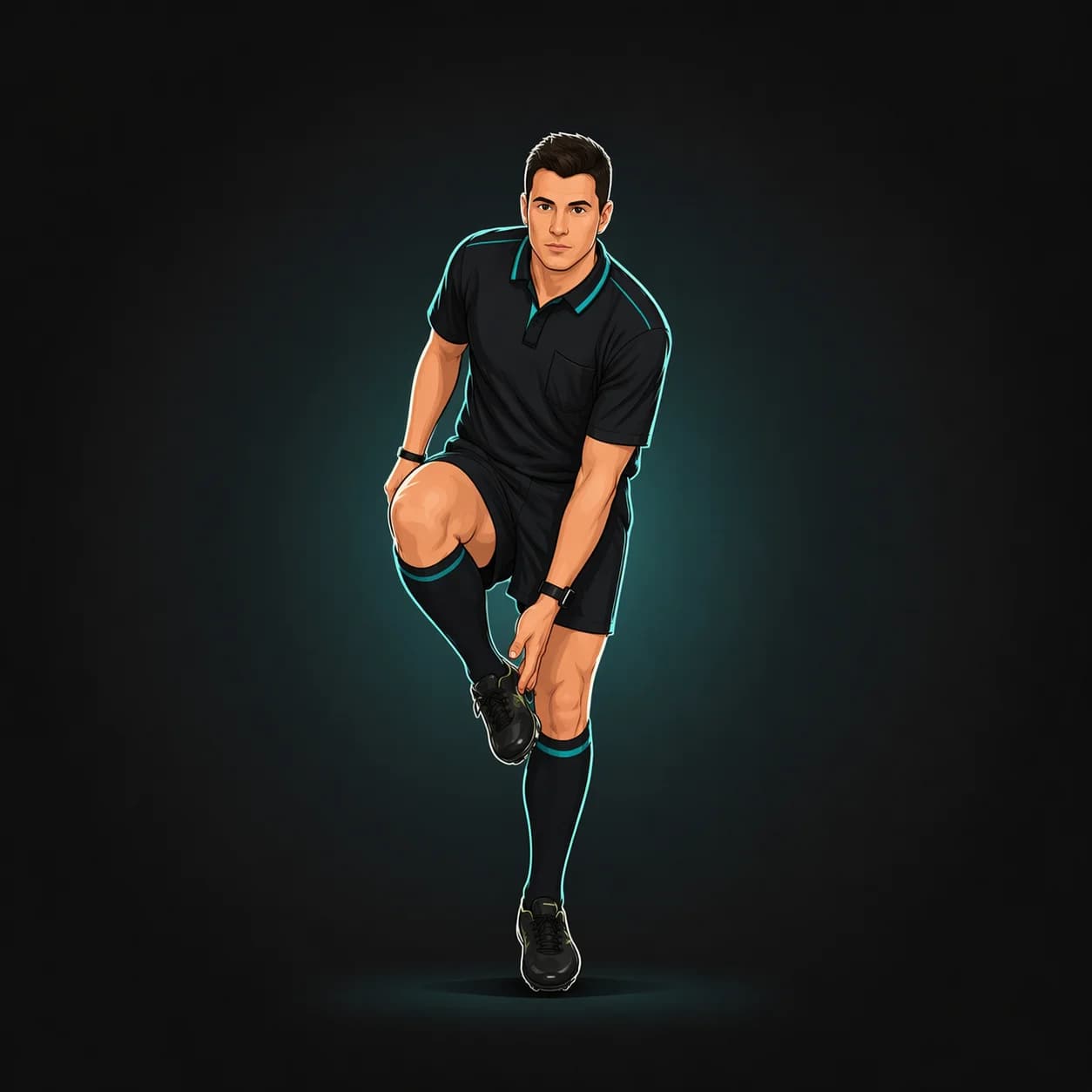
Foot Up by Front Row Player
Referee signals illegal foot position by a front row player during a scrum.
When used: Awarded when a front row player raises a foot from the ground before the ball is fed into the scrum.
Lineout
6 signals
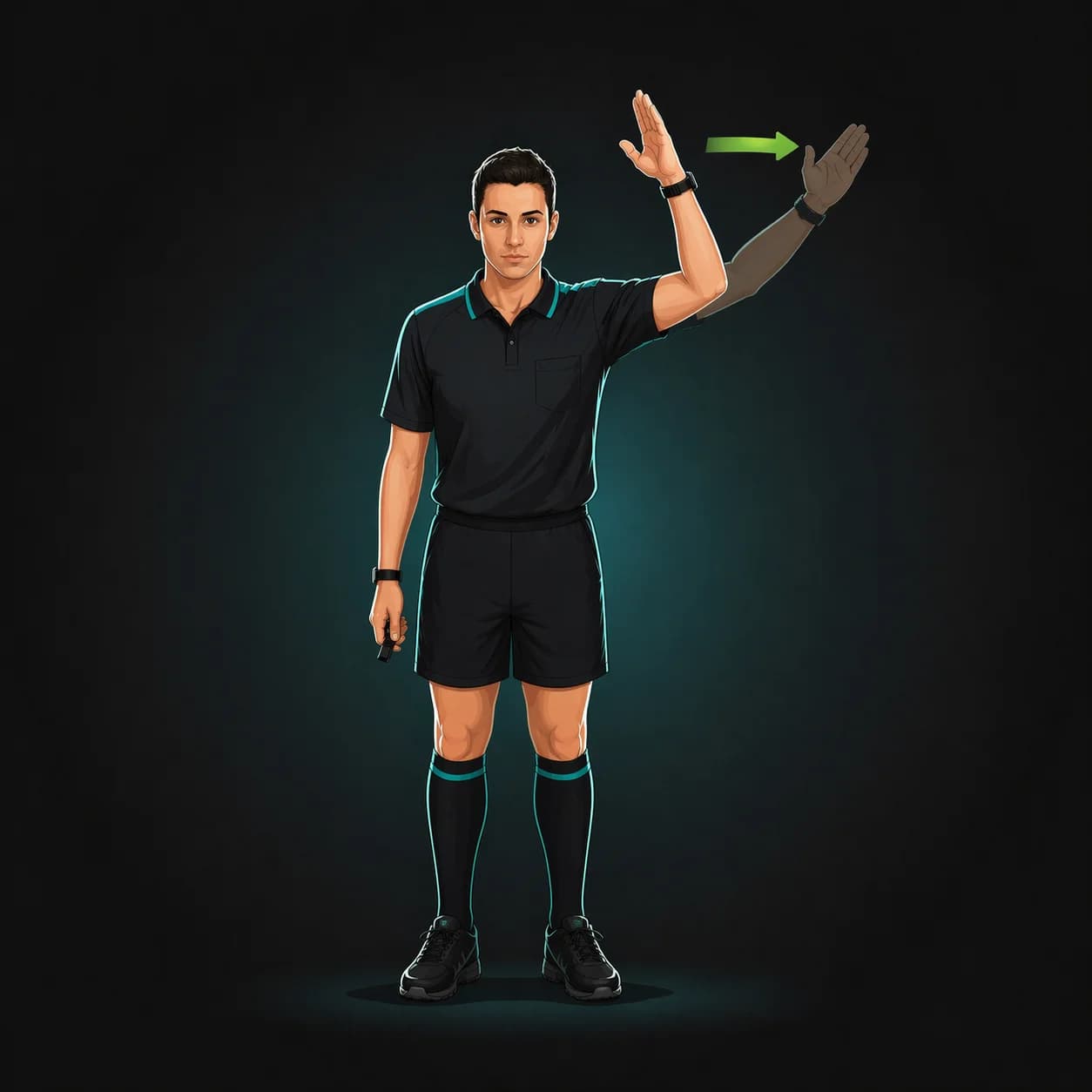
Lineout Throw Not Straight
Referee extends one arm above the head and tilts it to one side, indicating the ball went off-line.
When used: Awarded when the ball is not thrown straight down the middle of the lineout tunnel.
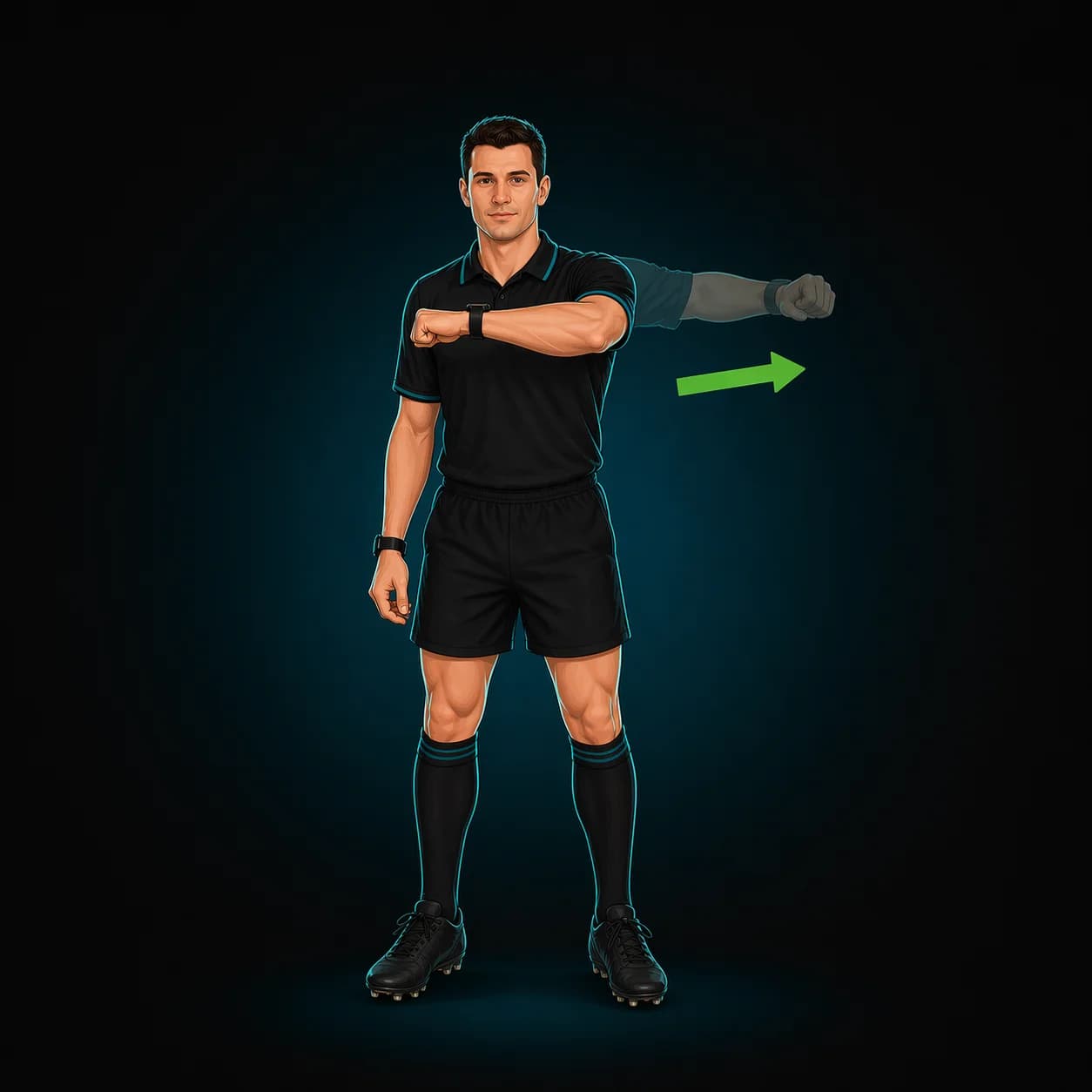
Barging in Lineout
Referee signals illegal physical contact between players in the lineout.
When used: Awarded when a lineout player charges or barges an opponent who is not in contact with the ball.
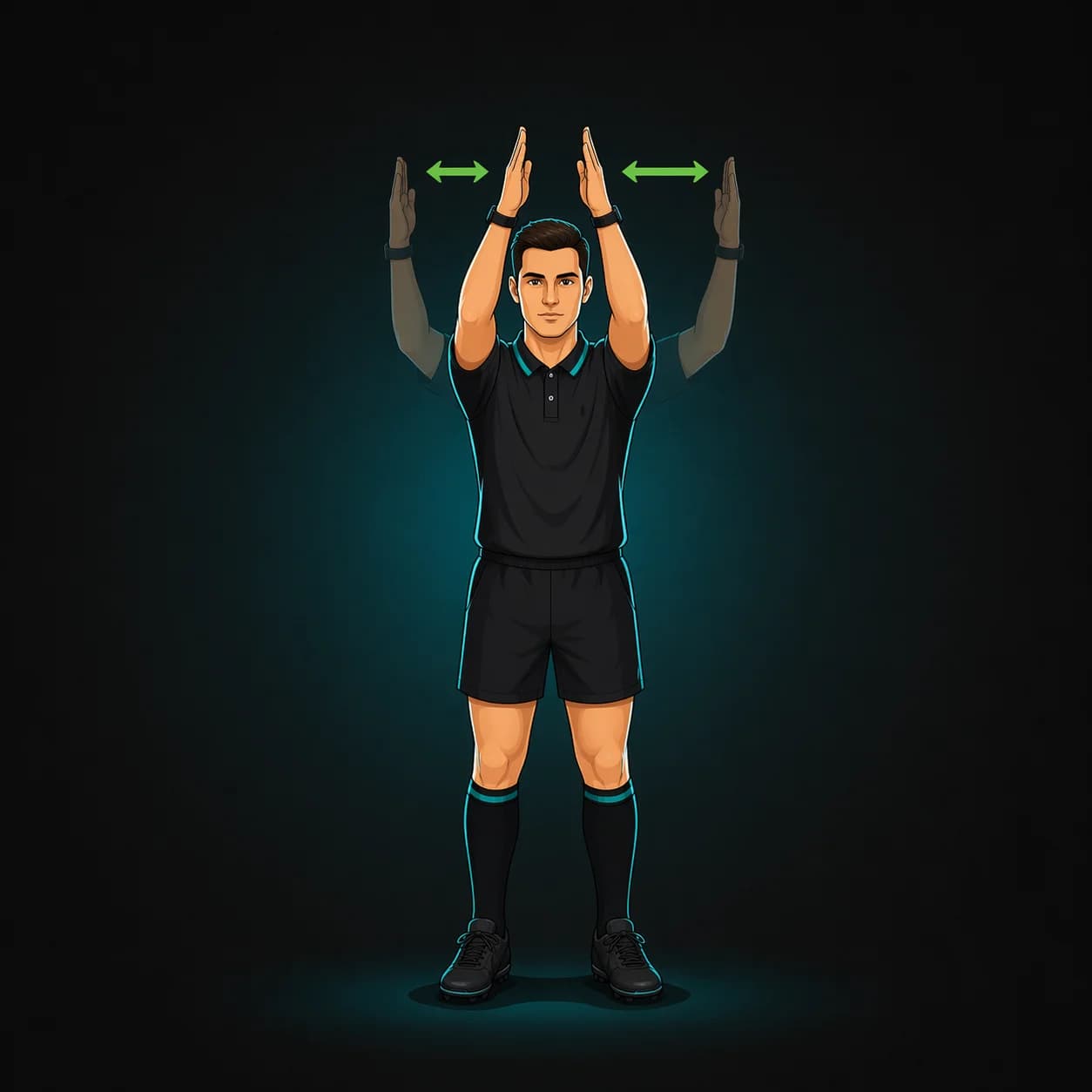
Closing Gaps in Lineout
Referee signals that a player has illegally closed the gaps between players in the lineout.
When used: Awarded when a lineout player closes the space between themselves and an adjacent player before the ball is thrown in.
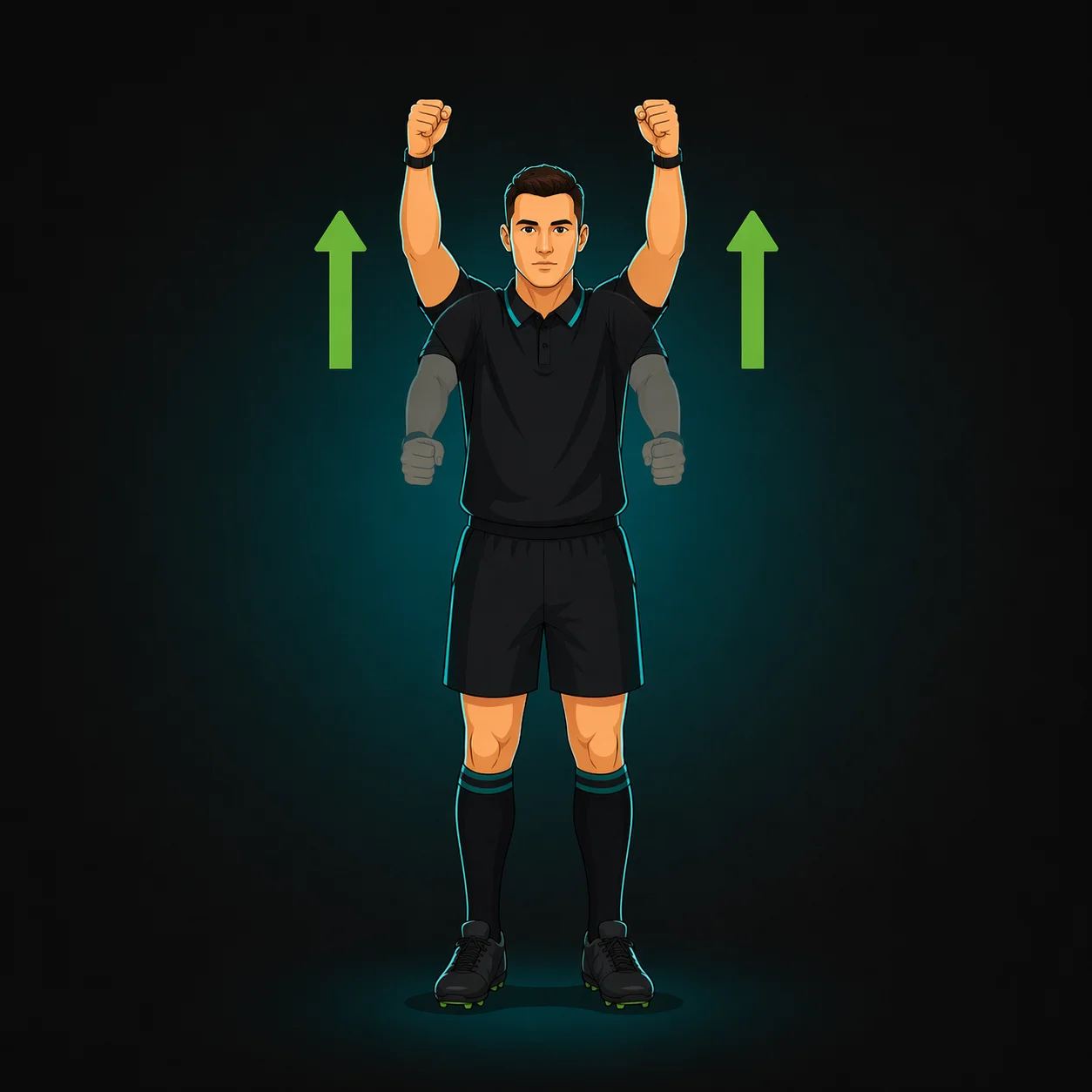
Early Lifting in Lineout
Referee signals that a player was lifted or jumped before the ball was thrown in.
When used: Awarded when a lineout player is lifted or begins to jump before the ball has left the hands of the player throwing in.
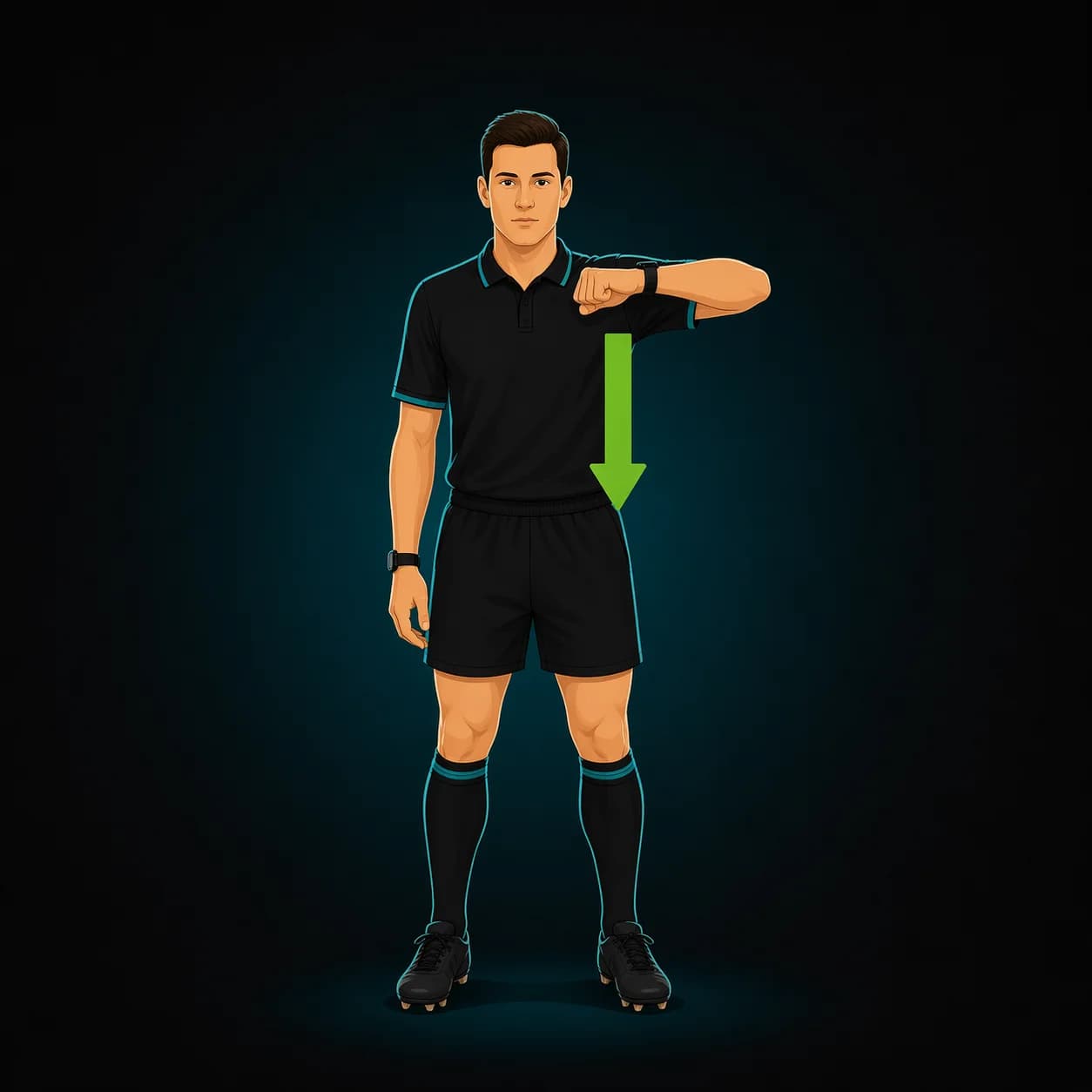
Leaning on Player in Lineout
Referee signals a player is illegally leaning on an opponent in the lineout.
When used: Awarded when a lineout player uses an opponent as a support by leaning on them before the ball is caught.
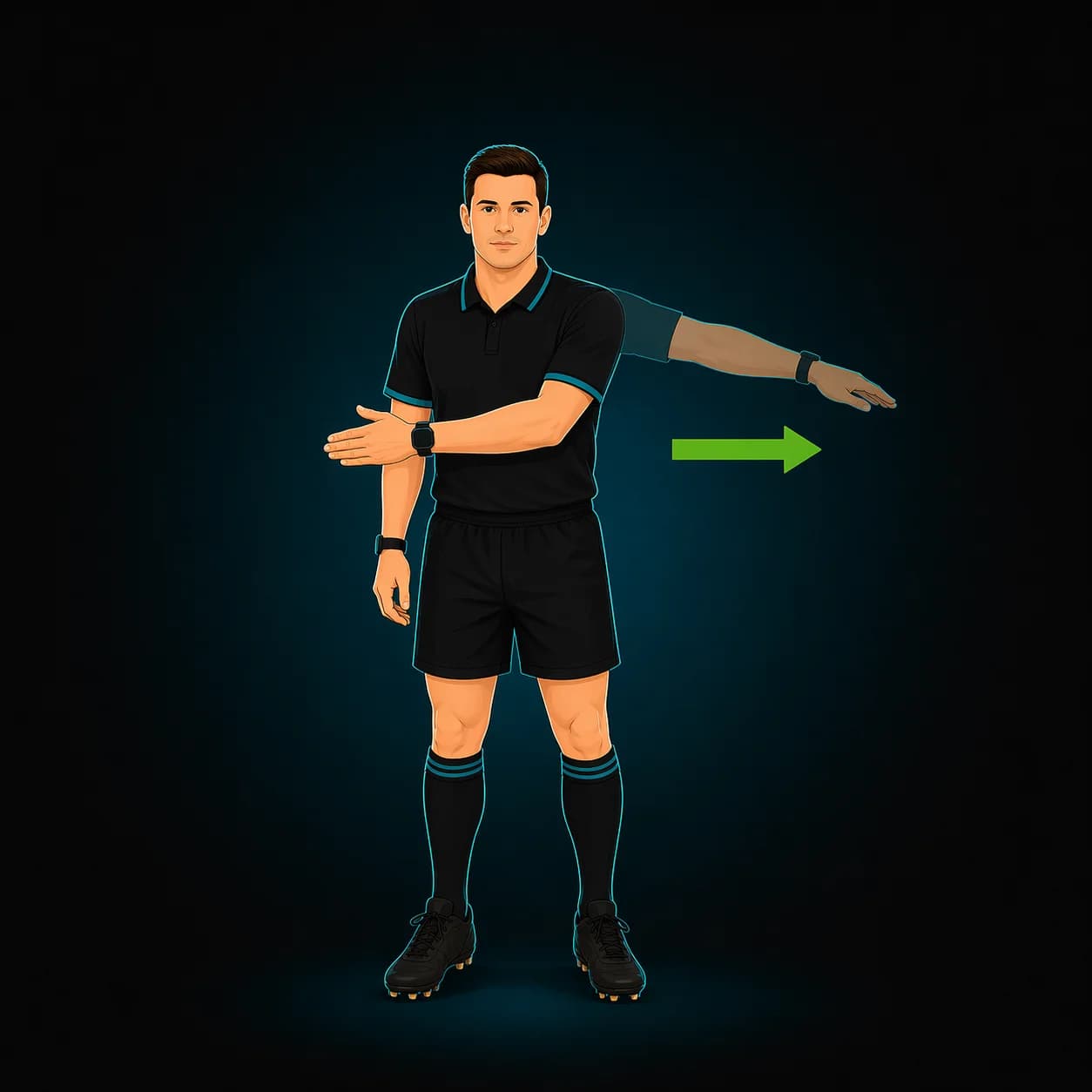
Offside in the Lineout
Referee signals that a player is in an offside position during the lineout.
When used: Awarded when a lineout player, or a player not involved in the lineout, is in an offside position while the ball is in the air.
Tackles, Rucks & Mauls
5 signals
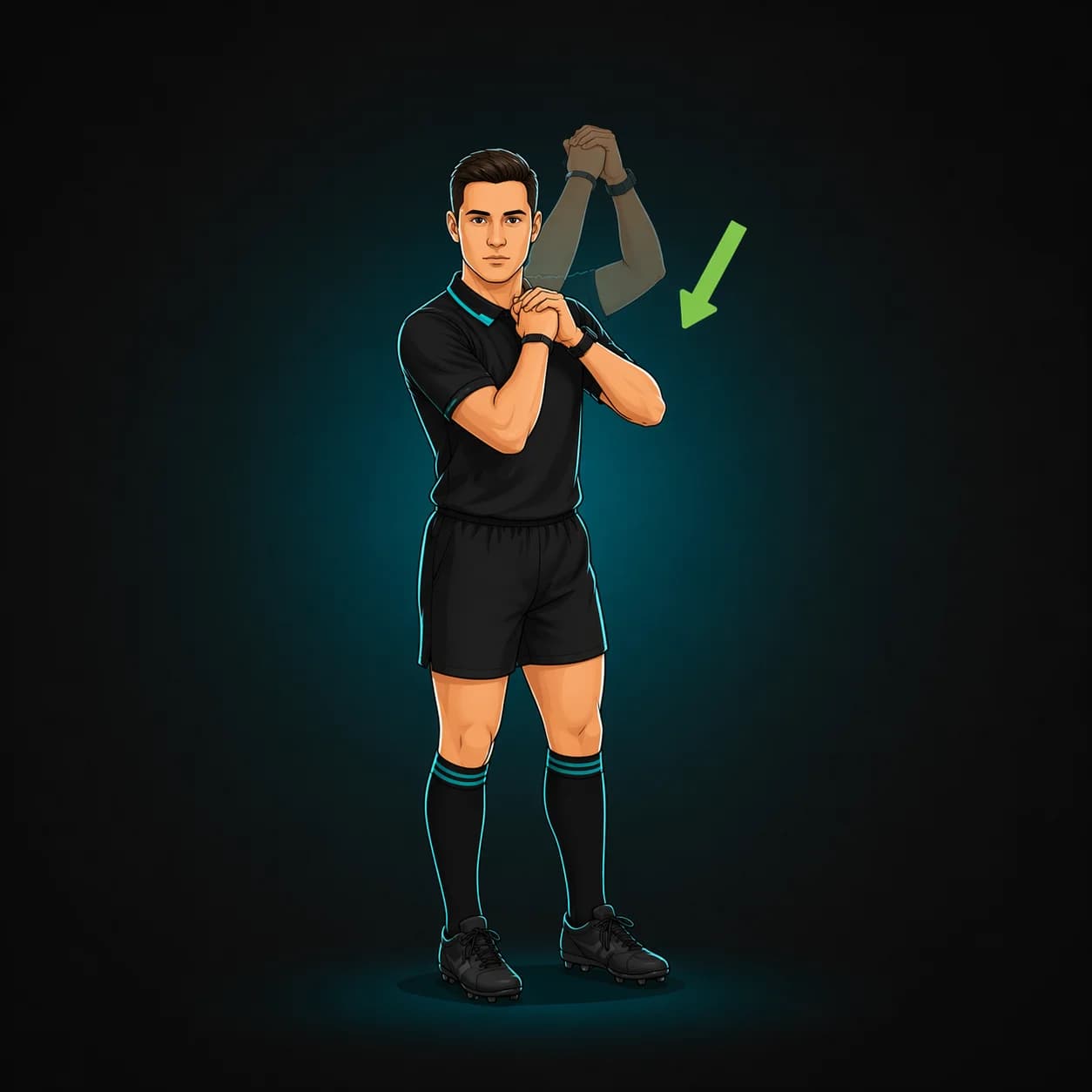
Not Releasing Ball After Tackle
Referee holds both hands out with the ball between them, simulating a player holding the ball on the ground.
When used: Awarded when a tackled player fails to release the ball immediately.
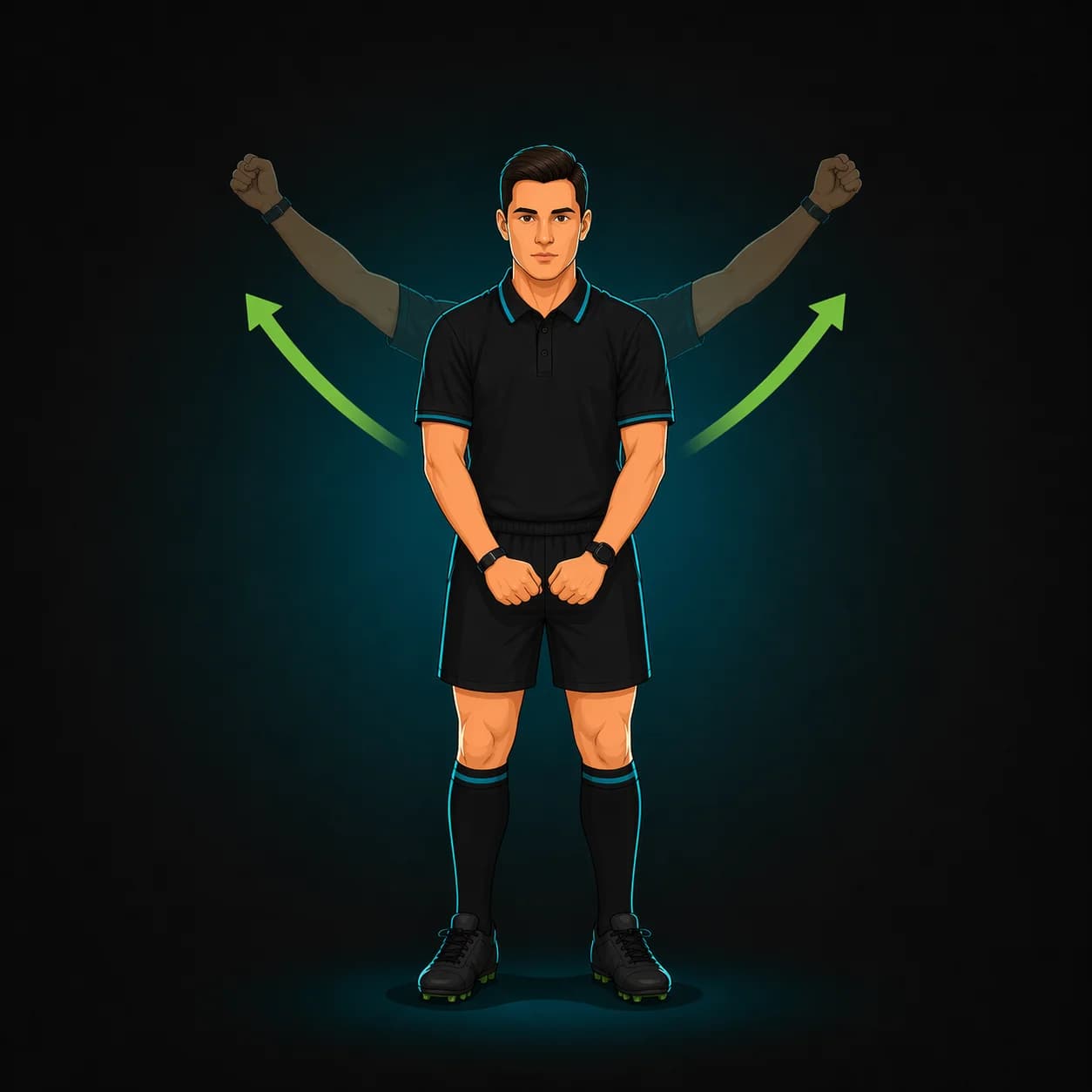
Tackler Not Releasing
Referee makes a grasping motion with both hands, holding them together at chest height.
When used: Awarded when the tackler does not immediately release the tackled player.
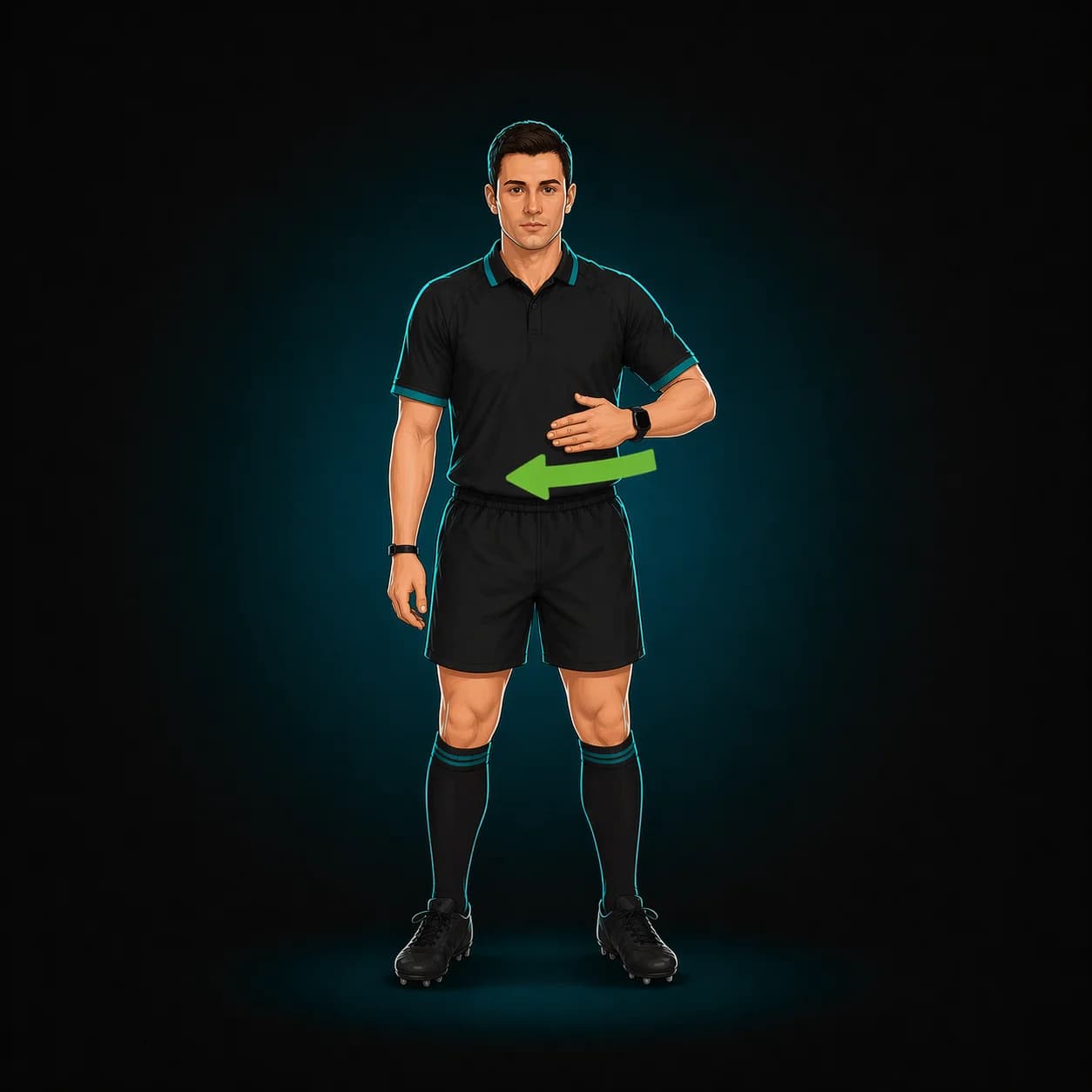
Joining Ruck from Side
Referee makes a sweeping gesture with one arm from the side toward the ruck, indicating incorrect entry.
When used: Awarded when a player joins a ruck or maul from the side rather than from behind the hindmost foot.
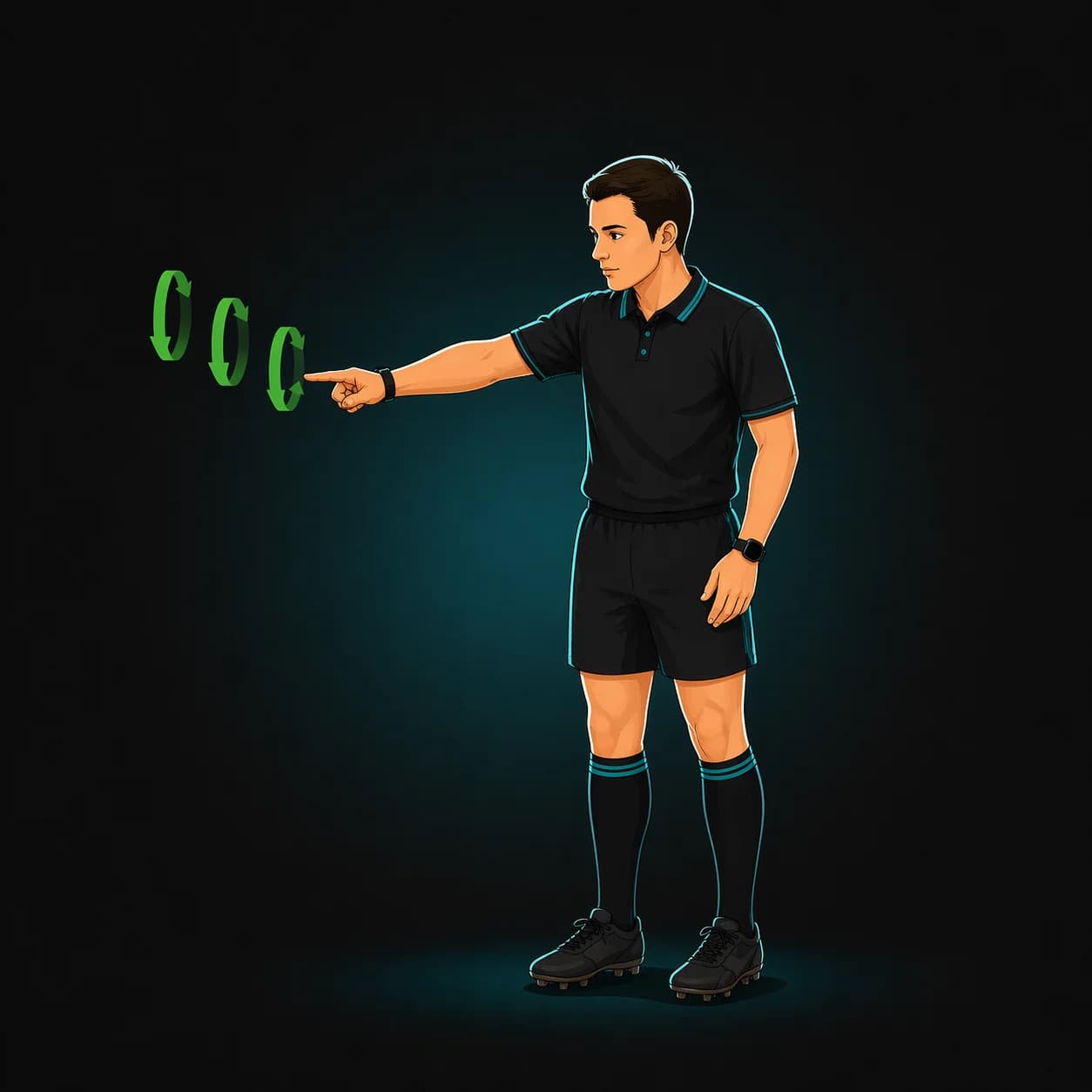
Player Not Rolling Away
Referee signals that a player at the tackle has not moved away from the tackle area.
When used: Awarded when a tackler or tackled player fails to roll away from the tackle area and release the ball and the player.
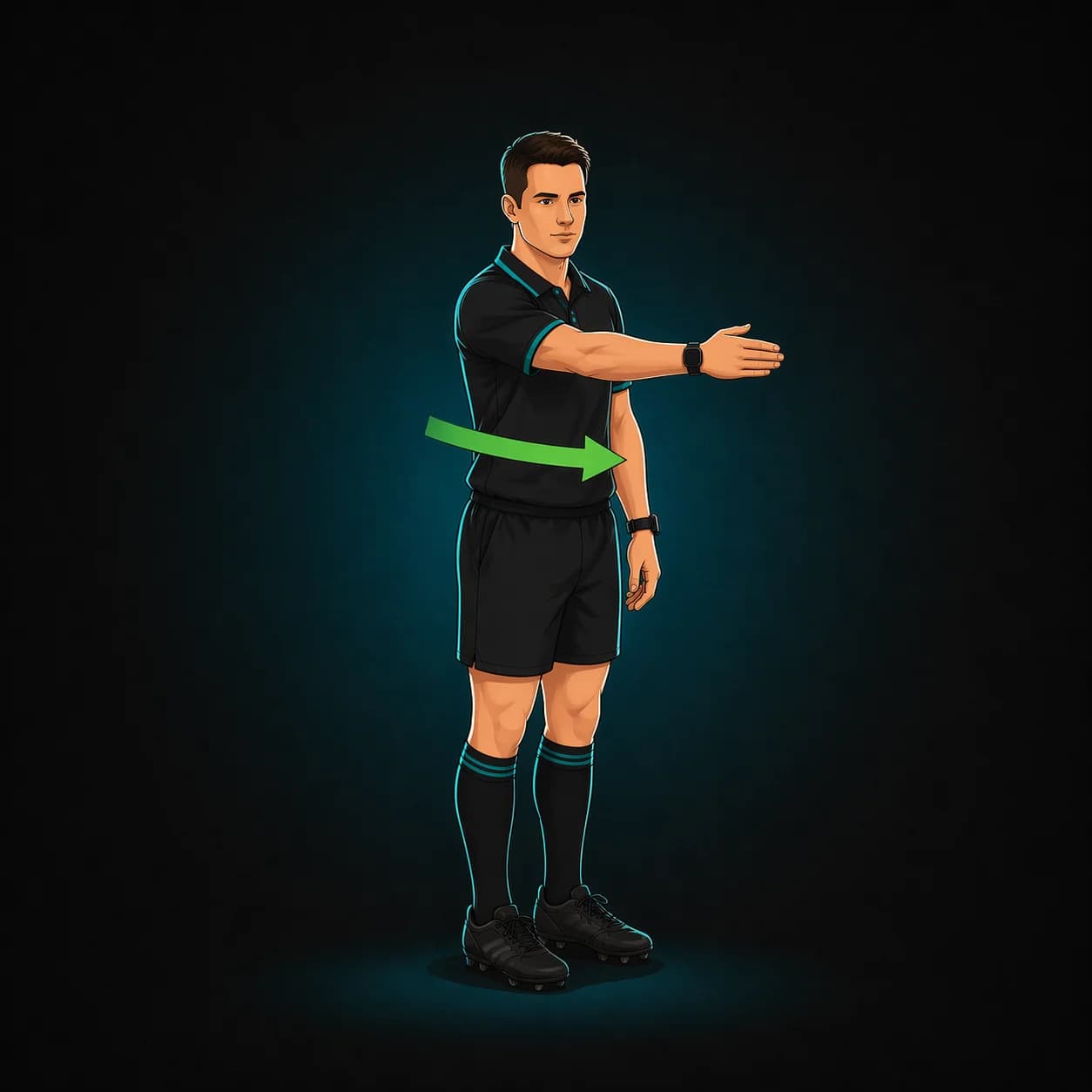
Entering Tackle from Wrong Direction
Referee signals a player has joined a tackle or ruck from an illegal angle.
When used: Awarded when a player joins a tackle situation from the side or from the direction of the opponents' goal line rather than from behind the ball.
Offside
1 signal
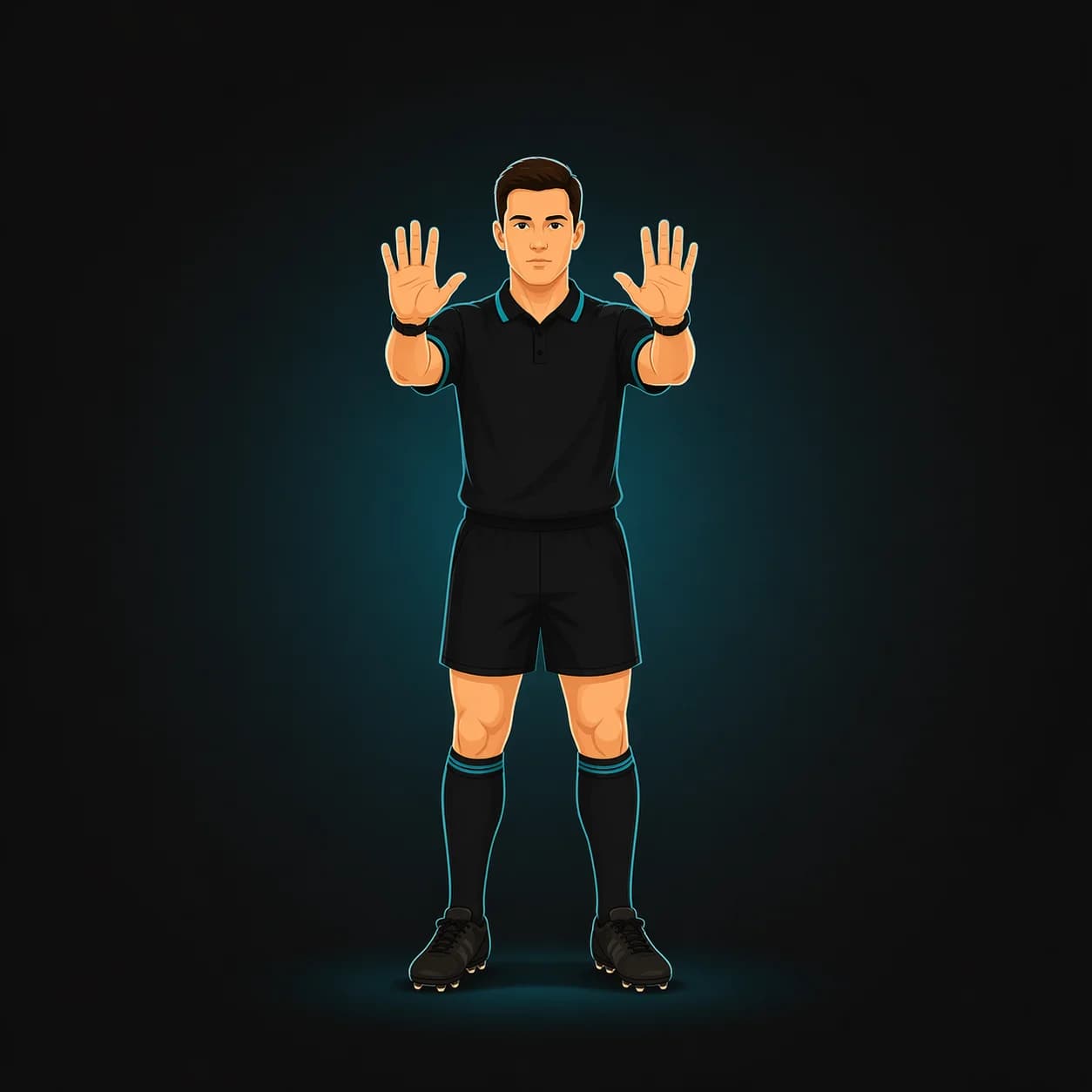
Offside in General Play
Referee extends one arm horizontally to the side, perpendicular to the direction of play, to indicate an offside player.
When used: Awarded when a player is in an offside position in open play.
Knock-on & Forward Pass
2 signals
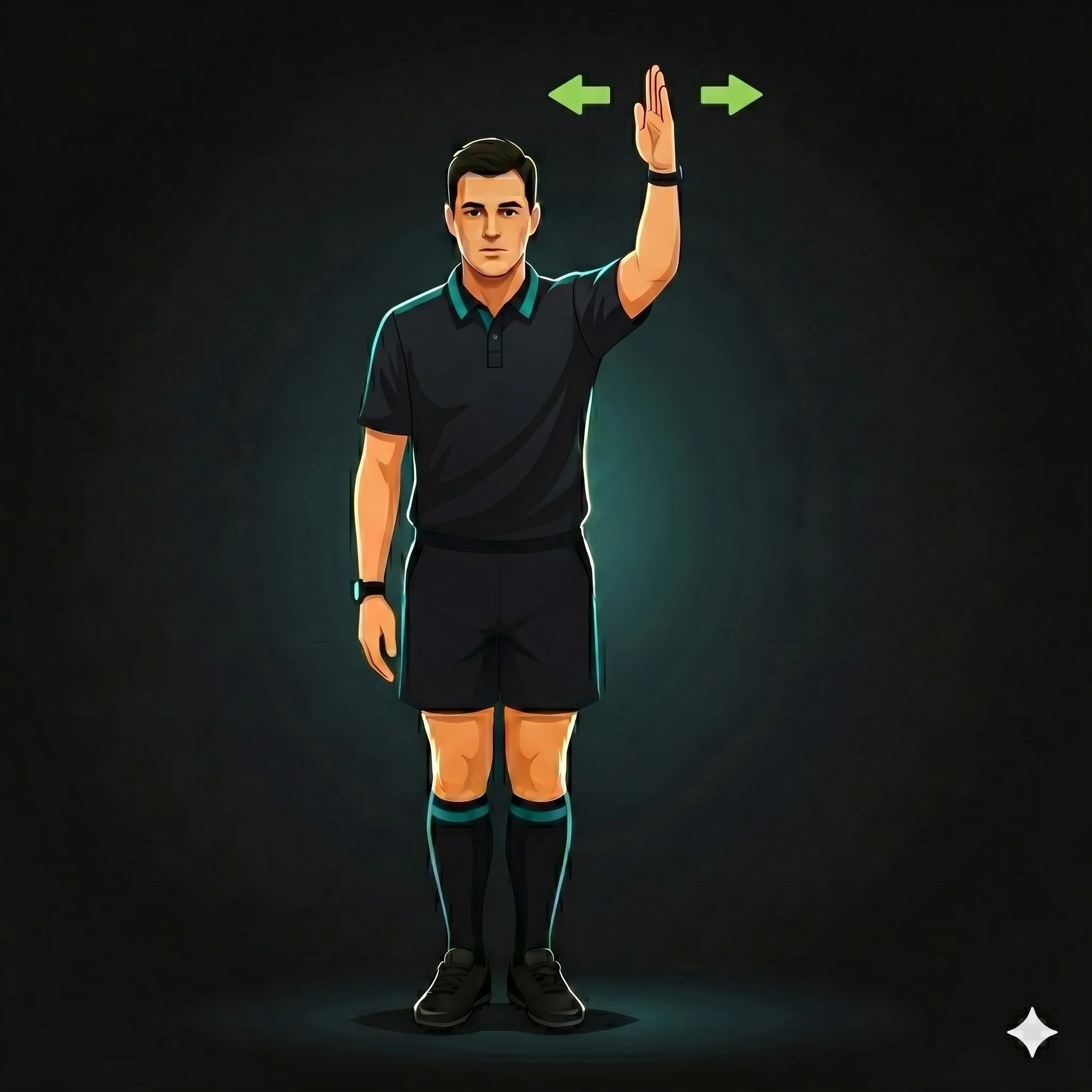
Knock-on or Throw Forward
Referee taps the knee with one hand, indicating the ball has gone forward.
When used: Awarded for a knock-on (ball hits hands or arms and goes forward) or a forward pass.
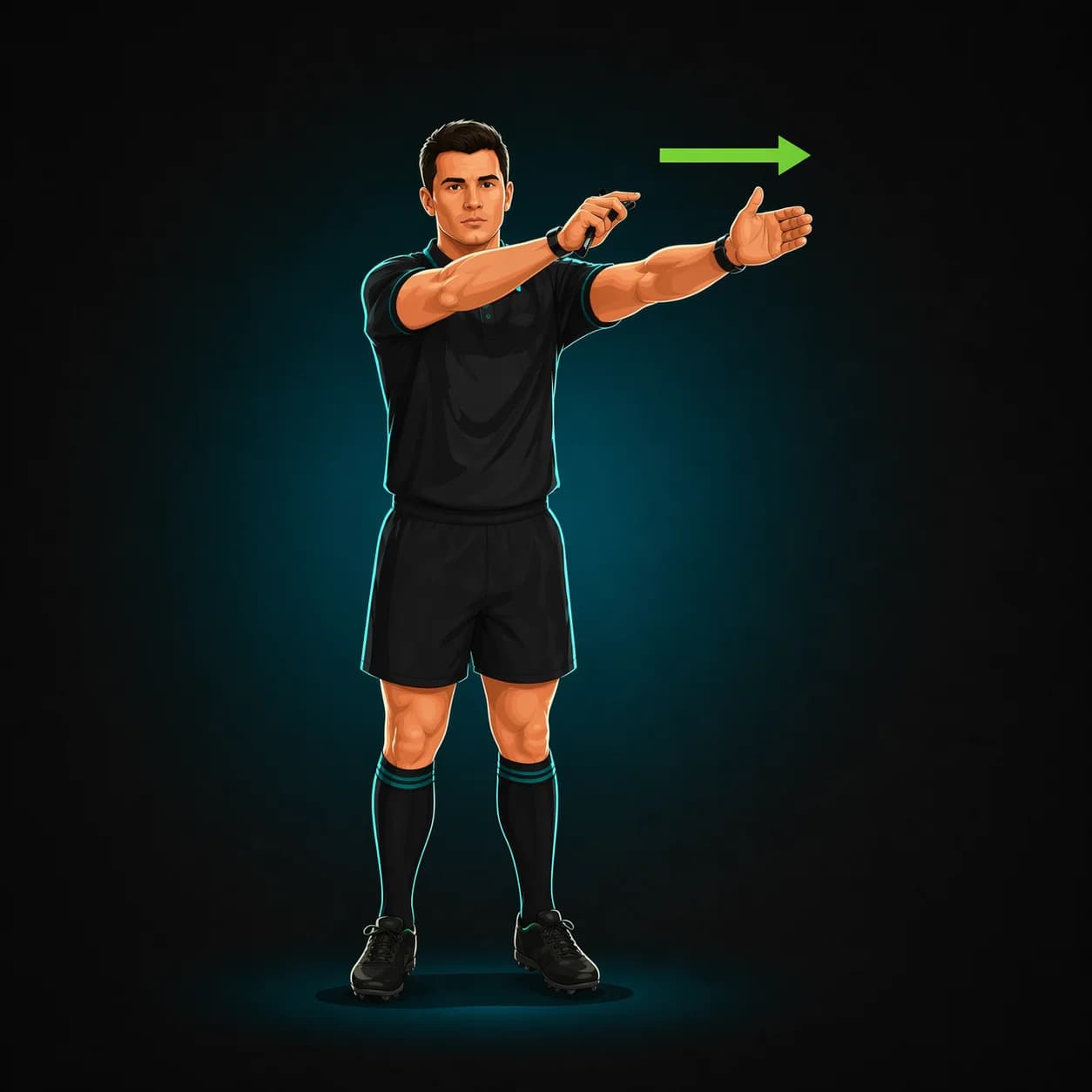
Throw Forward or Forward Pass
Referee signals an illegal forward pass by pointing in the direction the ball was thrown.
When used: Awarded when a player passes or throws the ball forward toward the opponents' dead-ball line. Scrum to the non-offending team.
Foul Play
7 signals
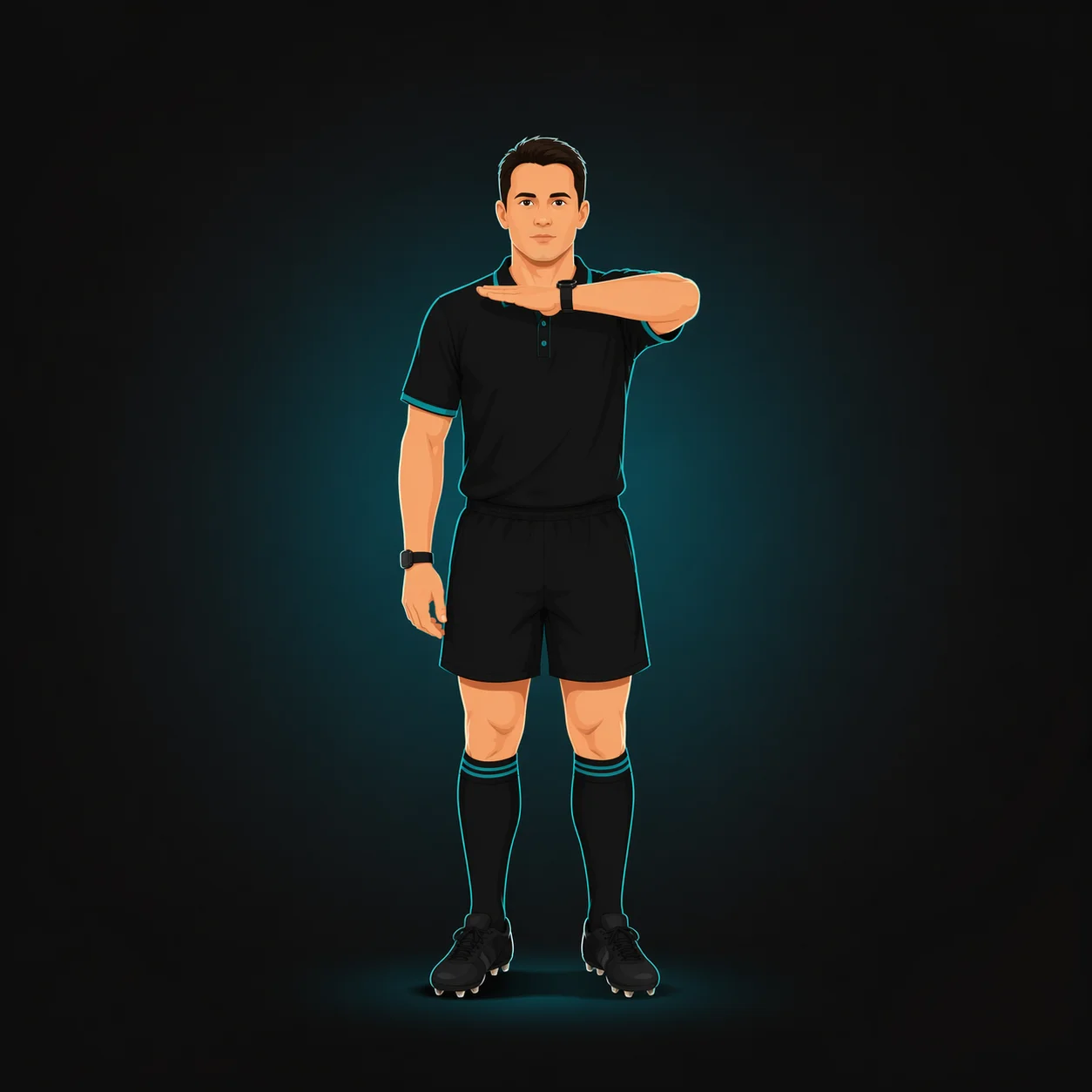
High Tackle
Referee places one hand flat against the side of the neck, then points to indicate the non-offending team's direction.
When used: Awarded when a tackler makes contact with the head or neck of an opponent. May warrant a yellow or red card.
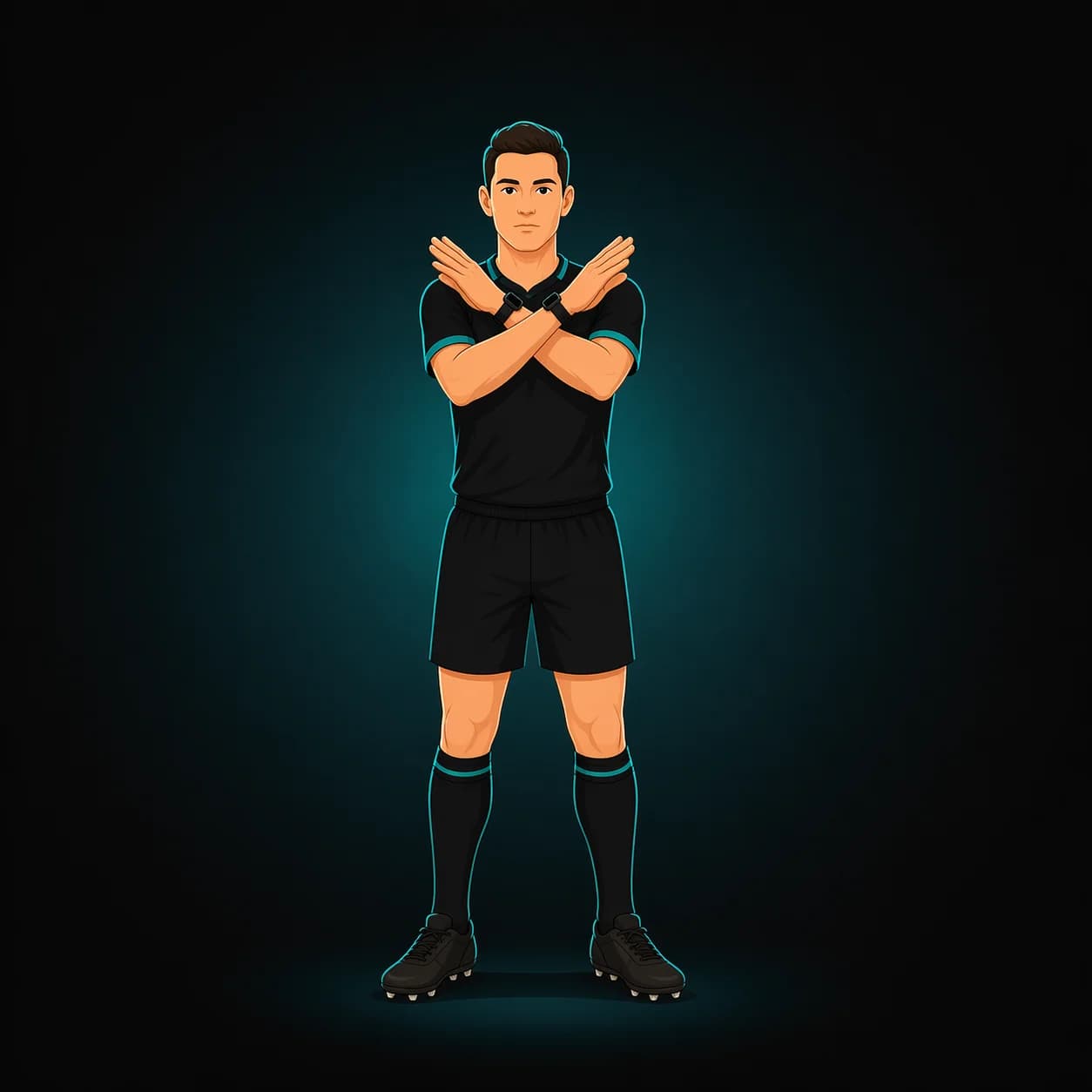
Obstruction / Blocking
Referee crosses both forearms in front of the chest in an X shape.
When used: Awarded when a player runs in front of a ball carrier to obstruct defenders, or otherwise illegally blocks opponents.
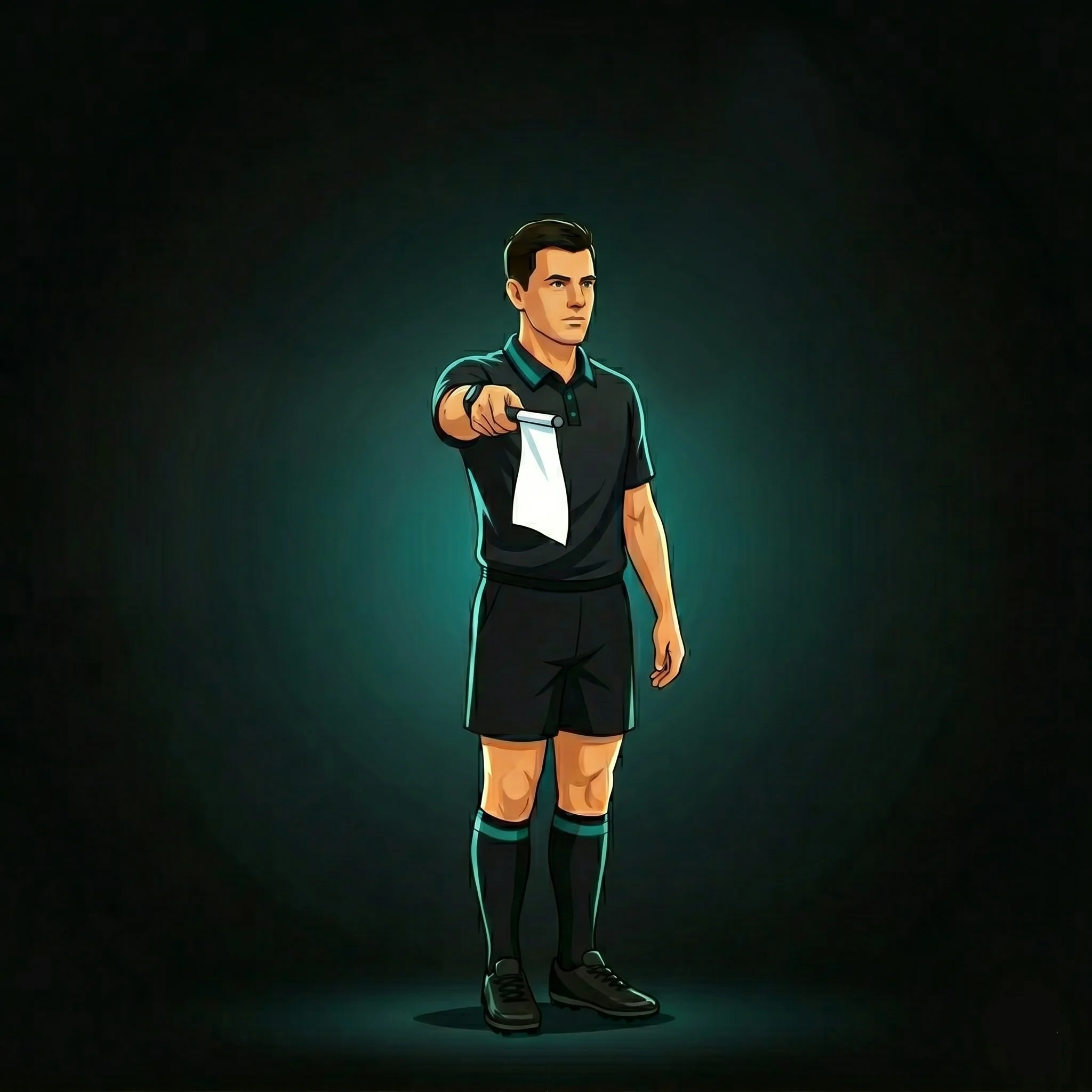
Foul Play / Misconduct
Referee raises a clenched fist above the head, then points to the non-offending team's direction.
When used: Indicates deliberate foul play, dangerous play, or misconduct. May be accompanied by a yellow or red card.
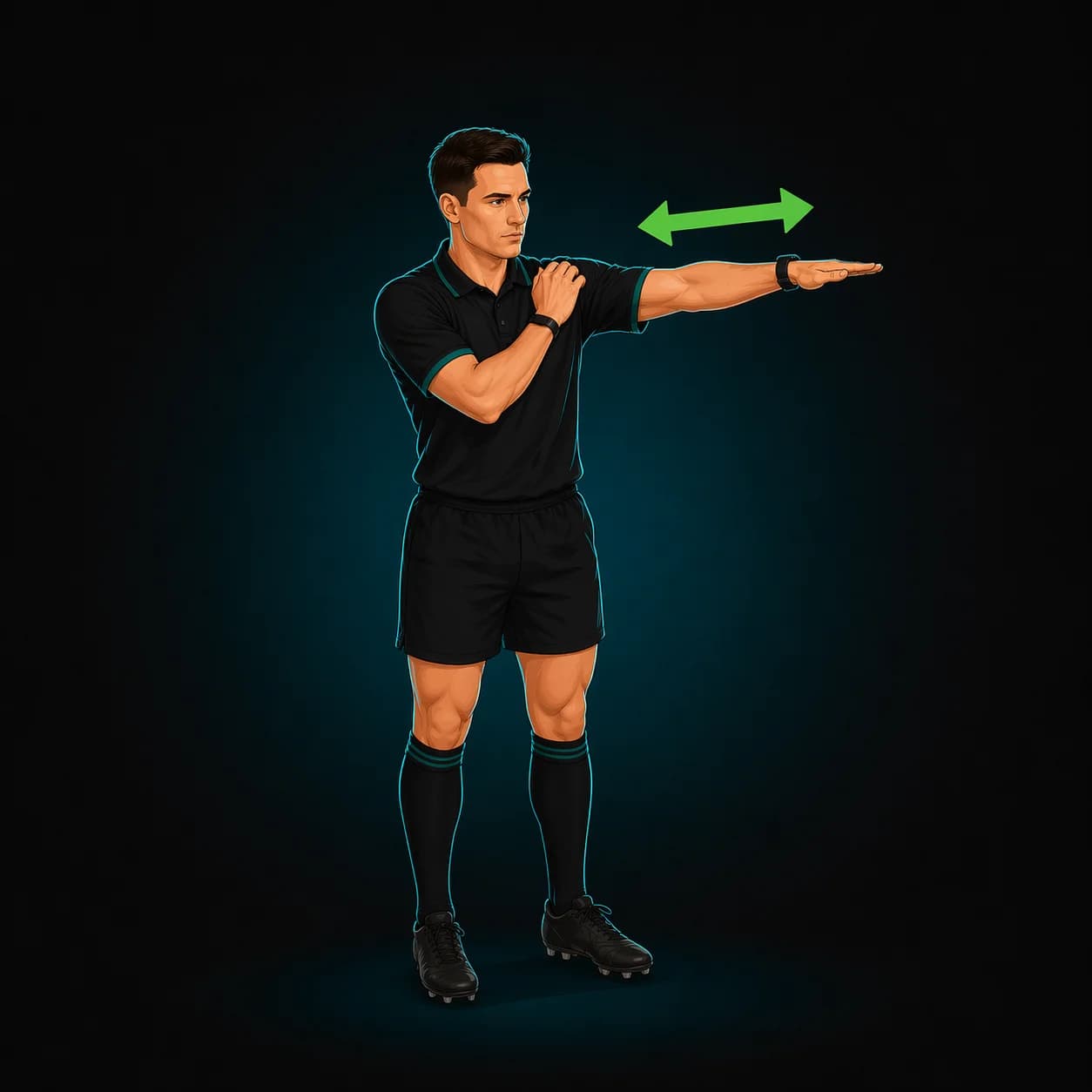
Incorrect Binding
Referee wraps one hand around the wrist of the other arm to mime incorrect binding at the scrum or maul.
When used: Awarded when a player does not bind correctly with the full arm around the body of a team-mate or opponent.
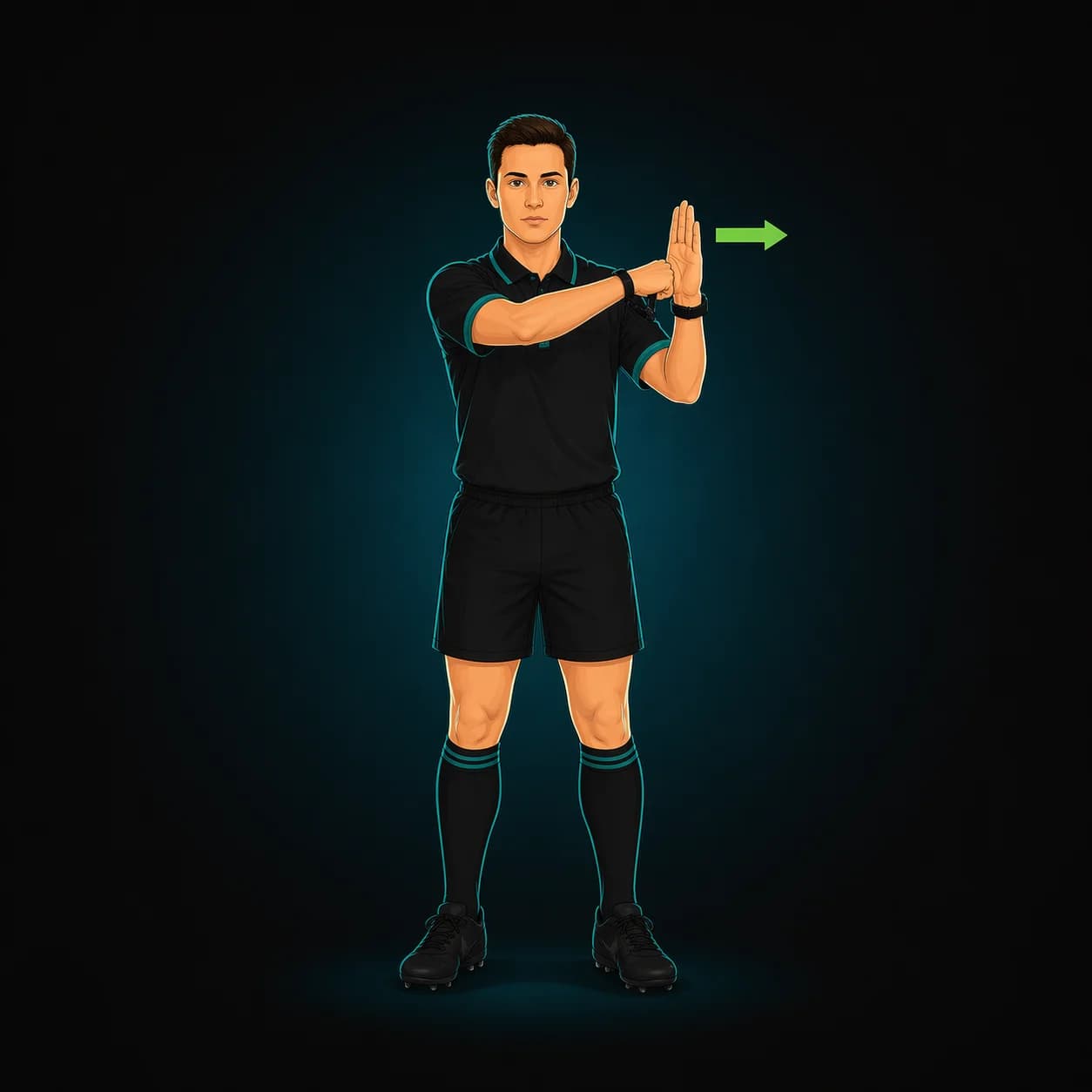
Punching
Referee signals striking an opponent with a closed fist.
When used: Awarded for striking an opponent. A serious act of foul play warranting a yellow or red card.
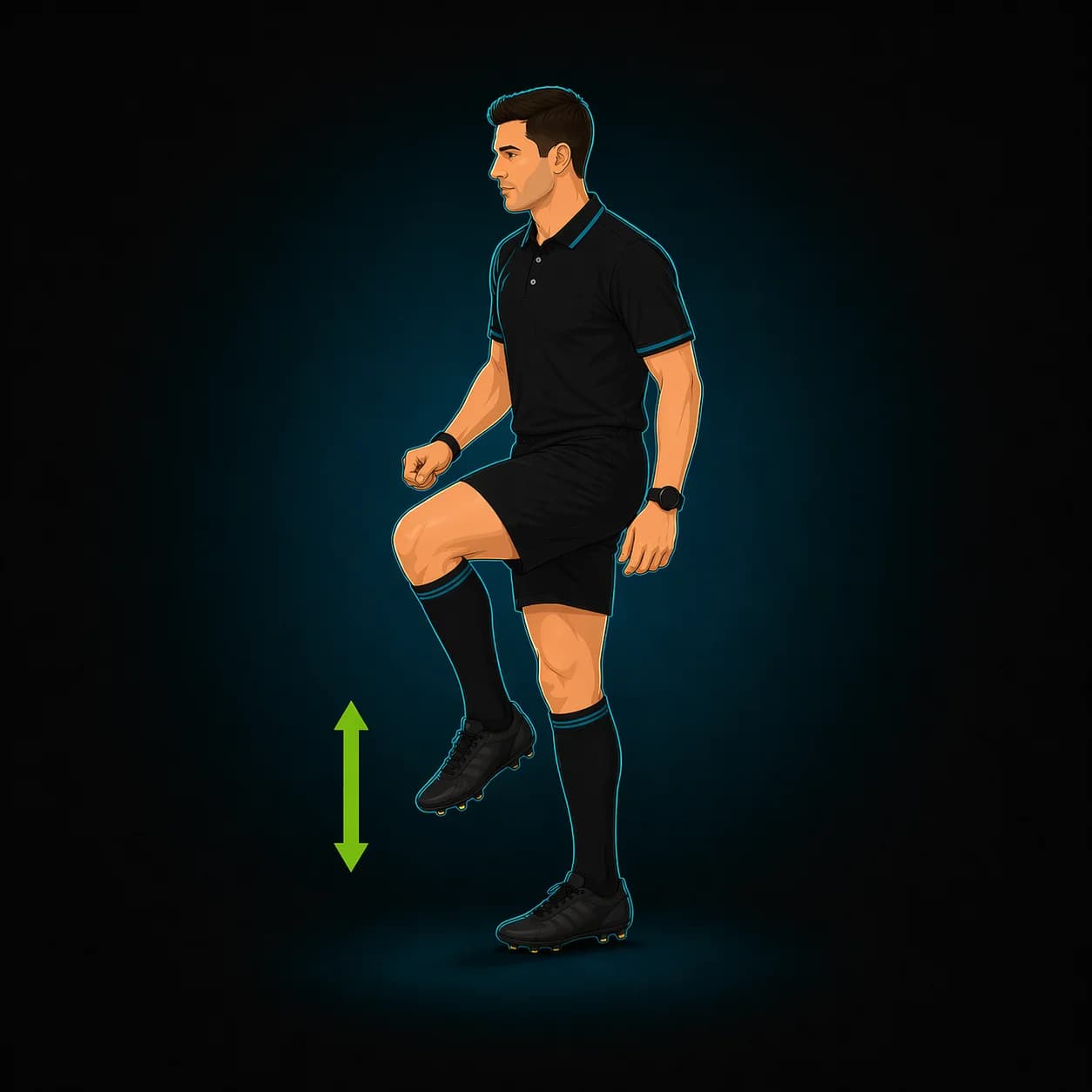
Stamping
Referee signals treading or stamping on a player on the ground.
When used: Awarded for deliberately treading on a player who is on the ground. A serious act of foul play warranting a yellow or red card.
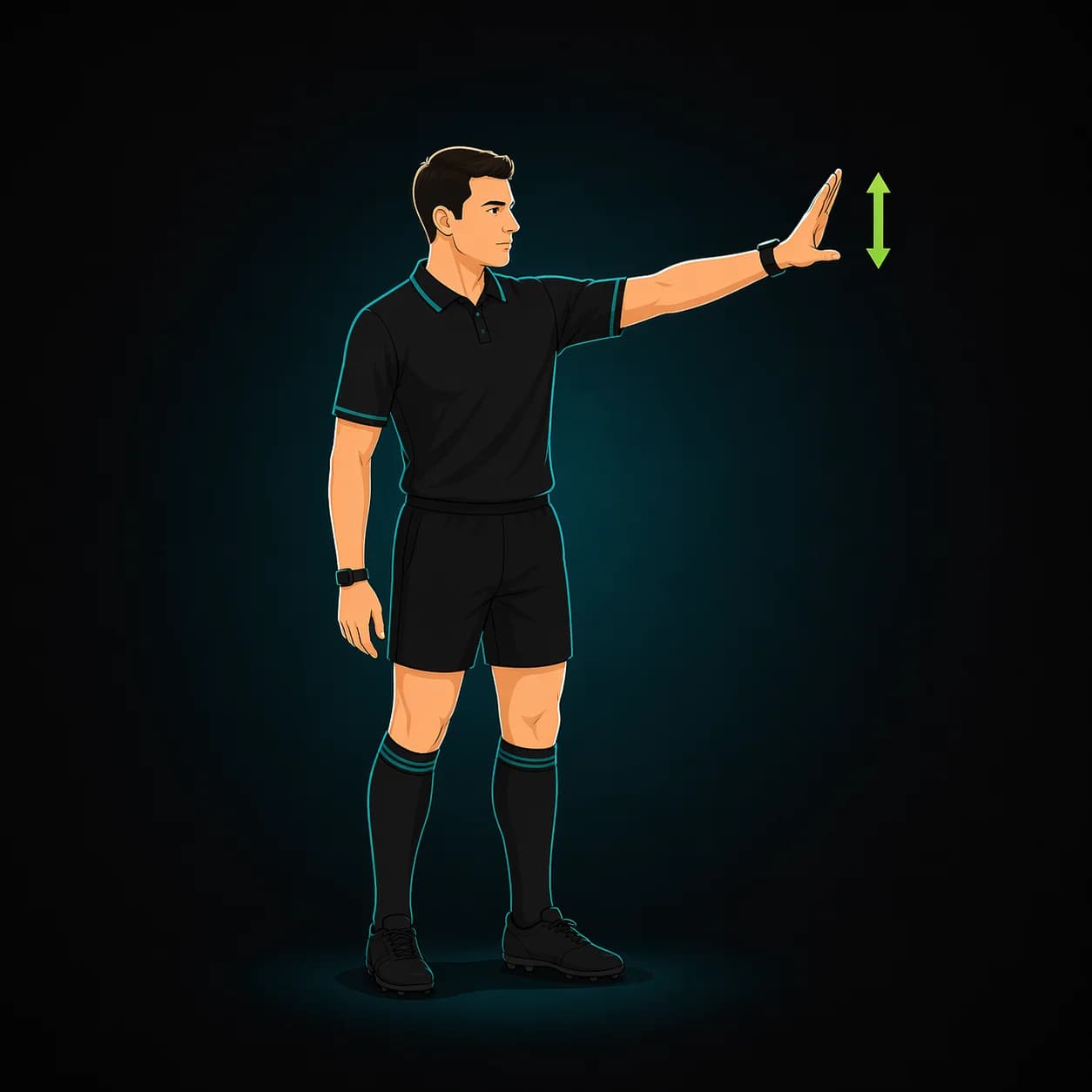
Dissent
Referee signals a player is disputing or questioning a refereeing decision.
When used: Awarded when a player verbally or physically disputes a decision. Persistent dissent may result in a yellow card.
Cards
2 signals
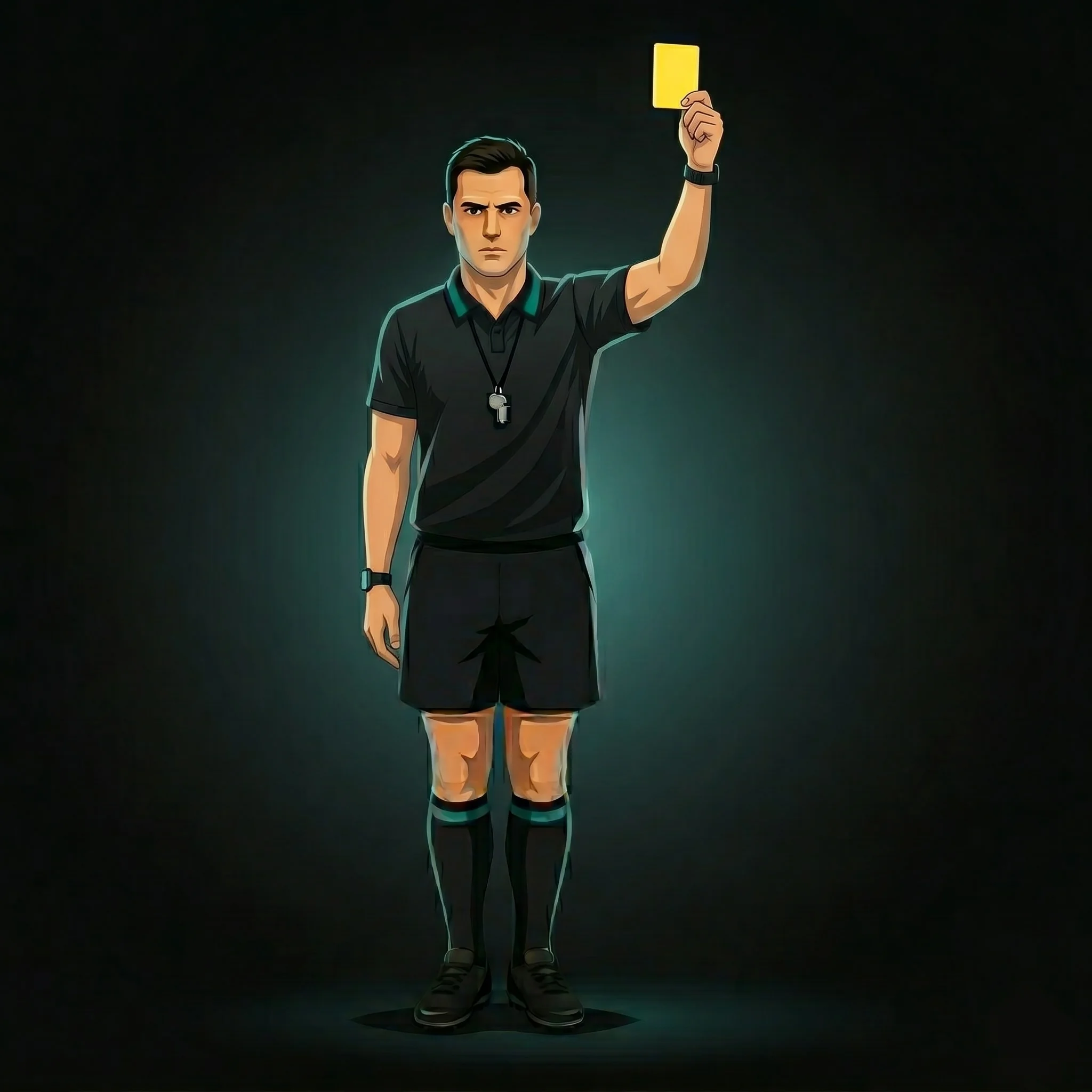
Yellow Card
Referee holds up a yellow card above the head. The player is directed to the sin bin area.
When used: Issued for deliberate or persistent infringement, dangerous play, or misconduct. Player is suspended for ten minutes.
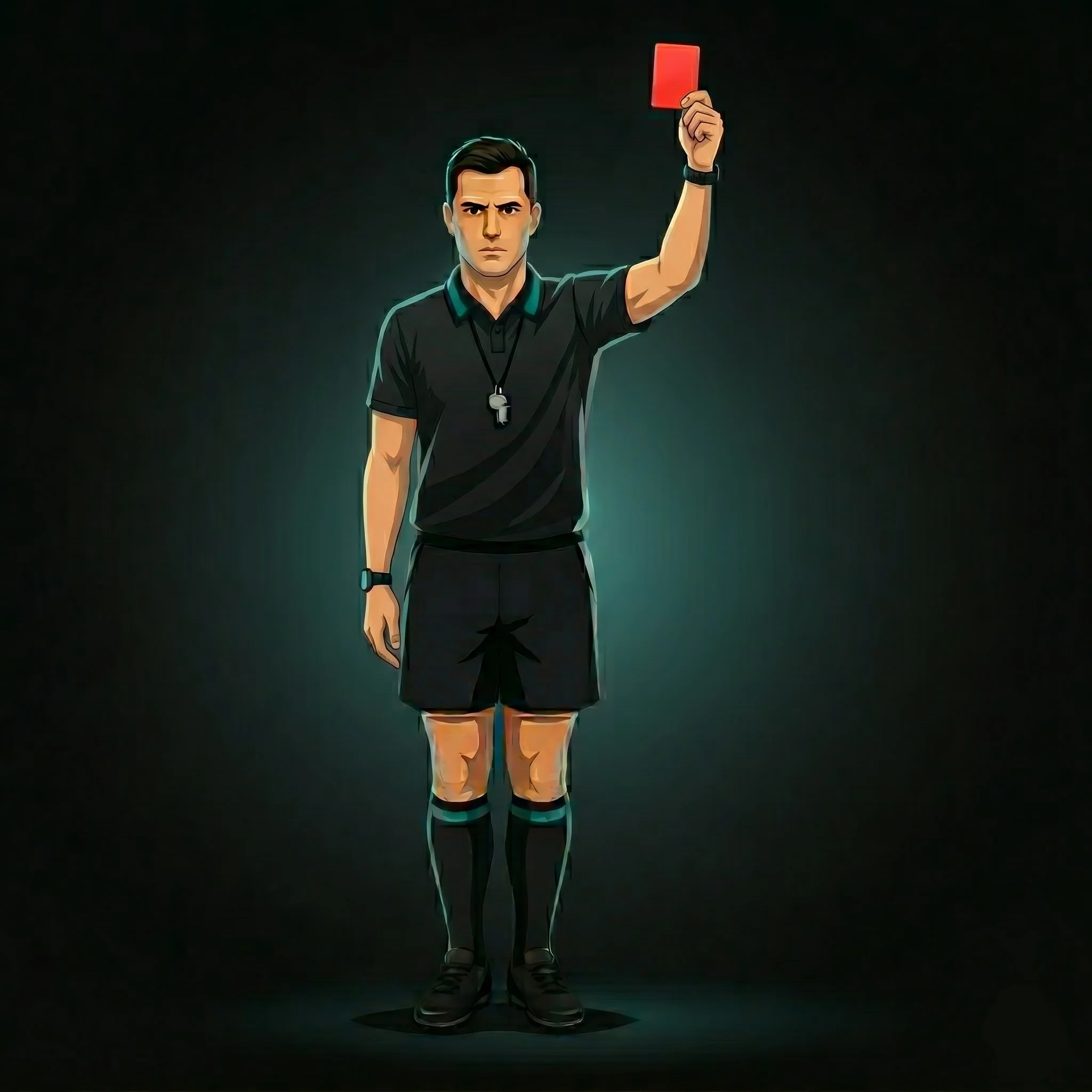
Red Card
Referee holds up a red card above the head. The player must leave the field immediately.
When used: Issued for serious foul play, dangerous play, or misconduct. Player cannot be replaced and the team plays with fewer players.
Mark & Touch
1 signal
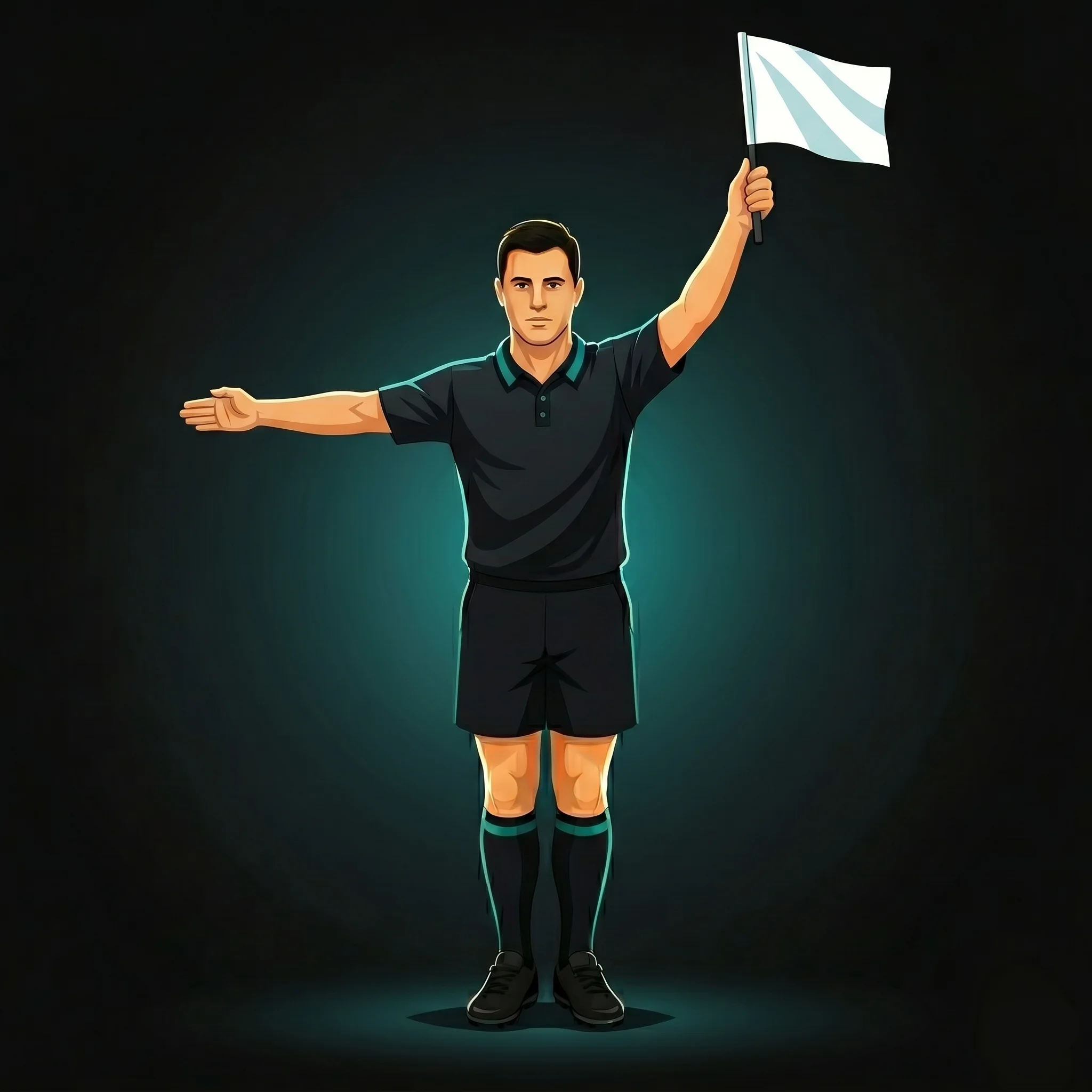
Ball or Player in Touch
Touch judge raises the flag above the head to indicate touch, then points in the direction of attack for the non-offending team.
When used: Indicates the ball or a ball-carrying player has gone into touch. A lineout is awarded to the opposing team.
Assistant Referee
1 signal
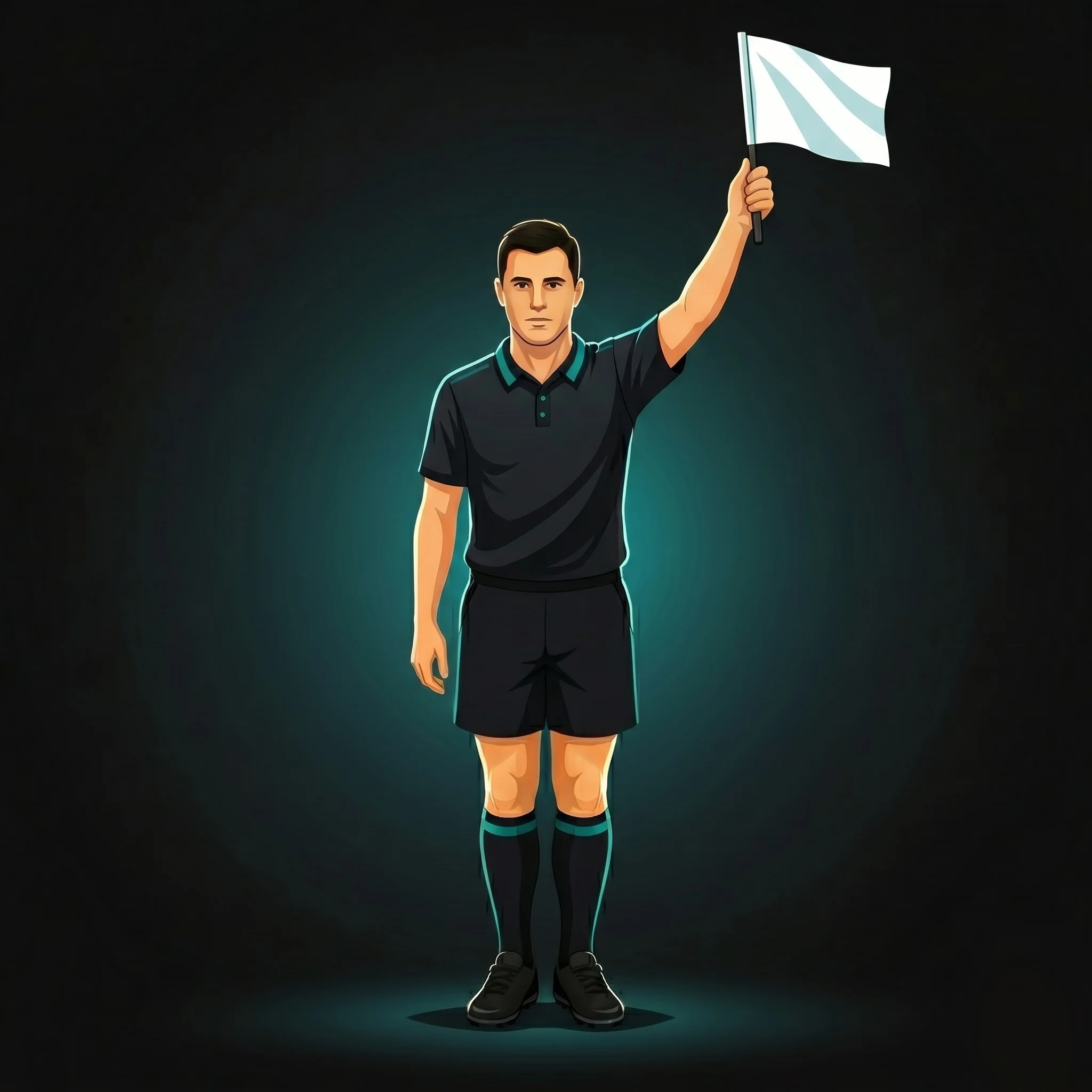
Kick at Goal Successful
Assistant referee raises the flag above the head to signal the kick has crossed between and over the posts.
When used: Used by both assistant referees simultaneously to confirm a conversion or penalty kick has been successful.
Match Management
5 signals
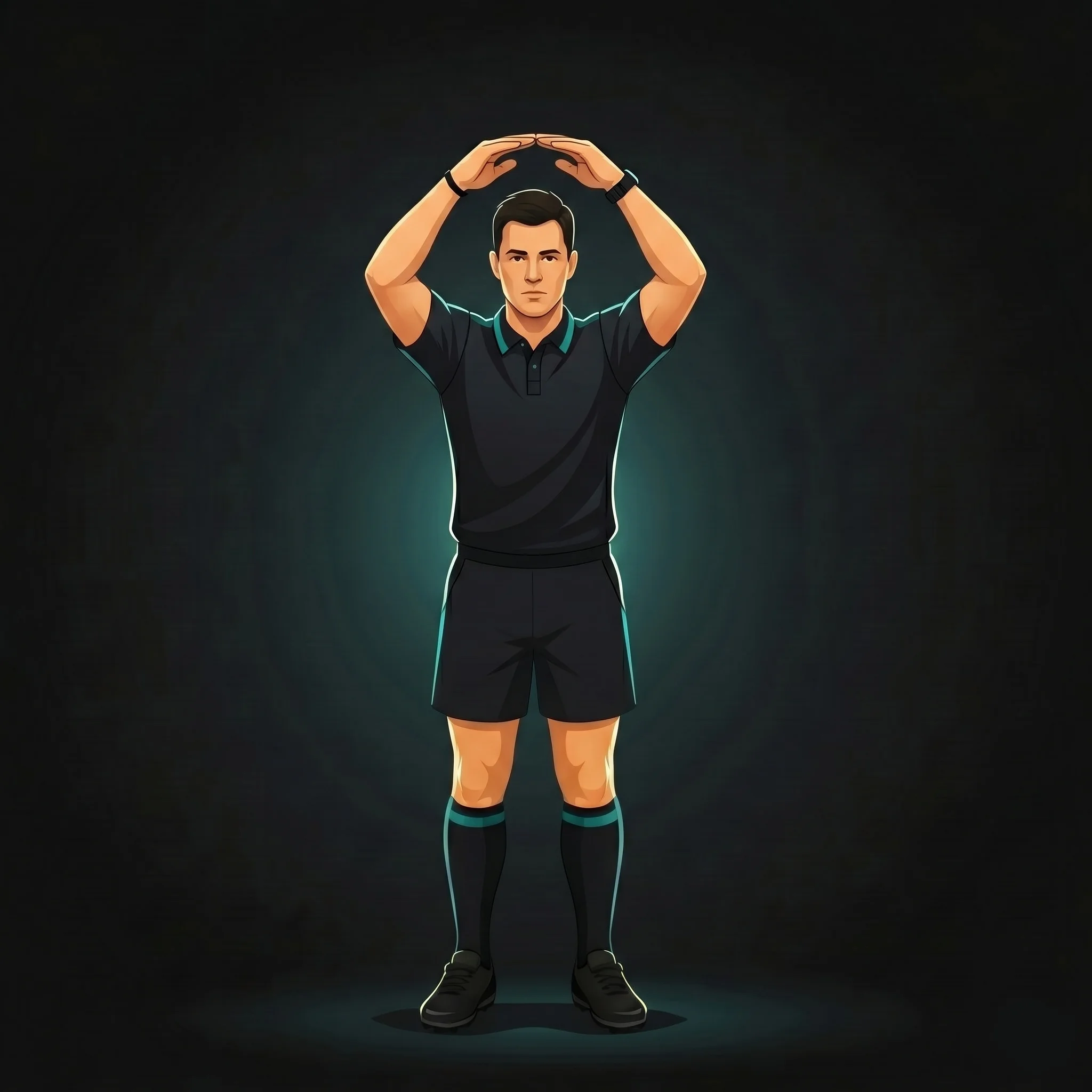
Forming a Scrum
Referee signals for teams to come together and bind for a scrum, using a circular hand motion.
When used: Used to instruct players to form a scrum after a scrum has been awarded and players need to be directed to the correct position.
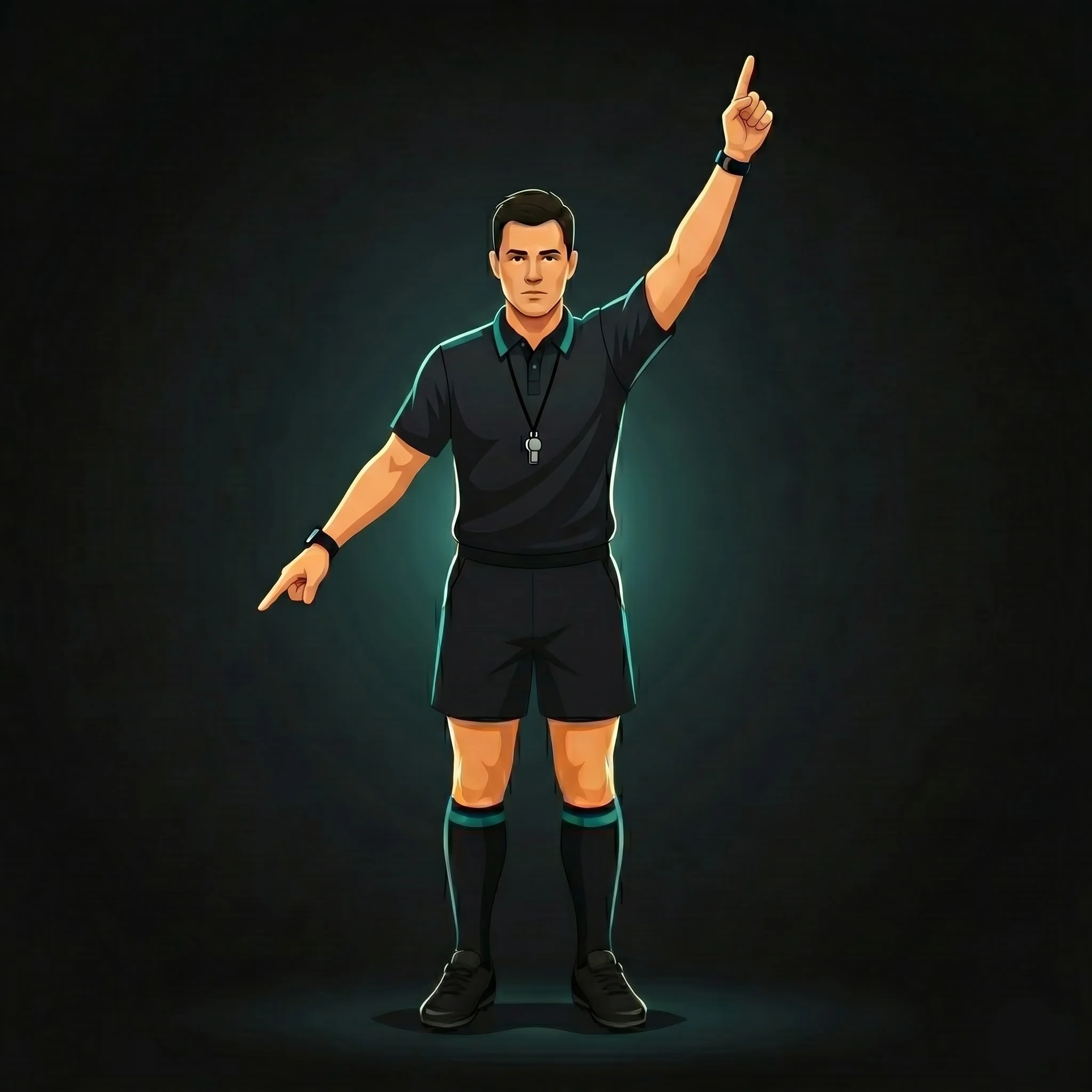
Offside Choice: Penalty or Scrum
Referee signals the non-offending team's choice of penalty kick or scrum following an offside infringement.
When used: Used when a team is awarded a penalty for an offside offence and the referee indicates their options.
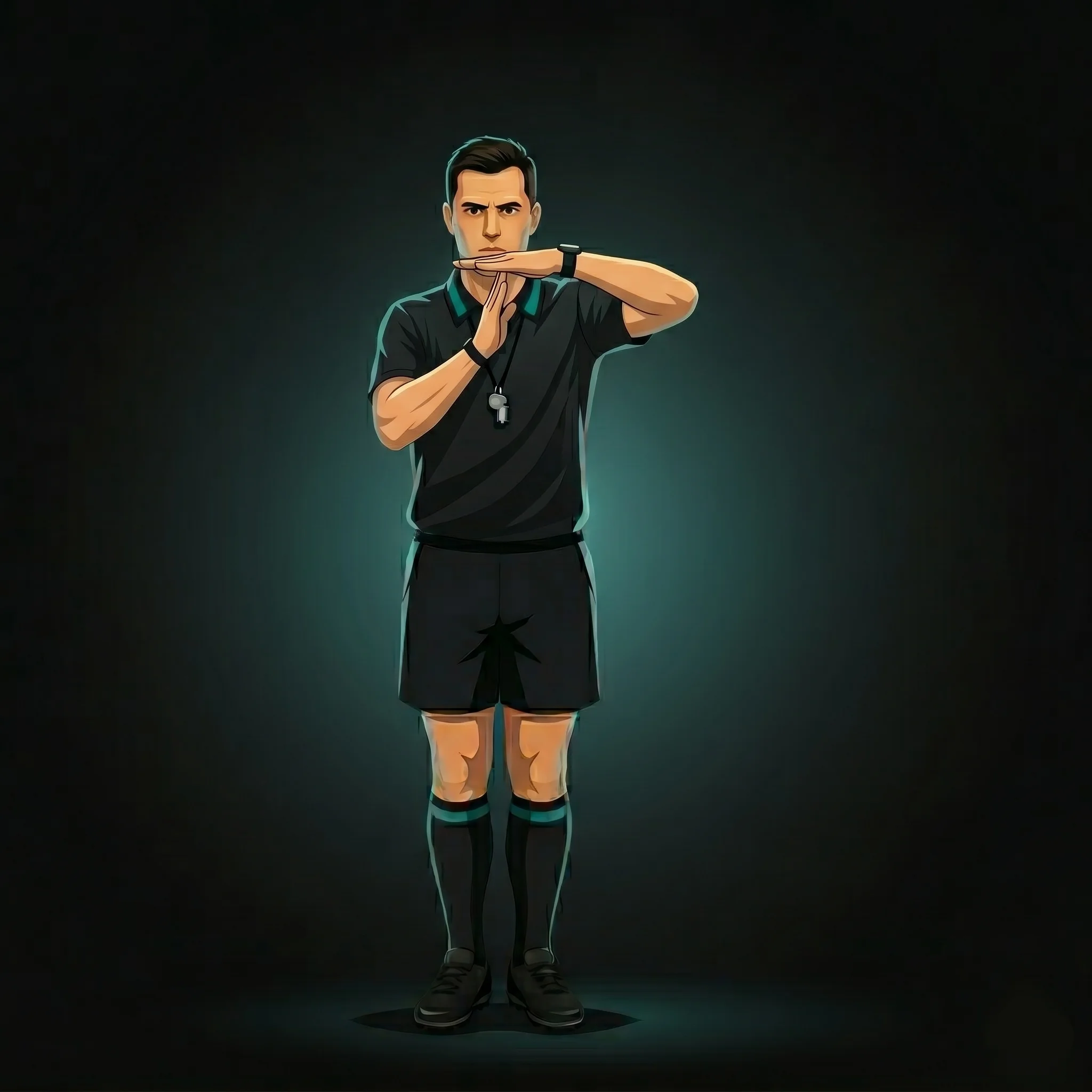
Time Off
Referee signals a stoppage in match time by crossing the arms above the head.
When used: Used when the clock must be stopped, for example for an injury, a video review, or another significant delay.
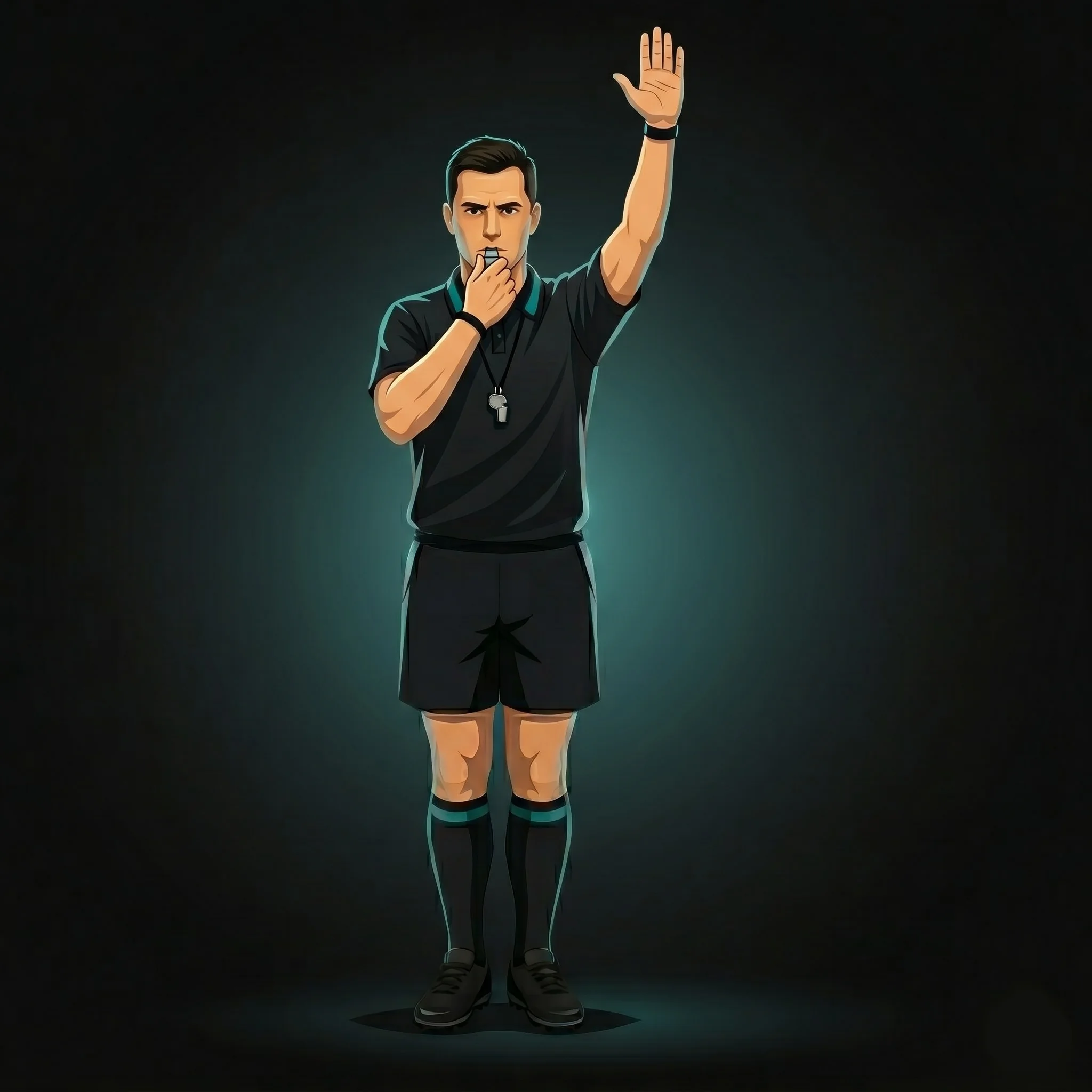
Timekeeper to Stop or Start
Referee signals to the timekeeper to stop or start the match clock.
When used: Used to communicate with the timekeeper at the side of the pitch when the clock needs to be paused or restarted.
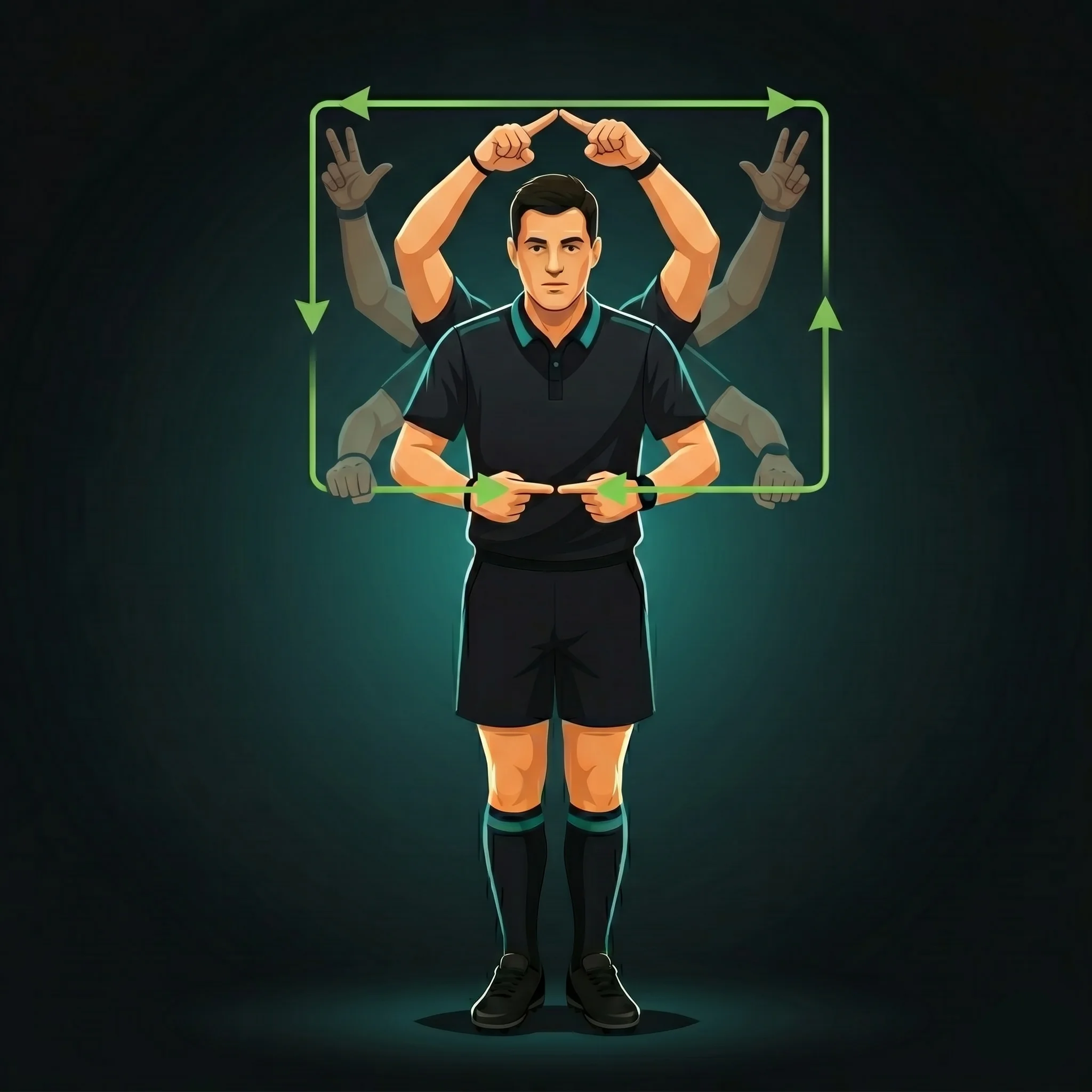
Referee Consults TMO
Referee signals a Television Match Official review is underway by forming a rectangle with both hands.
When used: Used when the referee refers a decision to the TMO for review using video evidence.
Player Safety
4 signals
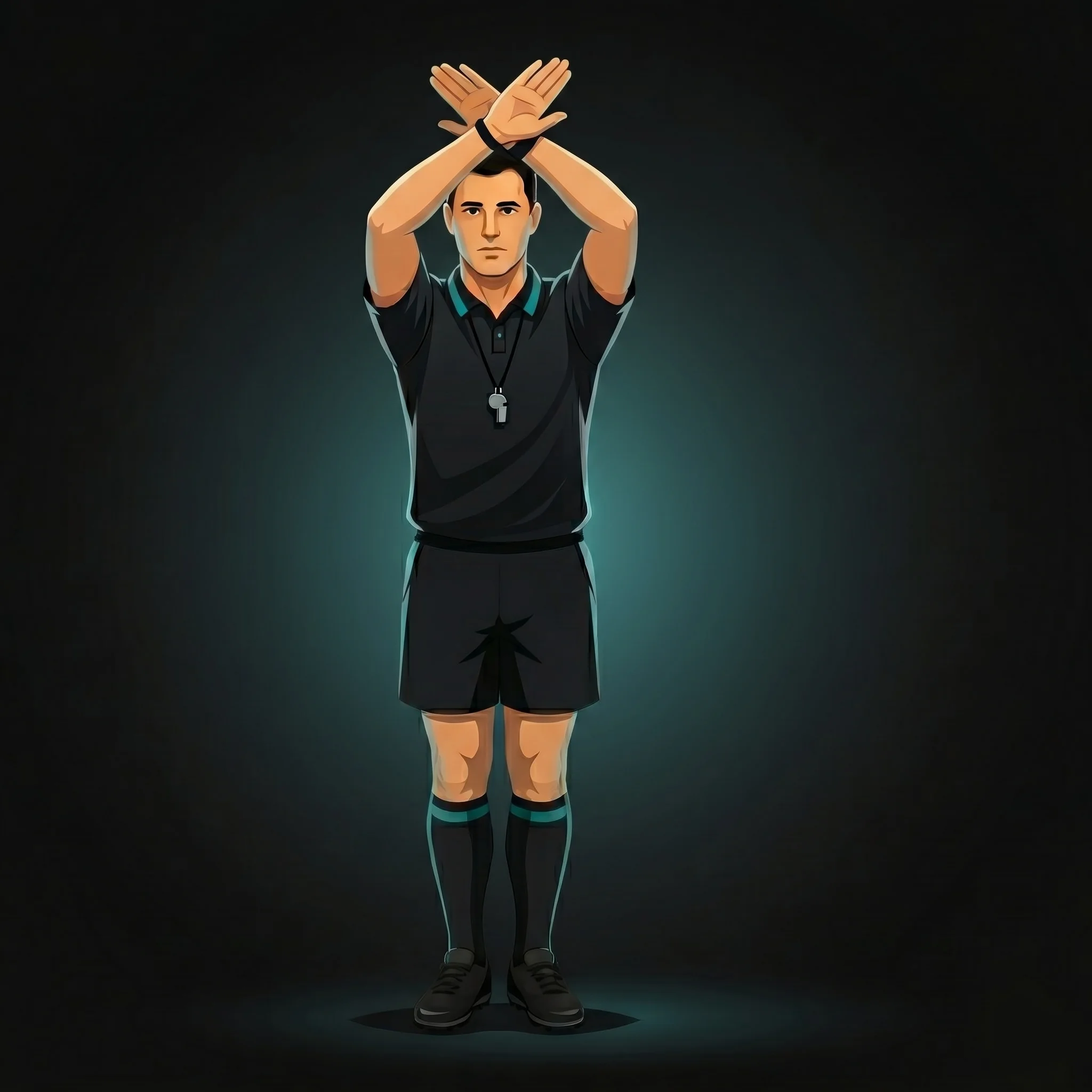
Bleeding Wound
Referee signals a player has a bleeding wound and must temporarily leave the field for treatment.
When used: Used when a player is bleeding. The player must leave the field and may be replaced by a temporary blood replacement.
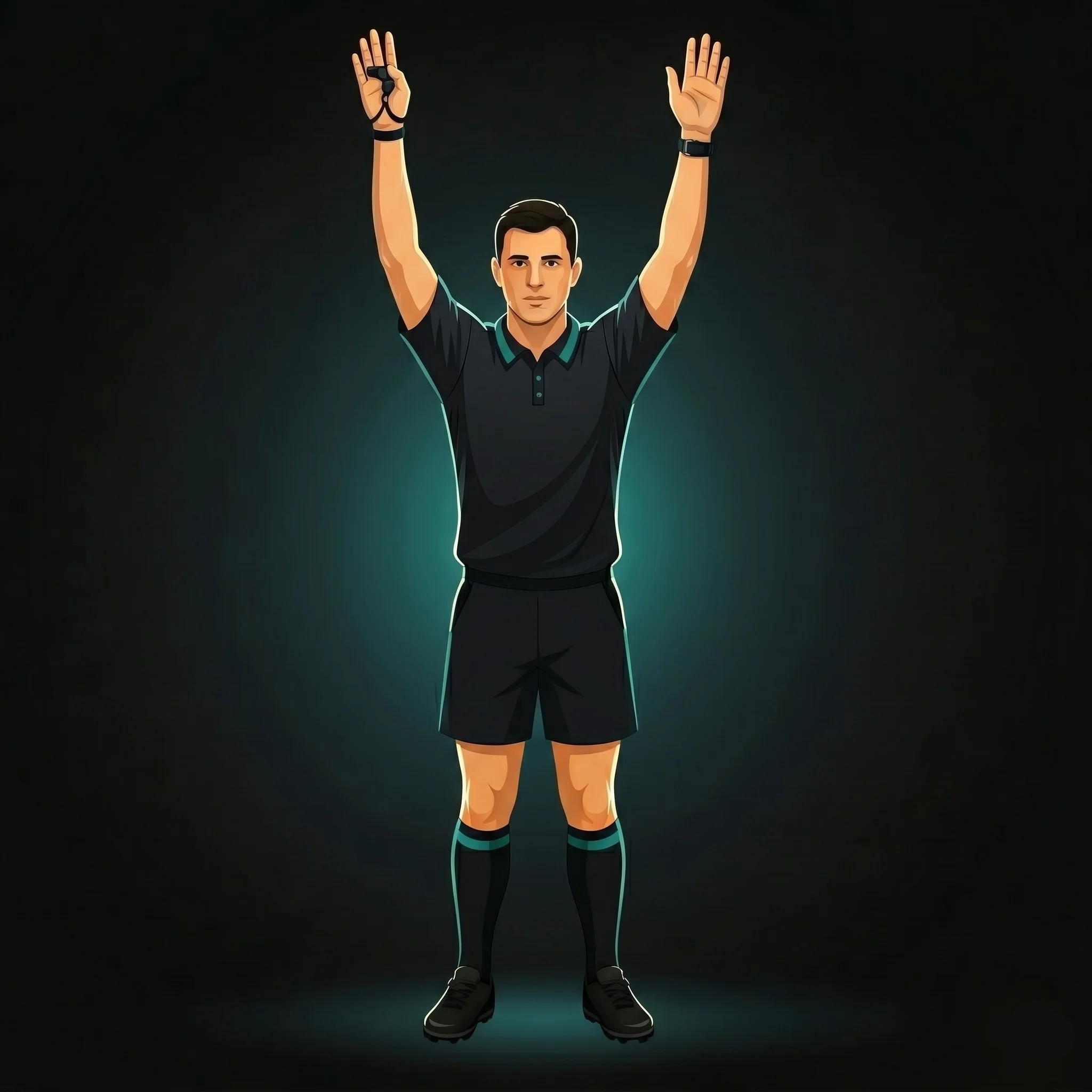
Doctor Needed
Referee signals for a doctor to come onto the field to attend to an injured player.
When used: Used when the referee deems medical intervention beyond a physio is required for a player's injury.
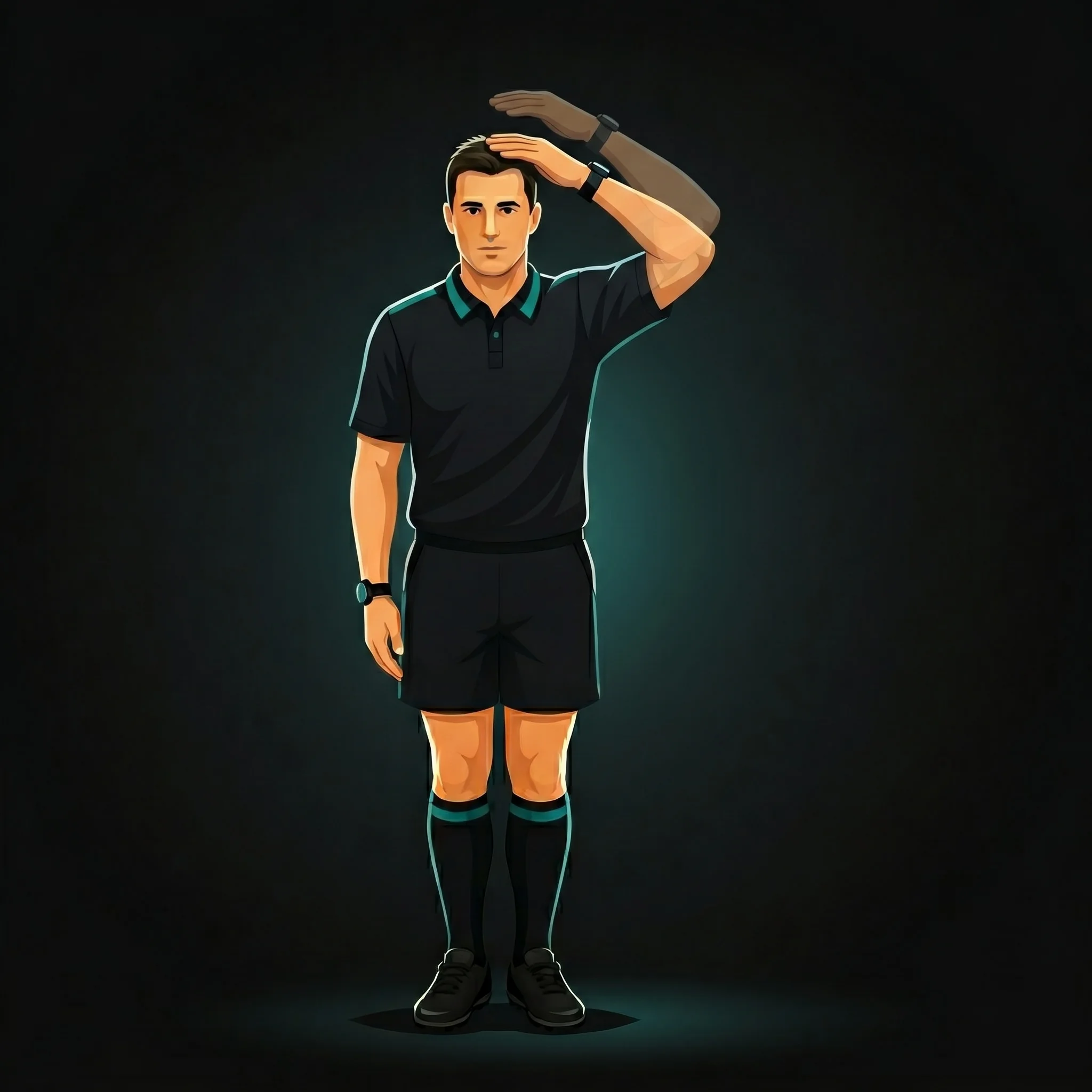
Head Injury Assessment Required
Referee signals that a player must undergo a Head Injury Assessment and must leave the field.
When used: Used when a player has received a potential concussive head impact. The HIA protocol is initiated and the player leaves the field for assessment.
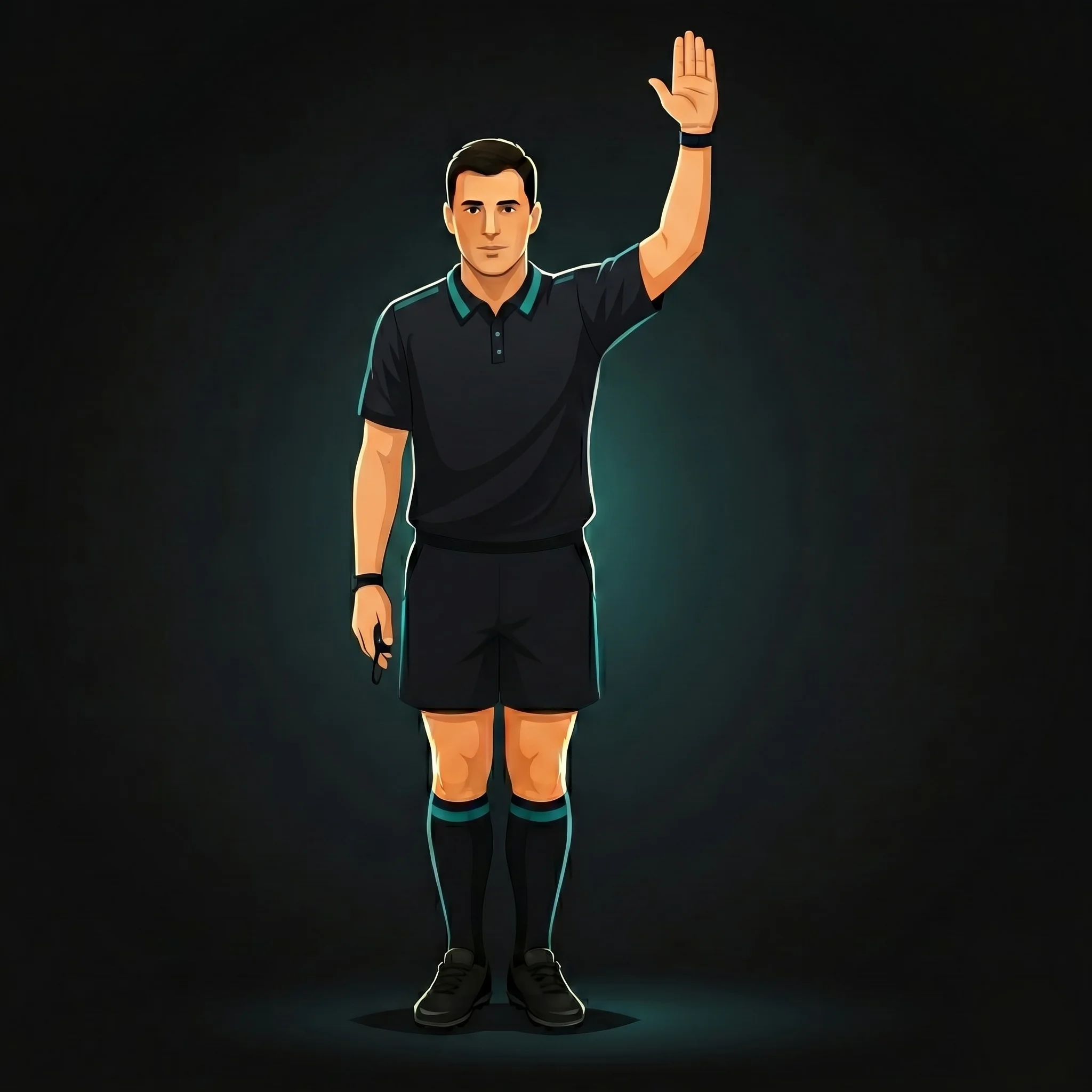
Physio Needed
Referee signals for a physiotherapist to come onto the field to attend to an injured player.
When used: Used when a player is injured and requires on-field medical attention from the team physiotherapist.