
Rugby term
Yellow card
Definition
A yellow card is a temporary suspension: the player leaves the field for 10 minutes of playing time, and their team plays a player short while they are off.
When a referee shows a yellow card
A yellow card is a caution and a temporary suspension. Law 9 says a player who commits foul play must be cautioned, shown a yellow card or sent off, and the referee picks the level. Reasons for a yellow card can include:
- repeating an offence after the referee has warned the team about repeated infringements (Law 9)
- misconduct, such as disputing the referee's decisions (Law 9)
- a dangerous tackle, such as a high or late tackle, judged below the red card level (Law 9)
- intentionally collapsing a scrum, ruck or maul (Law 9)
- foul play that prevents a probable try, where the law says the player must be shown a yellow card or sent off (Law 8)
What the referee does and signals
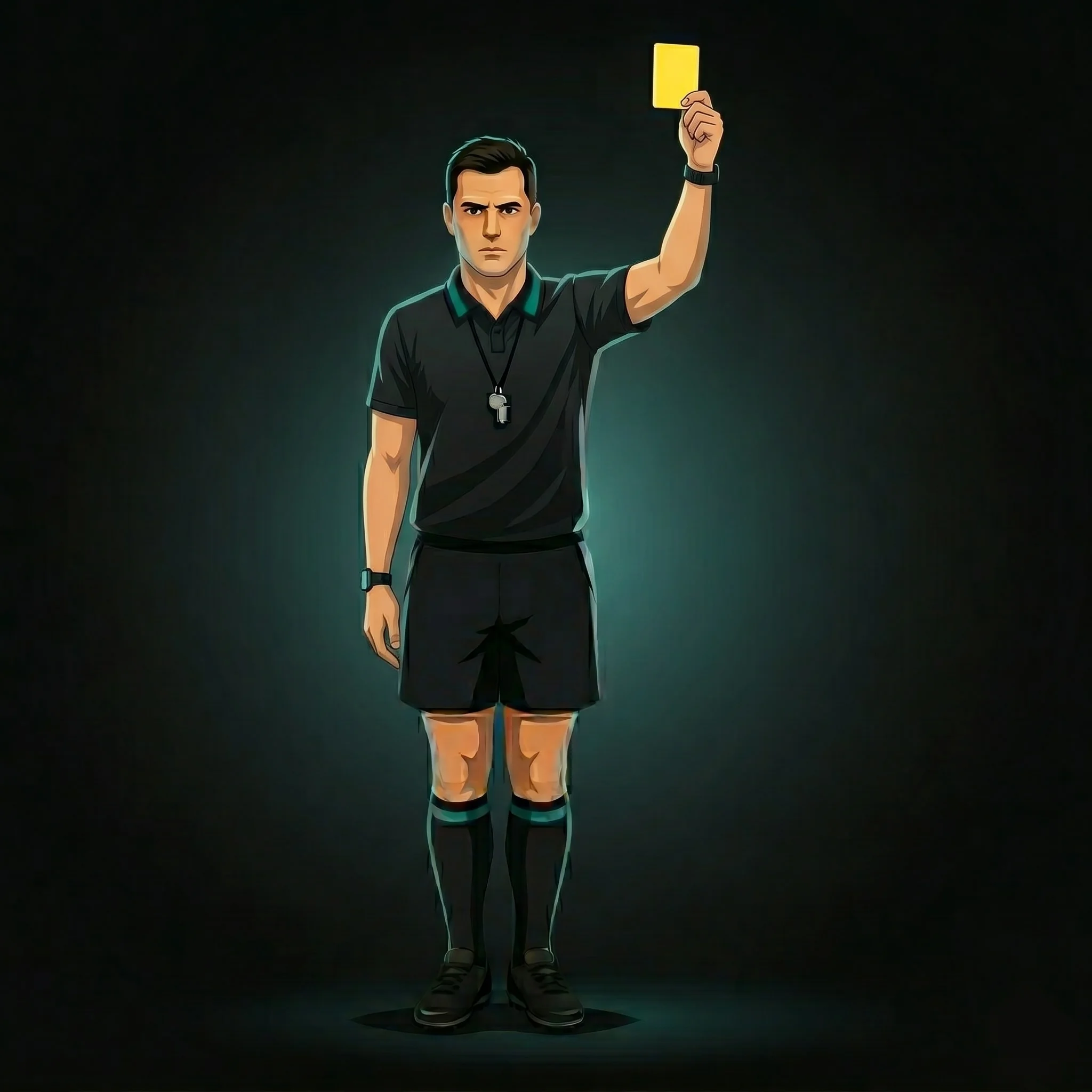
The referee blows the whistle to caution the player (Law 6) and holds the yellow card up above their head. The player goes to the sin bin. The other team is normally awarded a penalty kick for the offence too.
What happens next
The player is suspended for 10 minutes of playing time, and the team plays with one fewer player during that period (Law 9).
Playing time means the clock only counts while the match is running, so time the referee stops for an injury or a TMO review does not count. A sin bin can last longer than 10 minutes on a watch. In Sevens and 10s the suspension is two minutes.
If the carded player is a front-row player and the team cannot contest scrums with those left, the team takes another player off so a front-row replacement can come on (Law 3).
A second yellow card
A player who has been shown a yellow card and commits another yellow-card offence must be sent off, and play restarts with a penalty (Law 9). That becomes a red card, and under the standard law the team plays a player short for the rest of the game (Law 9).
Referee signal
Common questions
What does a yellow card mean in rugby?
It means the player has been cautioned and sent to the sin bin. They leave the field for 10 minutes of playing time and their team plays with one fewer player until they return (Law 9).
How long is a yellow card in rugby?
10 minutes of playing time (Law 9). Stoppages do not count, so it often lasts longer than 10 minutes on a watch. In Sevens it is two minutes.
Can a player with a yellow card be replaced?
No. The team plays with one fewer player for the 10 minutes. The only exception is a front-row replacement to keep scrums contested, and another player must go off to make room (Law 3).
What happens if a player gets two yellow cards?
A second yellow card in the same match means the player must be sent off (Law 9). It is treated as a red card.
What is the difference between a yellow card and the sin bin?
They describe the same thing. The yellow card is what the referee shows. The sin bin is the 10-minute suspension the player serves off the field.
Updated