
Rugby term
Head injury assessment (HIA)
Definition
An HIA, or head injury assessment, is when a player with a possible head injury leaves the field to be checked while a temporary replacement takes their place.
What HIA means
HIA stands for head injury assessment. It is only used in matches that World Rugby has approved in advance for the HIA process (Law 3). A player who needs an HIA leaves the field so the medical team can assess them, and a temporary replacement comes on in their place.
Matches without that approval do not use the HIA process.
How an HIA works
The player who needs the assessment leaves the field and is temporarily replaced, even if the team has already used all its replacements. The game cannot restart until the temporary replacement is on (Law 3).
The player has 12 minutes of actual time, counted from when they left the playing area. If they are not available to return within that time, the replacement becomes permanent (Law 3). If the time runs out during half-time, the replacement becomes permanent unless the player returns at the start of the second half (Law 3).
What the referee does and signals
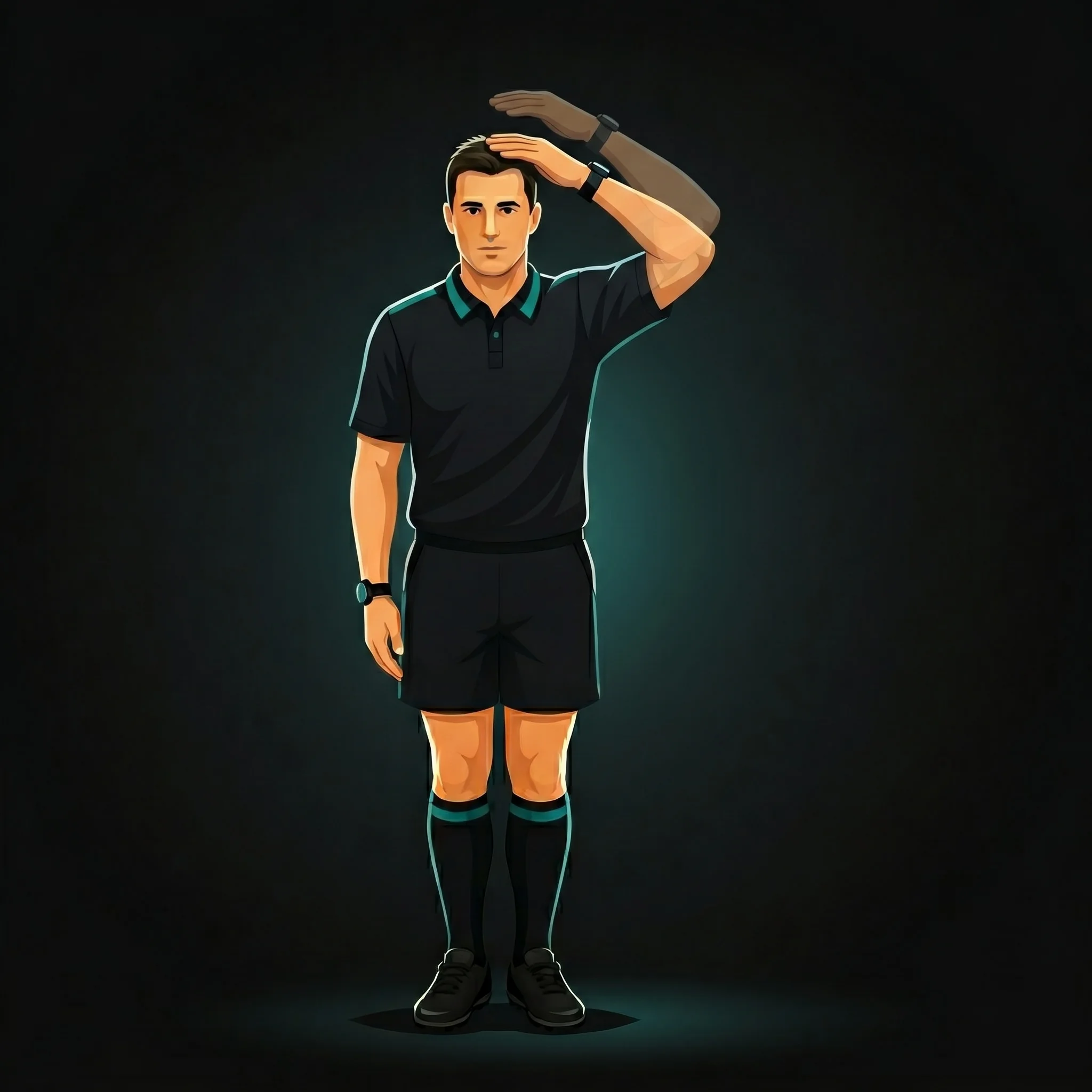
The referee can stop play when it is suspected that a player is seriously injured (Law 6), and can allow time for the injured player (Law 5). The referee signals that a head injury assessment is needed and the player leaves the field. The assessment itself is done by the medical staff, not the referee.
Recognise and Remove
At any point in a match, a player who is concussed or has suspected concussion must be removed from the playing area immediately and permanently (Law 3). This is known as Recognise and Remove. The law applies in every match, whether or not it uses the HIA process.
The HIA is different. It is a temporary replacement for a player who needs an assessment, and it is only used in matches World Rugby has approved for it (Law 3).
HIA or blood replacement?
The two are often mixed up. A blood replacement is for a bleeding injury and lasts up to 15 minutes of actual time while the bleeding is controlled (Law 3). An HIA replacement is for a possible head injury and lasts up to 12 minutes (Law 3). In both cases the replacement becomes permanent if the player is not back in time.
Referee signal
Common questions
What does HIA mean in rugby?
HIA stands for head injury assessment. A player with a possible head injury leaves the field to be assessed and is temporarily replaced while that happens (Law 3).
How long does an HIA take in rugby?
The player has 12 minutes of actual time from leaving the playing area. If they are not available to return after 12 minutes, the temporary replacement becomes permanent (Law 3).
Can a player come back on after an HIA?
Yes, if they are available to return within the 12 minutes. If not, the temporary replacement becomes permanent and the player takes no further part.
Does an HIA replacement use up a substitute?
The player is temporarily replaced even if all the replacements have been used (Law 3), so the team is not left a player short while the assessment takes place.
What is the difference between an HIA and Recognise and Remove?
An HIA is a temporary replacement for assessment, used only in approved matches. Recognise and Remove applies in every match: a player who is concussed or has suspected concussion must be removed immediately and permanently (Law 3).
Updated