
Rugby term
Binding
Definition
Binding means gripping a team-mate or an opponent firmly with the arm so that players stay connected, and it is required at scrums and rucks.
What binding means
To bind is to grip another player firmly with the arm. The laws define it as grasping the other player's body firmly between the shoulders and the hips, with the whole arm in contact from hand to shoulder. So a hand simply placed on another player is not a bind.
Binding at the scrum
The scrum engagement call is "Crouch, Bind, Set". On "Bind", each prop binds on the opposing prop, and on "Set" the front rows come together (Law 19). Every player in the pack has a set way to bind, and every bind must be kept, in the position it started, for the whole scrum (Law 19).
A scrum that is not properly bound is unstable and more likely to collapse, which is why the referee penalises a player who binds incorrectly.
Binding at the ruck
A player who joins a ruck must bind onto a team-mate or an opponent. The bind must come before, or at the same time as, contact with any other part of the body (Law 15). Players in a ruck must also keep their heads and shoulders no lower than their hips (Law 15).
Smashing into a ruck with the shoulder is not a bind. Charging into a ruck, which includes any contact made without binding, is dangerous play (Law 9).
What the referee does and signals
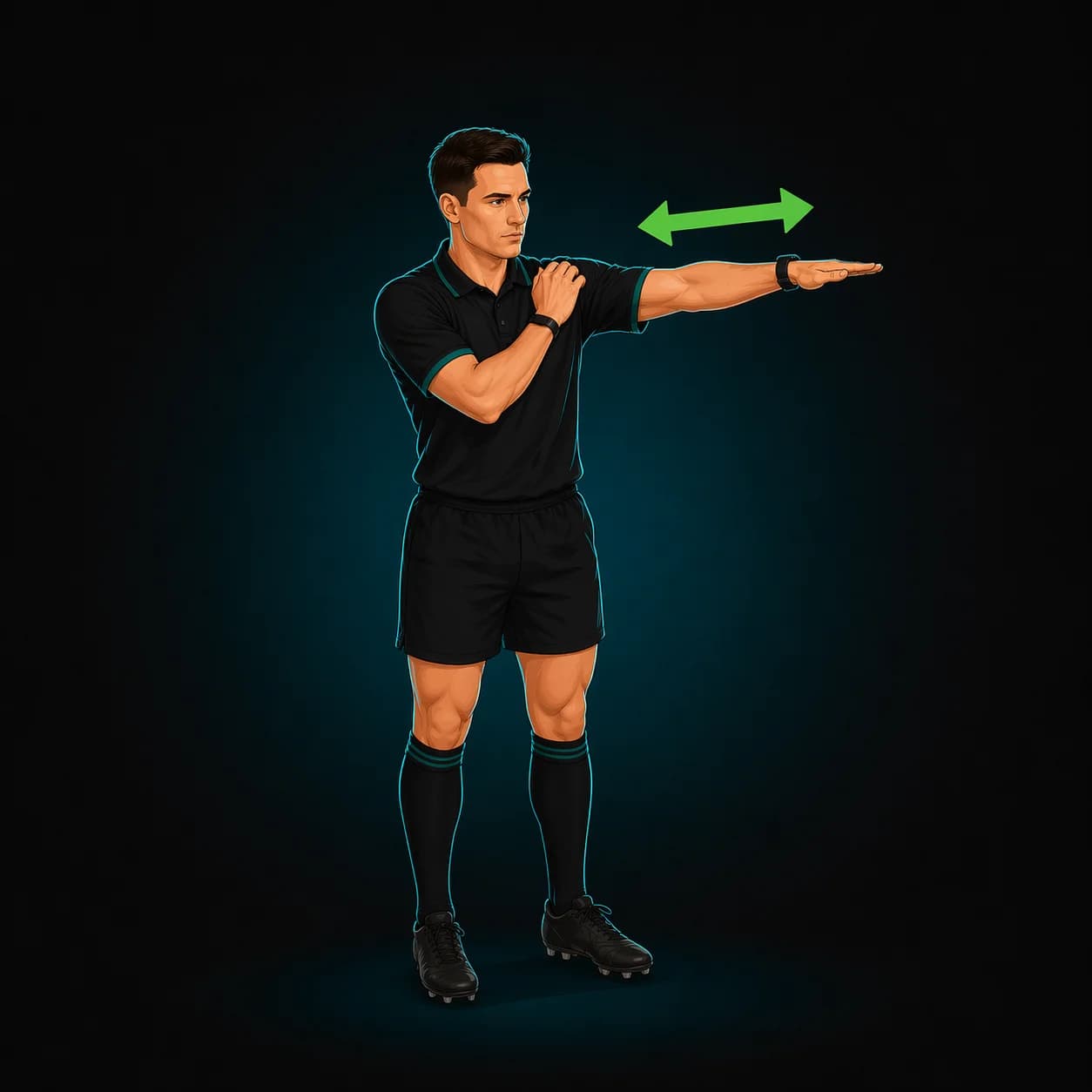
Failing to bind properly at a scrum or a ruck is a penalty kick to the other team (Laws 15 and 19). The referee's signal for it is shown below.
Referee signal
Common questions
What does binding mean in rugby?
It means gripping another player firmly with the arm so you stay connected to them. Binding is required at the scrum and when joining a ruck.
What is crouch, bind, set in rugby?
It is the referee's call that controls the scrum engagement. Both front rows crouch, the props bind on their opposite numbers, and the packs come together on "Set" (Law 19).
Do you have to bind at a ruck?
Yes. A player joining a ruck must bind onto a team-mate or an opponent, before or at the same time as making contact (Law 15).
What is the penalty for not binding in rugby?
A penalty kick to the other team, both at the scrum and at the ruck (Laws 15 and 19).
Updated