
Rugby term
Breakdown
Definition
The breakdown is the contest for the ball straight after a tackle, covering the tackle itself and any ruck that forms over the ball on the ground.
What the breakdown is
Breakdown is the everyday name for what happens straight after a tackle, when both teams compete for the ball on the ground. It is not a single law. The tackle is covered by Law 14 and the ruck by Law 15, and the breakdown is where the two meet.
It happens dozens of times in a match, and many penalties are given there.
Who must do what
Each player at the breakdown has their own duties:
- the tackled player must immediately make the ball available, by releasing, passing or pushing it in any direction except forward, and then get up or move away (Law 14)
- the tackler must immediately release the ball and the ball carrier, get up or move away, and be on their feet before playing the ball (Law 14)
- players arriving must stay on their feet and come from the direction of their own try line, through the "gate", not from the side (Law 14)
- an arriving player who is on their feet may play the ball before a ruck forms (Law 14)
When it becomes a ruck
A ruck forms when at least one player from each team is in contact, on their feet and over the ball on the ground (Law 15). From then on nobody may handle the ball, unless they had their hands on it before the ruck formed and have stayed on their feet. Players use their feet to win it (Law 15).
Each team now has an offside line through the hindmost point of any player in the ruck. Players not in the ruck must join it or get behind that line straight away (Law 15).
What the referee does and signals
Most breakdown offences are penalty kicks: not releasing, joining from an offside position, handling the ball in the ruck or being offside (Laws 14 and 15). The referee often plays advantage first, to see whether the other team can use the ball (Law 7).
If the ball does not come out, the referee awards a scrum. That happens when a tackle or a ruck becomes unplayable, and the team that was last moving forward throws in (Laws 14, 15 and 19).
A common example
A defender makes a tackle and a team-mate stays on their feet over the ball, getting their hands on it before any attacker arrives. If the tackled player keeps hold of the ball, the referee penalises them for not releasing. This contest for the ball is called jackaling.
Referee signal
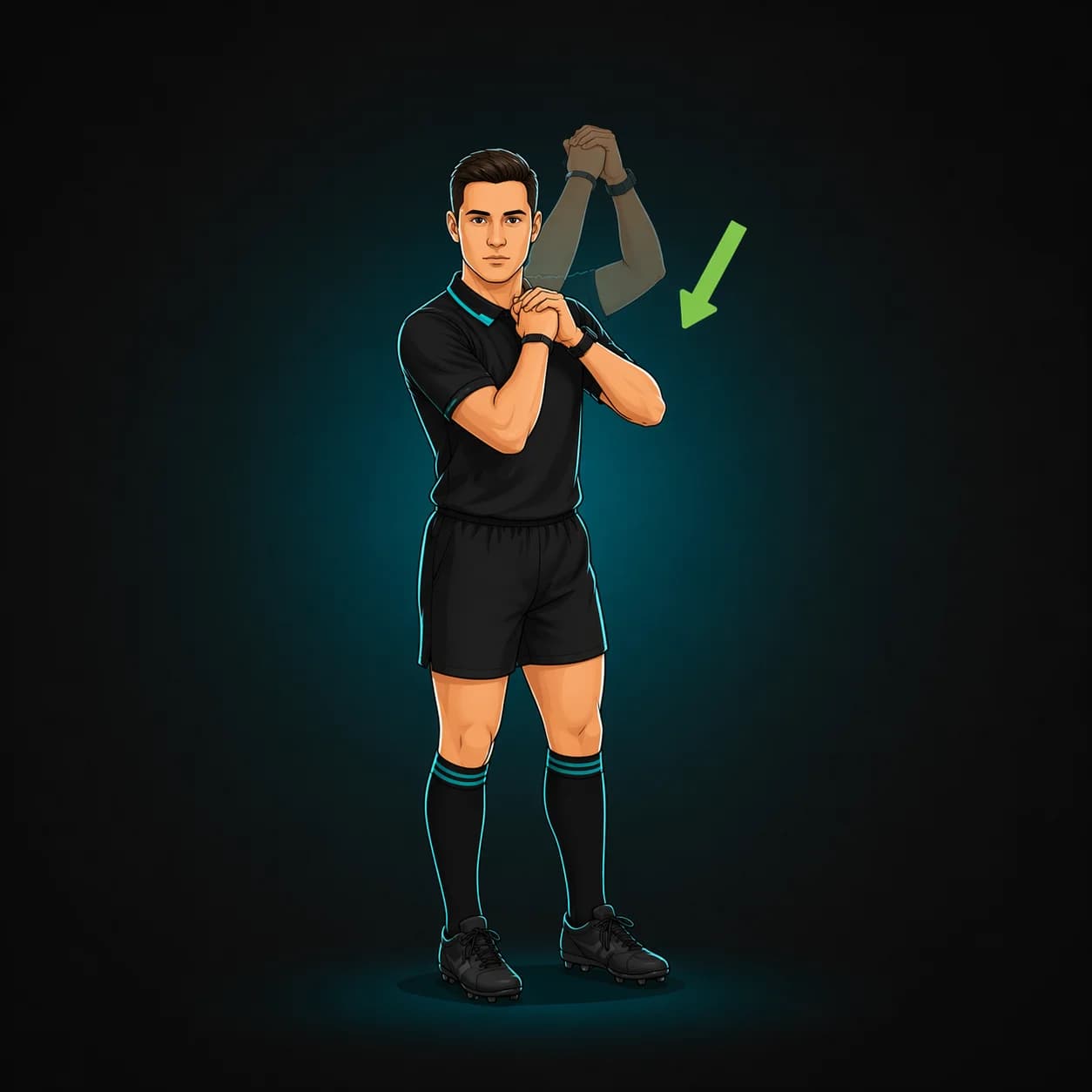
Common questions
What is the breakdown in rugby?
It is the contest for the ball straight after a tackle. It covers the duties of the tackler, the tackled player and the players arriving, and any ruck that forms (Laws 14 and 15).
What are the main rules at the breakdown?
Release the ball and the player straight away after a tackle, arrive on your feet from your own side, do not reach in for the ball once a ruck has formed, and stay behind the offside line.
Can you use your hands at the breakdown?
Yes, until a ruck forms. A player who arrives on their feet from their own side may pick up the ball (Law 14). Once a ruck has formed, only a player who already had their hands on the ball, and stayed on their feet, may keep handling it (Law 15).
What happens if the ball does not come out of a breakdown?
The referee awards a scrum when a tackle or a ruck becomes unplayable. The team that was last moving forward throws in (Laws 14, 15 and 19).
Updated