
Rugby term
Try
Definition
A try is scored when an attacking player is first to ground the ball in the opponents' in-goal, and it is worth 5 points.
How a try is scored
A try is scored when an attacking player is first to ground the ball in the opponents' in-goal (Law 8). Grounding means holding the ball and touching the ground with it, or pressing down on it with a hand, an arm or the front of the body between waist and neck (Law 21).
The in-goal includes the try line, so a ball grounded on the try line counts. A try is also scored when a scrum, ruck or maul reaches the try line and an attacker is first to ground the ball, or when a tackled player's momentum carries them over and they ground it (Law 8).
How many points a try is worth
A try is worth 5 points (Law 8). The scoring team then gets a conversion kick worth 2 more, so a converted try is worth 7. A penalty try is worth 7 points straight away, with no conversion (Law 8).
What the referee does and signals
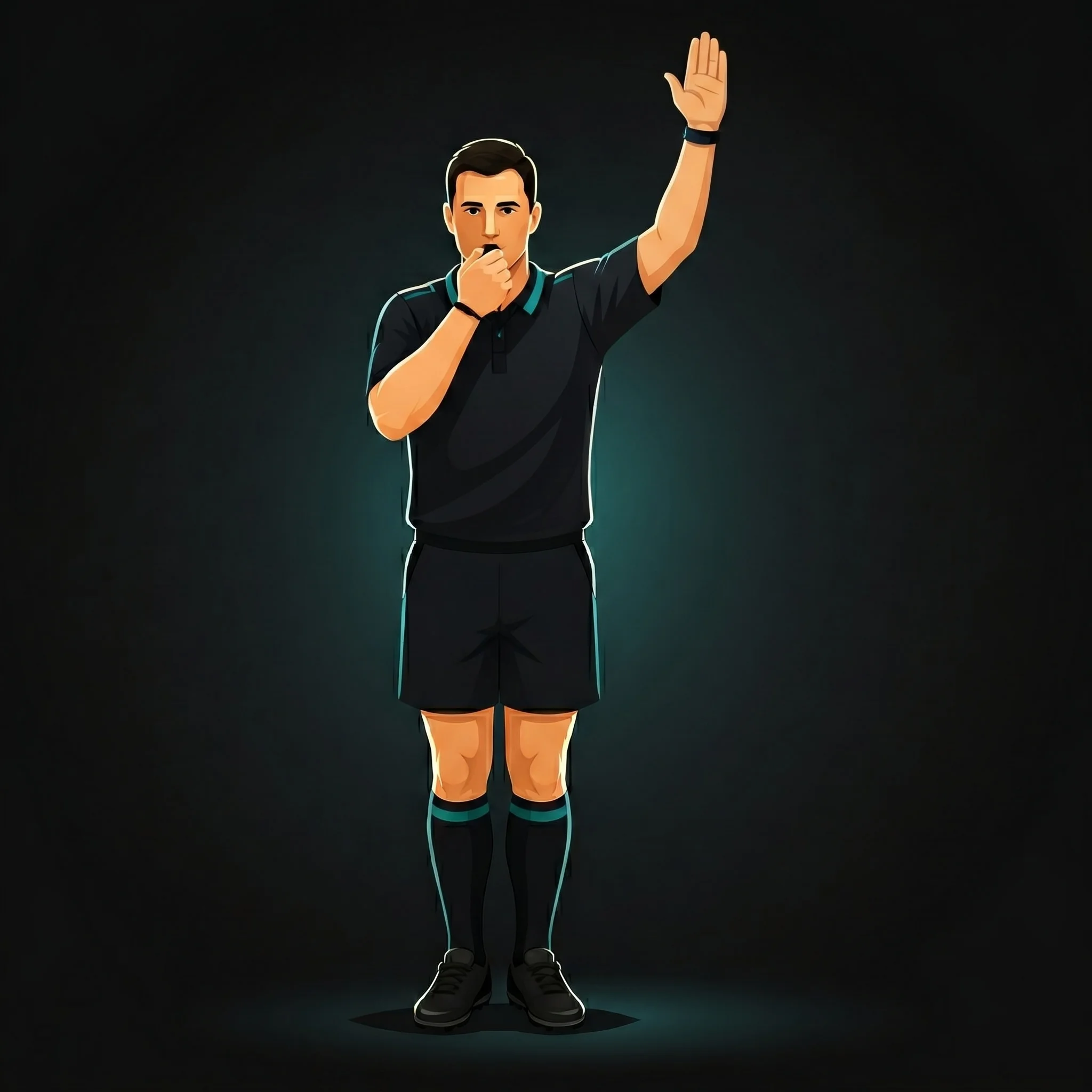
The referee blows the whistle and signals the try (Law 6). Where a TMO is appointed, the referee can ask for a review of the grounding, of touch, or of an infringement in the build-up (Law 6).
When it is not a try
The referee does not award a try when:
- the ball carrier is held up and cannot ground the ball (Law 21)
- the player holding the ball touches the touch-in-goal line or the dead-ball line, or the ground beyond, as they ground it (Law 21)
- the ball reaches the dead-ball line before it is grounded (Law 6)
- the player knocks the ball on while trying to ground it (Law 12)
- the TMO finds an infringement in the build-up, such as a forward pass (Law 6)
What happens next
The scoring team takes a conversion from a line through where the try was awarded (Law 8). Play then restarts with a drop kick from the centre of the halfway line by the team that conceded (Law 12). A try scored just before time runs out still gets its conversion (Law 5).
Referee signal
Common questions
How many points is a try worth in rugby?
A try is worth 5 points (Law 8). A successful conversion adds 2 more, and a penalty try is worth 7.
What is a try in rugby?
It is the main way to score. An attacking player is first to ground the ball in the opponents' in-goal, on or over the try line (Law 8).
Does the ball have to cross the line to score a try?
No. The try line is part of the in-goal, so a ball grounded on the line itself is a try.
What happens after a try is scored?
The scoring team takes a conversion kick for 2 more points. Play then restarts with a drop kick from the centre of the halfway line (Laws 8 and 12).
Can the TMO overturn a try?
Where one is appointed, the TMO can advise the referee on grounding, touch and any infringement leading to the try. If the review finds a problem, the referee can disallow the try (Law 6).
Updated