
Rugby term
Touch judge
Definition
A touch judge is one of the two officials on the touchlines who signal when the ball goes into touch and whether kicks at goal are successful.
Touch judges and assistant referees
Every match has two assistant referees or two touch judges, one on each side of the ground (Law 6). Unless the match organiser appoints them, each team provides a touch judge.
Both signal touch, touch-in-goal and the result of kicks at goal (Law 6). Assistant referees also help the referee in other ways the referee directs, including reporting foul play. At professional level the officials on the touchlines are assistant referees, but many people still call them touch judges.
Where they stand
A touch judge stays in touch, off the field of play, except when judging a kick at goal (Law 6). For conversions and penalty goals the two officials stand in in-goal behind the posts, one at each post.
What the flag signals mean
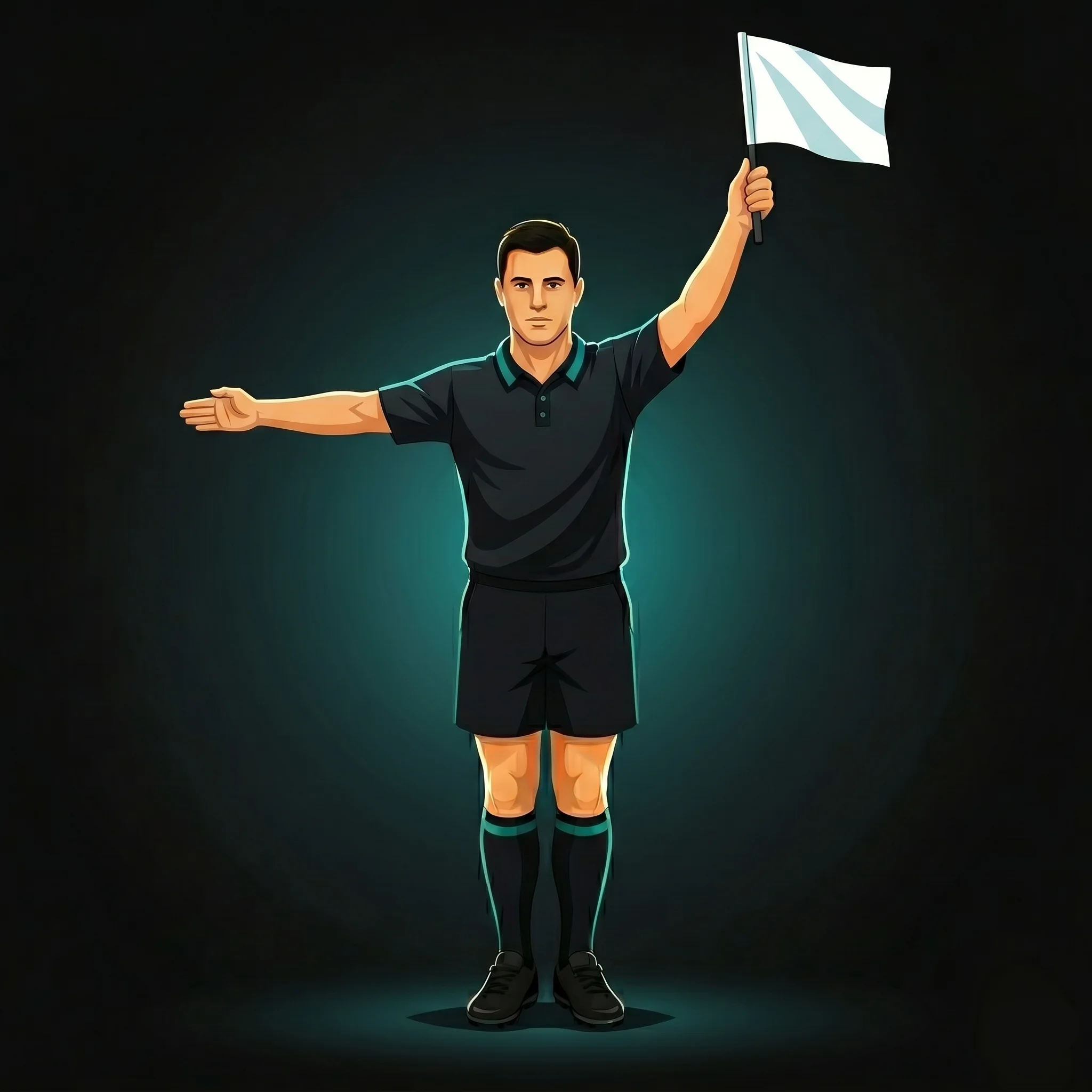
Each flag signal has a set meaning:
- flag raised on the touchline: the ball or the ball carrier has gone into touch or touch-in-goal. The official stands where the throw will be taken and points to the team that throws in (Law 6)
- flag lowered: the ball has been thrown in (Law 6)
- flags raised behind the posts: the kick at goal was successful (Law 6)
- flag held horizontally, pointing infield at right angles to the touchline: an assistant referee has seen foul play (Law 6)
Reporting foul play
An assistant referee signals foul play only if the match organiser has given them that authority. They stay in touch and carry on with their other duties until the next stoppage. The referee may then invite them onto the field to report what they saw (Law 6).
Who has the final say
The referee is in charge of the touch judges. The referee can tell them what their duties are and can overrule their decisions (Law 6), including after a flag has been raised (Law 6).
Referee signal
Common questions
What does a touch judge do in rugby?
A touch judge signals when the ball or the ball carrier goes into touch, shows which team throws in, and judges whether kicks at goal are successful (Law 6).
What is the difference between a touch judge and an assistant referee?
Both signal touch and kicks at goal. An assistant referee is formally appointed and also helps the referee in other ways, including reporting foul play (Law 6). Touch judges are often provided by the teams.
What does it mean when the touch judge raises the flag?
A raised flag on the touchline means the ball has gone into touch. Flags raised behind the posts mean a kick at goal was successful. A flag held out flat, pointing infield, means foul play has been seen (Law 6).
Can the referee overrule a touch judge?
Yes. The referee has control over the touch judges and assistant referees and may overrule their decisions (Law 6).
Updated