
Rugby term
Grounding
Definition
Grounding means putting the ball on the ground in in-goal with downward pressure, using the hands, arms or the front of the body from waist to neck.
How to ground the ball
There are two ways to ground the ball (Law 21):
- holding the ball and touching the ground with it
- pressing down on the ball with a hand or hands, an arm or arms, or the front of the body from waist to neck
Picking the ball up is not grounding it (Law 21). Just touching a loose ball is not enough either. The player has to press down on it.
Where grounding counts
The ball must be grounded in in-goal. The in-goal includes the try line itself, so a ball pressed down on the try line counts. The dead-ball line and the touch-in-goal lines are not part of in-goal. A player holding the ball who grounds it while touching either line, or the ground beyond, has not scored (Law 21).
The corner flag post does not count as touch-in-goal. If the ball or ball carrier touches it, play continues, unless the ball is grounded against the post (Law 21).
Who grounds it matters
When an attacking player grounds the ball in the opponents' in-goal, it is a try (Law 21). If there is doubt about which team grounded the ball first, the referee awards a five-metre scrum and the attacking team throws in (Law 21).
When a defender grounds the ball in their own in-goal, it is a touch down, not a score. Play then restarts with a try line drop-out or a five-metre scrum, depending on how the ball got there (Laws 12 and 19).
What the referee does and signals
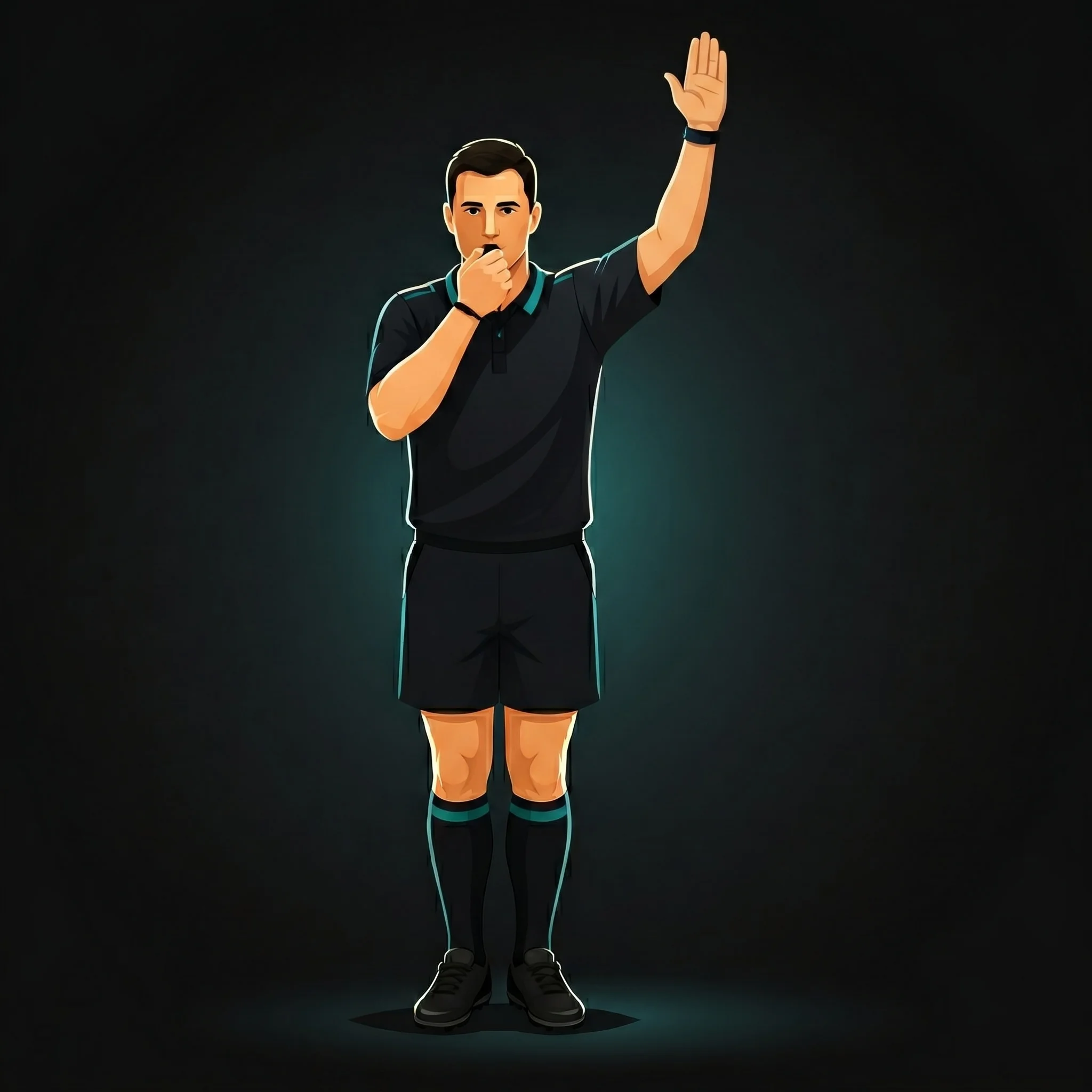
The referee blows the whistle and signals the try once the ball has been grounded properly (Law 6). If the grounding was hidden or close, the referee can ask the TMO to check the replay, where one is appointed (Law 6).
If defenders hold the ball carrier up so the ball cannot be grounded, there is no try. The ball is dead, and play restarts with a try line drop-out or a five-metre scrum (Law 21).
A common misconception
The player's body does not need to be over the line. A player who dives and presses the ball down on the try line has scored, even with their body still in the field of play. What matters is where the ball is grounded.
Referee signal
Common questions
What counts as grounding the ball in rugby?
Holding the ball and touching it down in in-goal, or pressing down on it with a hand, an arm or the front of the body between waist and neck (Law 21).
Does the ball on the try line count as a try?
Yes. The in-goal includes the try line, so grounding the ball on the line scores a try.
Do you need downward pressure to score a try?
Yes, unless you are holding the ball and touch the ground with it. A loose ball has to be pressed down with a hand, an arm or the front of the body between waist and neck (Law 21).
What happens if a player is held up over the line?
No try is scored. The ball is dead, and play restarts with a try line drop-out or a five-metre scrum, depending on how the ball got into in-goal (Law 21).
Updated