
Rugby term
Knock-on
Definition
A knock-on is when the ball goes forward off a player's hand or arm and touches the ground or another player before that player can catch it.
What counts as a knock-on
The laws now call it a knock forward (Law 11). It starts when a player:
- loses possession of the ball
- hits it forward with the hand or arm
- is hit on the hand or arm by the ball
If the ball then goes forward, towards the opponents' dead-ball line, and touches the ground or another player before the original player can catch it, it is a knock-on. A tackler who touches the ball and sends it forward has also knocked on (Law 11). If the player catches it again before it touches anything, there is no knock-on.
What is not a knock-on
These are not knock-ons:
- a player knocks the ball forward immediately after an opponent kicks it, which is a charge-down (Law 11)
- a player rips or knocks the ball from a ball carrier and it goes forward off the carrier's hand or arm (Law 11)
- a player fumbles the ball but catches it again before it touches the ground or another player
- the ball comes forward off a player's foot or leg when they did not have it in their hands, because a knock-on needs the hand or arm
What the referee does and signals
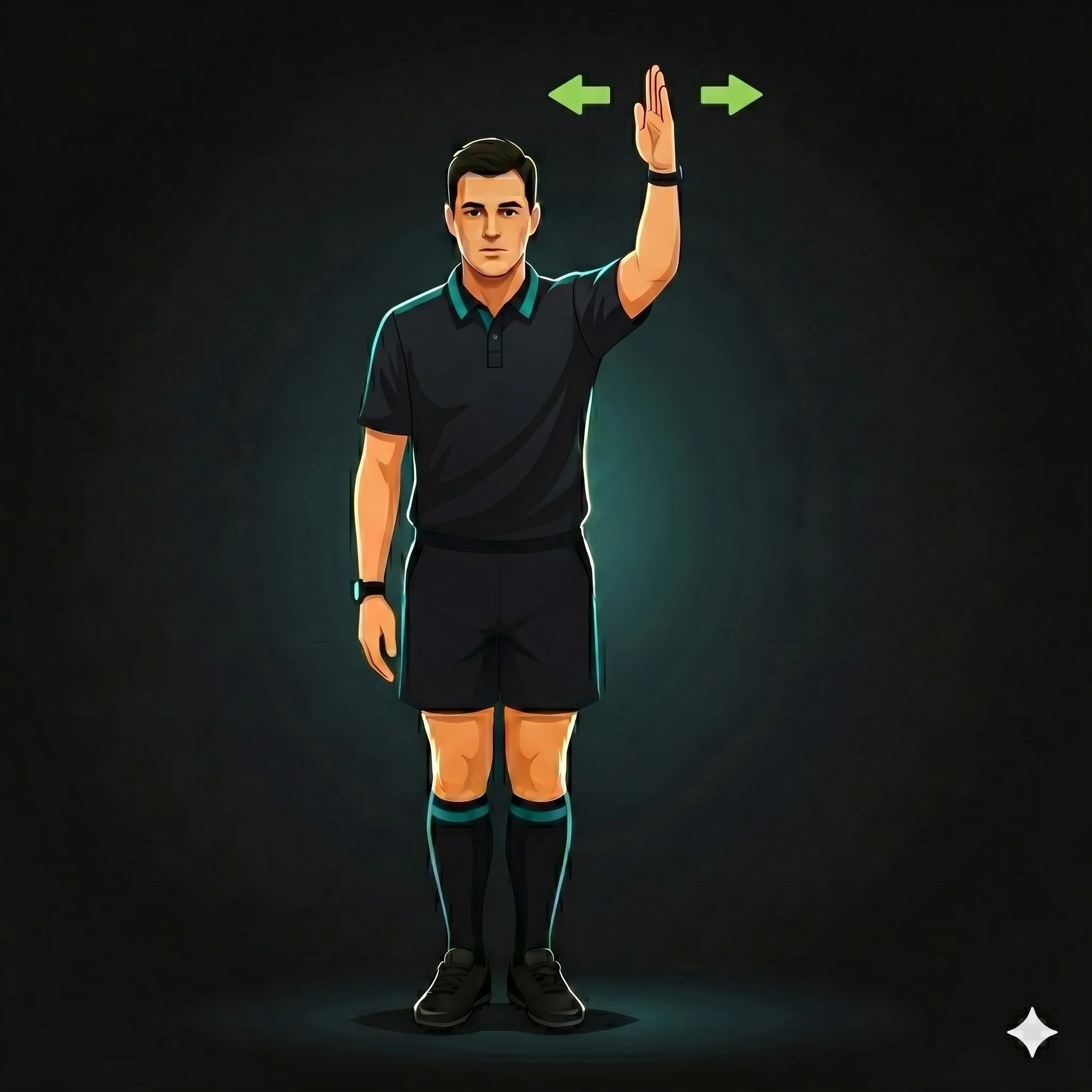
After a knock-on the referee stops play, unless the other team gains an advantage (Laws 7 and 11). Advantage is common here: if the other team picks up the ball and attacks, play goes on. If nothing comes of it, the referee comes back for the scrum.
What happens next
The other team gets a scrum, with the put-in, at the place of the knock-on (Law 19). If the ball went into touch, they can choose a lineout or a quick throw instead (Law 11). An attacker who knocks on in the opponents' in-goal gives away a try line drop-out (Law 12).
A knock-on done on purpose is different. A deliberate knock-on is penalised with a penalty kick, not a scrum (Law 11). If it stops a probable try, the referee awards a penalty try (Law 8).
A common example
A centre takes a pass under pressure and the ball bounces off their hands and forward onto the ground. That is a knock-on, and the other team gets the scrum. If the same centre juggles the ball and catches it before it lands, play simply continues.
Referee signal
Common questions
What is a knock-on in rugby?
It is when the ball goes forward off a player's hand or arm, or after they lose possession, and touches the ground or another player before they can catch it (Law 11).
What happens after a knock-on in rugby?
The referee awards a scrum to the other team at the place of the knock-on, with their put-in, unless that team gains an advantage first (Laws 7 and 11).
Can you regather your own knock-on?
Yes, if you catch the ball before it touches the ground or another player. Then there is no knock-on and play continues.
Is a charge-down a knock-on?
No. If a player knocks the ball forward immediately after an opponent kicks it, there is no sanction and play continues (Law 11).
Is it a knock-on if you rip the ball forward from a ball carrier?
No. If a player rips or knocks the ball from a ball carrier and it goes forward off the carrier's hand or arm, there is no sanction and play continues (Law 11).
Updated